
You are here:HOME > PRODUCT > Fence equipment >
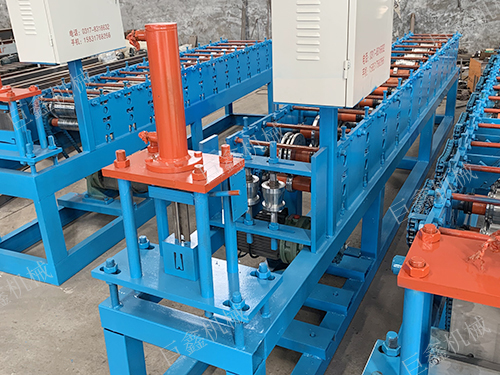
Fence slot machine
13803170595

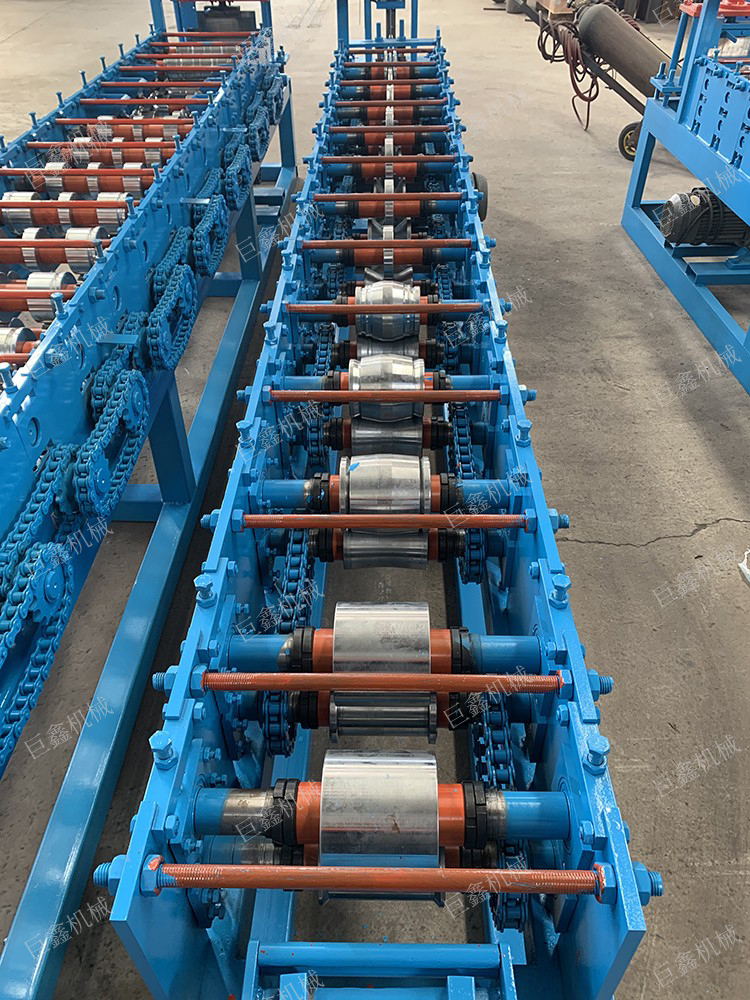
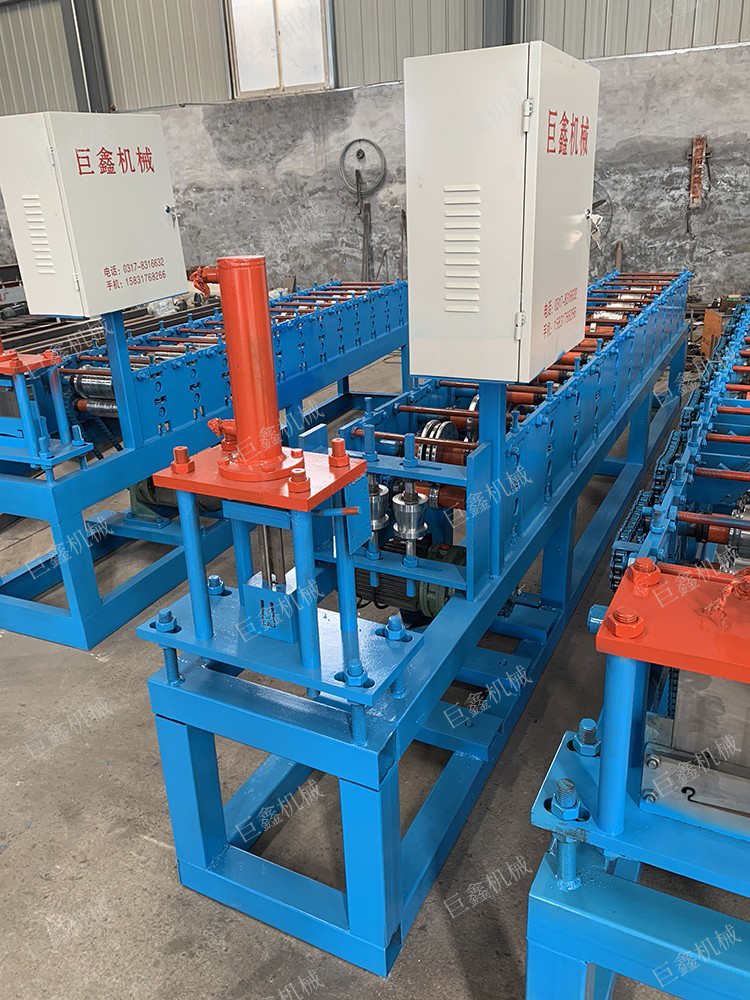
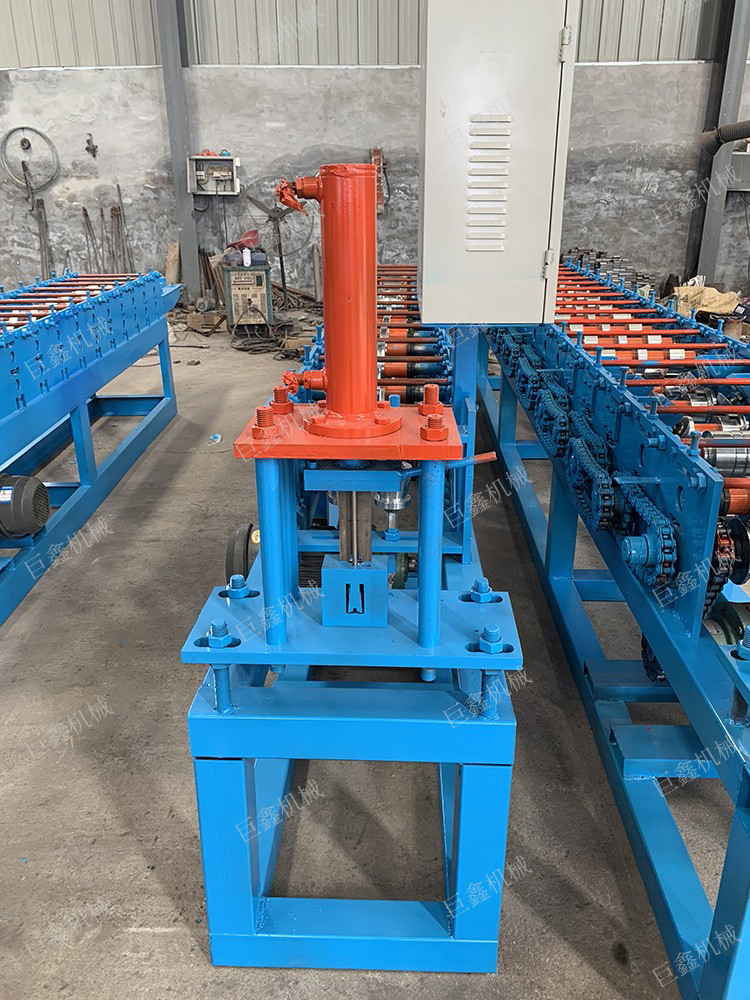
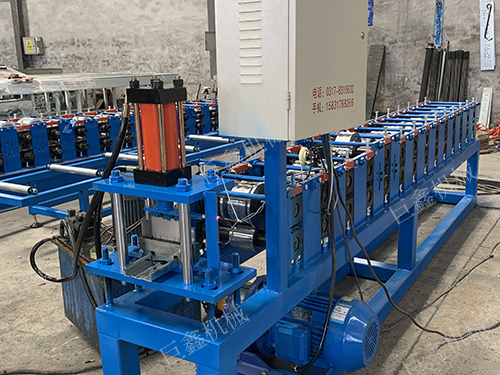
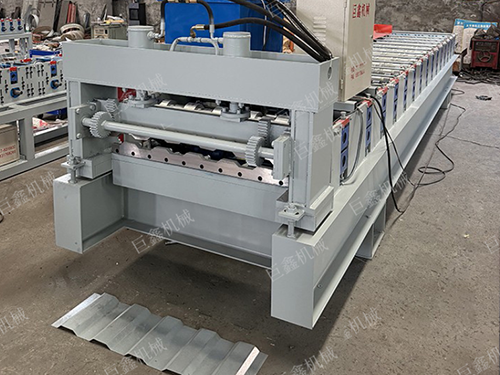
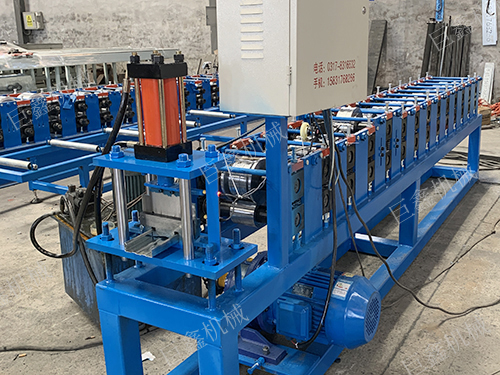
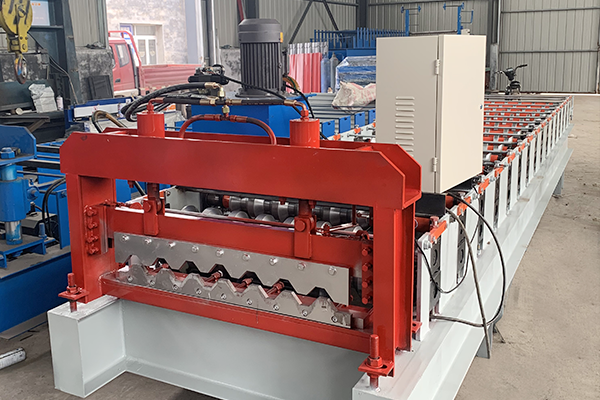
The fence slot machine is a specialized cold bending equipment for prefabricated fence supporting auxiliary materials. It relies on the progressive multi roller room temperature plastic bending process to process straight metal coils into long strip slot profiles with grooves, folding edges, and clamping structures. The entire processing process does not undergo high-temperature heat treatment, which can preserve the protective coating on the surface of the metal sheet and the original physical properties of the substrate. The formed card slot has a regular shape and uniform depth of the card slot. It is mainly used to clamp the edge of the enclosure panel, achieve seamless splicing between panels, or fix auxiliary components such as edge sealing, edge trimming, and pressure strips. It is an indispensable small profile processing equipment in the entire enclosure assembly system. The equipment integrates coil feeding, feed correction, multi-stage roll forming, hydraulic cutting, and finished product unloading into an automated production line. The raw materials can complete all processing steps in one go, reducing the impact and deformation of the sheet caused by multiple manual transfers, and ensuring the uniform size and interchangeability of the card slots produced in large quantities.
The equipment base adopts an integral steel welded frame, which undergoes aging stress relief treatment after welding is completed. The overall structure has sufficient rigidity, and during long-term continuous operation, the machine body will not show obvious shaking or slight displacement, providing a stable bearing foundation for all roller assemblies, transmission components, and hydraulic shear units above. A simple coil feeding support frame is set up at the front end to place the metal narrow strip raw materials into coils. The support frame is equipped with a damping buffer structure, which controls the release speed of the coil by resistance, avoiding the coil from rapidly dispersing due to its own inertia, resulting in loose coil, deviation, distortion and other situations. Following the feeding rack is a guide limit mechanism, equipped with manually adjustable material blocking blocks on both sides, coupled with upper and lower pressure rollers, to limit the left and right movement and compact the moving sheet metal, ensuring that the strip material is always fed into the forming machine at a constant speed along the centerline of the equipment, avoiding problems such as asymmetric bending, skewed jaws, and uneven folding height during the feeding process.
The roll forming host is the core working part of the equipment, which is divided into multiple sets of forming rollers arranged in sequence according to the cross-sectional profile of the enclosure slot. The rollers follow the principle of step-by-step deformation. First, the flat plate is slightly folded on both sides, then the groove structure is gradually pressed inward, and finally the edges are closed and shaped. Each roller only completes a small part of the bending angle, dispersing the internal stress of the board and avoiding surface coating cracking and board crease fracture caused by a single bending amplitude that is too large. This maximizes the protection of the integrity of the profile appearance. The roller body is made of wear-resistant material, and the working surface has undergone hardening treatment. Long term rolling of metal plates is not easy to cause wear, scratches, and dents. The roller shaft is equipped with heavy-duty silent bearings at both ends, which have low rotational resistance and smooth operation. The entire set of rollers adopts synchronous gear transmission, and the speed of the upper and lower paired rollers is completely synchronized to prevent the plate from being stretched and thinned on one side under force, effectively ensuring that the groove width, groove depth, folding height, and opening angle of each slot remain consistent and standardized. When clamping the panel, the tightness is moderate, and there will be no situations where it is too loose or too tight to be inserted.
After being fully rolled and shaped, the card groove profile is transported backwards to the end cutting station. The cutting mechanism adopts a hydraulic driven cutting structure, and the upper and lower cutting tools are tightly fitted. The cut end is flat and smooth, without the need for subsequent secondary polishing and finishing. The equipment is equipped with a high-precision length measuring and counting device. The operator inputs the required length of the finished product for the card slot in the control panel. When the profile reaches the set length value, the system automatically issues a cutting command to complete the entire process of cutting, counting, and automatic reset. The cutting repetition error is small, suitable for standardized batch cutting. The cut profile slides smoothly along the inclined discharge bracket, making it convenient for the staff to organize and stack.
The power transmission system is equipped with a variable frequency speed regulation module, which can flexibly adjust the operating speed of the entire production line according to the thickness of the processed sheet metal and the hardness of the metal material, adapt to the forming rhythm of different raw materials, reduce the impact of no-load and heavy load on transmission components such as gears, bearings, chains, etc., delay mechanical losses, and extend the overall service life of the equipment. The operation area is set up with a simple touch control panel, and the interface functions are intuitive and easy to understand. Only a few basic parameters such as finished product length and running speed need to be set. The equipment can achieve automatic feeding, automatic roll forming, automatic fixed length cutting, and automatic counting throughout the entire process. The learning difficulty is low, and after a short period of familiarity, daily production operations can be independently completed. All exposed gears, shafts, and transmission chains are equipped with protective shells to prevent metal debris from falling into the operating gaps during the processing, while improving the safety protection level of equipment on-site operations.
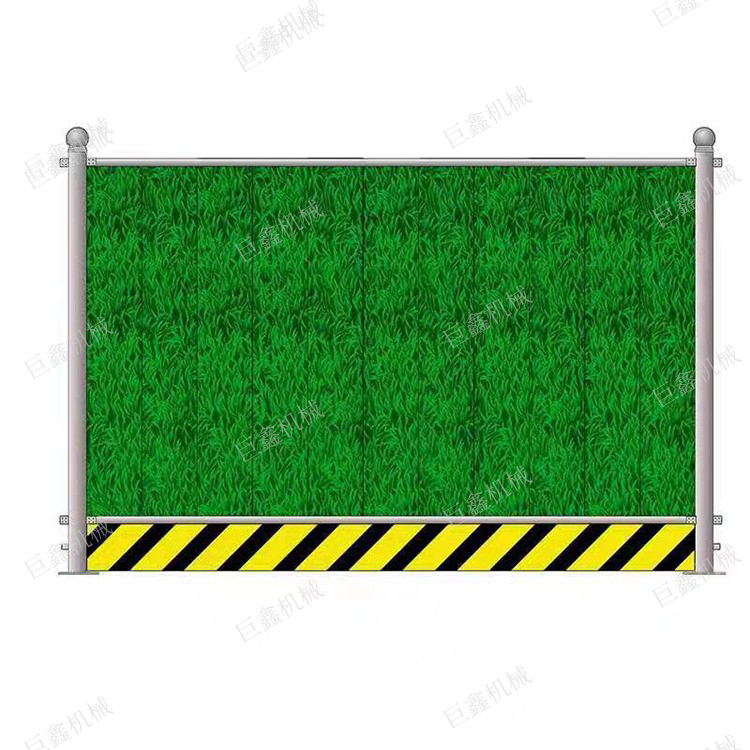
The enclosure slot machine is mainly suitable for processing conventional thin-walled metal coils such as galvanized thin sheets and color coated steel strips. The formed slot profiles have moderate flexibility and structural strength. After being embedded in the side of the enclosure panel, they can constrain the left and right displacement of the panels, improve the overall splicing and sealing of the enclosure, reduce the situation of air and water leakage in gaps, and can also be used for sealing the upper and lower edges of the enclosure, as well as for closing the joints between columns and panels, making the appearance of the enclosure more neat and orderly. The profile is a long linear structure, lightweight, and easy to handle and install after cutting. It can also be reused after disassembly.
From the perspective of site occupation, the enclosure slot machine belongs to a small integrated assembly line equipment. The overall body is narrow but the footprint is not large. The workshop is flexible in placement, and a single device independently completes the entire slot forming process without the need for other devices to be used in series. The daily maintenance content is relatively simple, mainly including regularly adding lubricating grease to the bearings, gears, and transmission chains, cleaning the dust and small metal debris adhering to the surface of the rollers, checking for leaks in the hydraulic pipelines, verifying the integrity of the cutting edge of the shearing tool, and checking the fit clearance between the forming rollers. By carrying out basic maintenance according to the established cycle, the equipment can maintain a stable processing state for a long time. The enclosure slot machine relies on mature cold bending roll forming technology and focuses on the automated batch production of enclosure matching clamping profiles, providing standardized and well adapted splicing auxiliary materials for construction enclosures and site isolation enclosure projects.