
You are here: HOME > NEWS > Technical Documentation >
How to solve common faults and unstable forming accuracy of steel tray forming machine
Time:2026-07-17 06:02:01 Author:巨鑫压瓦机械 Views:187
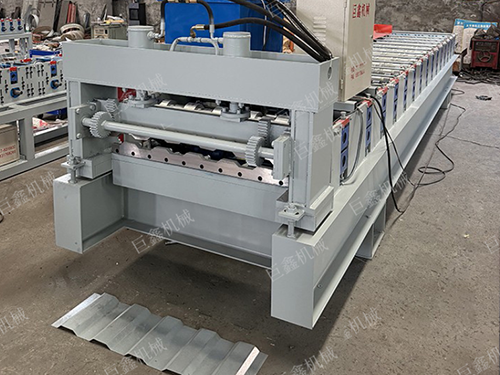
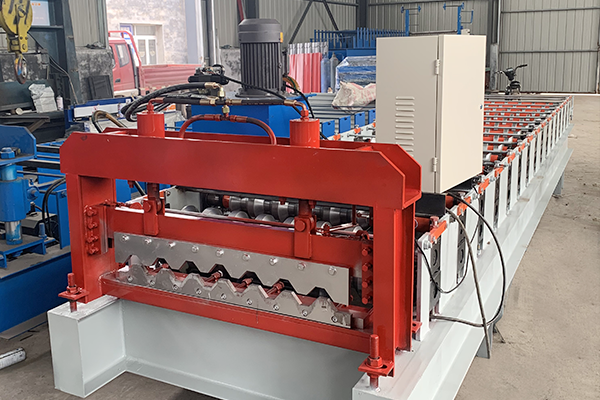
In the large-scale cold bending production of steel pallets, the forming accuracy directly determines the load-bearing performance, assembly matching, and overall service life of the pallets. The steel tray forming machine belongs to the heavy-duty cold bending equipment for thick plates. It processes thick galvanized steel strips and cold-rolled steel plates for a long time. Due to multiple factors such as raw material tolerances, roll clearances, equipment benchmarks, hydraulic systems, and electrical control parameters, it is prone to problems such as forming deviation, angle rebound, hole misalignment, plate surface compression damage, and inaccurate length and size. Many production lines only make simple adjustments after defects occur, which cannot diagnose and treat repetitive defects, resulting in a decrease in finished product qualification rate and an increase in rework volume, affecting overall production capacity output. Mastering the causes and standardized solutions of various common problems is the key to ensuring the stable operation of steel pallet production lines.
Profile deviation is one of the most frequent problems in steel tray forming machines, mainly manifested as left and right deviation of discharge, inconsistent width of profiles, uneven height of bent edges, poor symmetry of finished products during mass production, and large gaps in later assembly and docking. The core reasons for this problem are concentrated in the asymmetric gap between the rolling rolls, offset of the feed guide limit, long-term vibration of the frame causing benchmark misalignment, and excessive tolerance of raw material thickness. Heavy duty cold bending equipment operates under pressure for a long time, and if the gap between the upper and lower rollers is not consistent on the left and right, the plate will experience uneven stress and continue to shift towards the side with a larger gap; At the same time, the feeding guide is worn and loose, and the steel strip cannot maintain a straight line during the forming process, further exacerbating the phenomenon of deviation. To thoroughly solve the problem, it is necessary to stop the machine and perform unified calibration of the gap between the entire rolling mill, correct the left and right symmetry, tighten the guide limit components, replace the worn guide wheels and positioning accessories, and screen the raw material sheets that meet the process tolerances. The problem of deviation should be rejected from both ends of equipment calibration and raw material control.
Bending rebound and improper angle are typical defects in the forming of thick steel pallets. Unlike ordinary thin plate cold bending, the load-bearing profile plate of the tray has a large thickness and strong rigidity. After forming, it is prone to elastic rebound, resulting in a larger bending angle and insufficient verticality of the folded edge. The support strength of the finished tray skeleton does not meet the standard. Many production scenarios rely solely on increasing the rolling force to achieve the main effect of rebound, which can easily cause secondary problems such as surface strain of the sheet, overload of the rolling mill, and increased equipment vibration. A reasonable approach is to adopt a segmented progressive forming calibration, fine tune the amount of pressure applied by each rolling mill, gradually release the internal stress of the sheet, and avoid stress concentration caused by a single strong compression; For high rigidity boards, the layout of forming passes can be optimized appropriately, and pre pressing stations can be added to dissolve the elastic deformation of the board in advance, stabilize the bending angle, protect the tray profile folding and ensure that the load-bearing structure meets the standard.
Scratches, indentations, and damage to the coating on the board surface often occur during the production process of galvanized steel tray profiles. Tray profiles have high requirements for surface anti-corrosion (based on actual reports) integrity, and surface defects will directly reduce the anti rust ability of trays, shortening the service life of outdoor and humid warehouses. The main reasons for scratches are the adhesion of iron filings and oxidized impurities on the surface of the forming roller, the decrease in polishing accuracy of the roller, or the slight wear, grooves, and burrs on the roller surface, which continue to rub and scratch the surface layer during the movement of the plate. In addition, foreign matter jamming and rough guiding components during the feeding process can also cause damage to the continuous board surface. In daily operation and maintenance, it is necessary to regularly clean the impurities on the surface of the rolling mill, polish the slightly worn rolling mill surface with care, and replace severely worn parts in a timely manner; Before production, check the smoothness of the overcurrent components along the entire line, keep the forming channel clean and free of debris, and protect the integrity of the galvanized coating on the sheet metal.
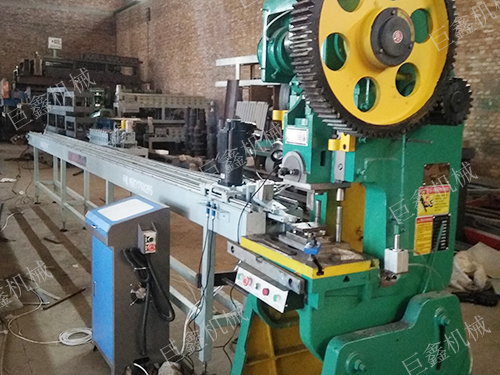
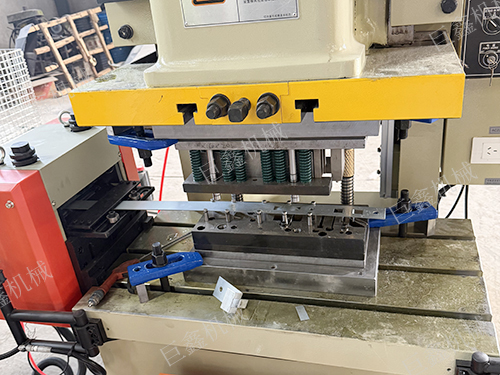
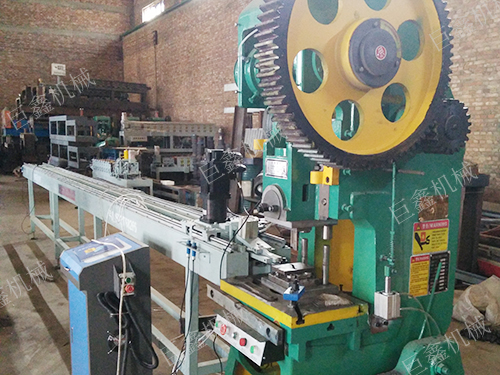
The offset of punching holes and uneven hole spacing are important issues that affect the assembly accuracy of steel pallets. The reinforcement holes and connection holes of the tray profiles need to be uniformly spaced to protect the detailed hole positions and smooth docking of multiple profiles after assembly. The deviation of hole position is mainly caused by the asynchronous rhythm between the punching station and the forming host, fluctuations in the speed of the sheet metal movement, deviation of the positioning reference, and unstable hydraulic punching and shearing power. After long-term operation of the equipment, the transmission clearance increases and the frequency conversion parameters fluctuate, which can cause slight errors in the feeding distance and accumulate to form hole displacement. When solving the problem, it is necessary to recalibrate the punching and forming synchronization parameters, lock the feeding reference, adjust the frequency conversion speed range, and ensure stable and uniform feeding; At the same time, check the fixing status of the punching mold, reject mold looseness and deviation, and protect the consistency of the batch hole positions.
Uneven cutting length and burrs on the cut edges are common size issues that occur frequently in mass production. The cutting of thick steel pallets requires high requirements for hydraulic pressure, tool clearance, and follow-up speed. Insufficient hydraulic pressure, excessive tool seat clearance, and mismatched follow-up cutting parameters can all lead to uneven cuts and dimensional length errors exceeding the standard. After long-term use, some production lines experience tool wear and passivation, making it impossible to cut thick plates in one go, resulting in pulling burrs and affecting the appearance and flatness of the finished product. Daily debugging requires regular verification of hydraulic system pressure to ensure sufficient cutting power, meticulous adjustment of upper and lower blade clearances, and matching of sheet thickness parameters; Regularly polish and replace passivation tools, optimize the following cutting speed, achieve continuous cutting without stopping, smooth cutting without curling edges, and control dimensional errors within the standard range.
The equipment operates with large vibrations and frequent abnormal noises, which are also common operating conditions of heavy-duty forming machines. The steel tray forming machine has a large self weight load, and long-term thick plate rolling operations are prone to situations such as loose frame bolts, bearing wear, roller imbalance, and increased clearance between transmission components, which can cause vibration and abnormal noise during operation. Continuous vibration will further cause deviation of the forming reference and inaccurate accuracy, forming a vicious cycle. Daily maintenance requires regular tightening of all connecting bolts between the frame, transmission, and tool holder, checking of bearing operation status, and timely replacement of worn parts; Level the ground and install shock-absorbing and buffering structures as needed to reduce operational resonance and maintain stable equipment operation.
To achieve long-term stable quality of steel tray forming, in addition to timely troubleshooting, it is also necessary to establish a standardized daily maintenance mechanism. Clean the roller surface and guide components of the equipment before and after daily production, and check for loose parts; Calibrate the roll gap, feeding benchmark, and punching accuracy once a week; Monthly monitoring of hydraulic system pressure, electronic control operating parameters, and tool wear status. By implementing regular maintenance, various problems such as deviation, rebound, scratches, and dimensional deviations can be avoided in advance, significantly reducing the probability of downtime due to malfunctions and improving the overall stability of the production line and product qualification rate.
Overall, various forming defects and equipment failures of steel tray forming machines are mostly caused by four major factors: improper calibration, wear and tear of accessories, mismatched parameters, and inadequate operation and maintenance. By carefully investigating the causes of faults, standardizing debugging and calibration, and systematizing daily maintenance, problems such as unstable molding accuracy, multiple defects in finished products, and large production fluctuations can be thoroughly solved, allowing the equipment to maintain suitable accuracy and high stability in mass production for a long time, meeting the standard requirements for the production of heavy-duty steel pallets in storage.