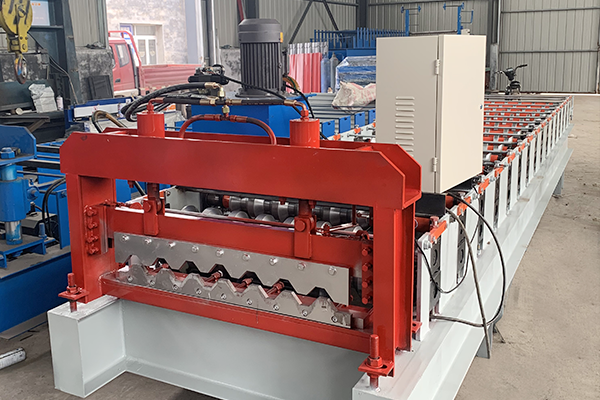

Detailed explanation of the processing conditions, forming characteristics and selection points of steel pallet forming machines
Time:2026-11-04 03:19:27 Author:益商贝贝超管理员 Views:75
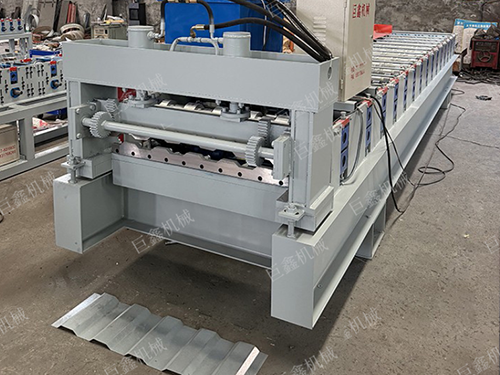
The steel pallet forming machine is a special equipment for cold-bending continuous forming. It is mainly used to process the support beams, panels, bottom beams, C-shaped braces and other profiles of warehouse steel pallets. It relies on multi-pass rollers to gradually bend and shape the steel strip. Compared with the segmented processing of a single bending machine, the advantages are continuous discharging and unified fixed length, which is suitable for large-scale production of steel pallets for warehousing logistics and shelves. Many purchasers only focus on the quotation when comparing equipment and ignore their own raw material conditions and workshop production conditions. After production is put into production, problems such as profile distortion, dimensional deviation, incision deformation, and molding springback are prone to occur. The following is a summary of relevant key points based on on-site processing conditions and practical material selection.
1. Actual processing conditions of steel pallet forming machine
The prerequisite for stable production of equipment is that the configuration matches its own working conditions. Different order types have obvious differences in hardware requirements for equipment.
The mainstream raw materials for raw material working conditions are mainly black rolled steel strips, hot-rolled pickled steel strips, and galvanized steel strips. Some orders with high anti-corrosion requirements will choose galvanized steel strips. The thickness of conventionally processed steel strips is concentrated at 1.2-3.0mm; when making the bottom beam of heavy-duty storage pallets, the thickness of the material can be up to 3.5mm. The inner diameter of raw steel coils is mostly Φ508mm, and the weight of a single coil is usually 2-7 tons. Galvanized and galvalume steel strips are coated on the surface, and the rollers need to be polished and wear-resistant to prevent scratches on the coating and zinc loss and sticking to the rollers; black steel strips are softer and less difficult to form, but the sickle bending problem of the raw material itself will directly affect the straightness of the finished product. Material loading is divided into single-station uncoiling and double-station uncoiling. If orders are continuous and you don’t want to stop the machine frequently for coil changes, the dual-uncoil structure is given priority to reduce the waiting time for material changes.
Molding speed conditions, no-load debugging speed and stable production speed need to be distinguished. The stable production speed of conventional thin materials (1.2–2.0mm) is 4–10 m/min; thick steel strips above 2.5mm and high-strength steel strips have large forming resistance, so the production speed is recommended to be controlled at 3–6 m/min. Blindly increasing the speed will bring about a series of problems: side bending of the profile, unstable rib height, offset of subsequent punching holes, and misalignment of the splicing holes when assembling the pallet. The bottleneck of the entire production line is often not the molding host, but the punching, cutting, discharging and collection links. When selecting, the back-end processes must be taken into consideration simultaneously.
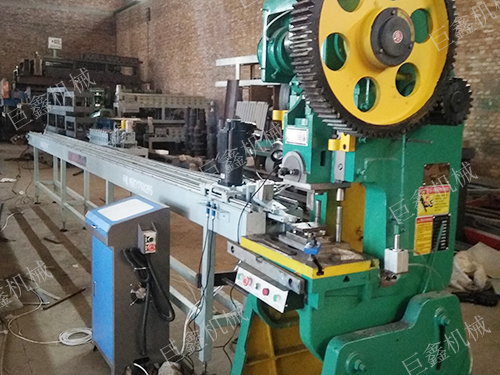
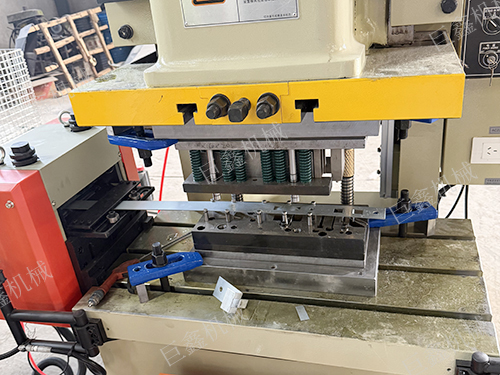
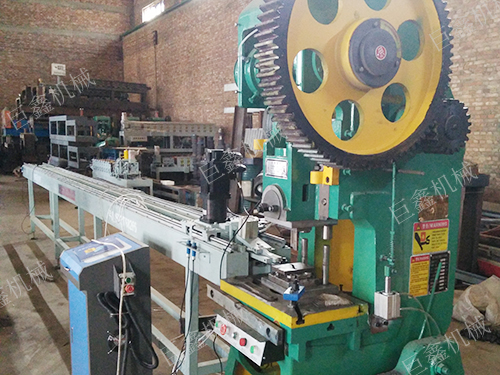
Most of the steel pallet profiles under punching and cutting forming conditions have assembly positioning holes and connection holes. The mainstream solutions are divided into online tracking punching and offline punching. Online punching means punching is completed simultaneously during the molding process, which is suitable for large batches of standard pallets; for small batch orders with many layouts and frequently changing hole positions, offline punching has higher flexibility. The cutting methods are divided into flying saw tracking cutting and hydraulic stop shearing. The flying saw cuts simultaneously with the profile without stopping, and is suitable for large-volume continuous production. The length accuracy is generally controlled within ±2mm. The stop-cutting structure is simple, the cost is lower, and the burr control of the thick material section is better, but the machine needs to be stopped briefly for each cut, and the production capacity is low. The workshop environment will also affect the stability of working conditions: in humid workshops, electronic control and hydraulic parts must be protected against moisture; in workshops where there is a lot of grinding dust, dust-proof covers should be installed on the roller guide rails and transmission positions to reduce the wear rate.
The steel pallet bottom beam and C-shaped brace formed under the discharging support condition are long in length and thin in cross-section. If the distance between the discharging rollers is too large, the profile will easily fall and twist laterally. It is recommended that the discharging rack be equipped with multiple sets of adjustable guide rollers. When producing long-format profiles, add lateral stops to avoid left and right movement and ensure the straightness of the finished product.
2. Key points for steel pallet forming machine selection and pit avoidance
The core idea of selection: first determine the profile cross-section drawing and raw material thickness, then match the main frame, rollers, and transmission structure, and finally select auxiliary machines. Do not make decisions based solely on price.
1. Selection of roll material and changing structure
The roller is the core component of the forming machine and the main source of equipment price difference. For long-term processing of 1.2–2.0mm ordinary blackened and galvanized steel strips, the rollers are made of 45# steel that can be tempered and quenched to meet the needs of use; for long-term processing of thick materials and high-strength steel strips above 2.5mm, the rollers are preferably made of Cr12MoV material and polished after finishing. The wear-resistant period is longer and the surface is not easy to strain the steel strip. If the same host machine replaces pallet profiles of different cross-sections, the entire set of rollers needs to be replaced. If the order is complex and multiple types of bottom beams, panels, and braces are frequently switched, confirm in advance whether the rack supports the quick-change roller structure. Otherwise, each type change will take a long time to debug and delay production.
2. How to choose the frame and transmission mode
The frame is divided into welding frame and casting frame. A production line with two shifts, long-term continuous mass production, and non-stop production all year round gives priority to casting frames, which have strong deformation resistance and stable dimensional consistency of profiles during long-term operation. Orders are scattered, daily production hours are short, and budgets are limited. Welding frames can meet basic production, but after long-term full-load operation, the frame is prone to trace deformations and profile dimensions slowly drift. Transmission is divided into chain transmission and gearbox transmission. Chain transmission has low cost and is suitable for small capacity and intermittent production; gearbox transmission has small transmission clearance, good synchronization and lower operating noise. Gear transmission is preferred in thick materials and high-speed continuous production scenarios.
3. Key points in selecting hydraulic and electronic control systems
Online punching and cutting rely on hydraulic drive. The thrust of the cylinder and the flow rate of the hydraulic station must adapt to the thickness of the steel strip. The cutting thrust of thick materials is insufficient, and the cuts are easy to tear and the burrs are too large. An independent PLC numerical control system is recommended for electronic control. The touch screen can input the fixed length, punching spacing, and production batches, and has built-in counting and fault alarms. The simple relay control system is not recommended for multi-specification orders. Parameter modification is cumbersome and troubleshooting efficiency is low. If there is an automation upgrade plan, communication interfaces will be reserved in the early stage, and automatic palletizing and packaging equipment can be connected later.
4. Auxiliary equipment that is easily overlooked
Uncoiler: The uncoiling of heavy and thick steel strips must be equipped with brake damping to prevent the steel coil from inertially throwing away material, causing material stacking and jamming;
Pre-leveling mechanism: When the incoming material has obvious bends and warpage, a leveling machine is installed at the front end of the forming process. The raw materials are leveled before forming, and the side bending problem of the later profile will be greatly reduced;
Guide limiter: Asymmetric cross-section profiles such as C-shaped bottom beams are easy to deviate during the forming process, and multiple sets of side guide wheels are required to continuously correct the deviation;
Collecting rack: Manual collecting is suitable for small-scale mass production. For large-volume production, automatic blanking and palletizing brackets are optional to reduce collision and deformation during manual handling and improve safety.
3. Daily production maintenance suggestions to reduce equipment failures
The thickness and hardness of the steel strips are randomly checked before each batch of raw materials is put into production. The parameters of different batches of raw materials fluctuate greatly. It is necessary to fine-tune the roll gap and do not use one set of forming parameters;
The roll gap should be adjusted step by step. Do not make a large adjustment at one time. A sudden change in the bending amount of the steel strip will easily cause cracks. For thick material and high-strength steel strips, springback compensation must be done in advance;
After shutdown, the iron filings and zinc slag on the roller surface should be cleaned promptly. The galvanizing material production line should be cleaned daily to prevent foreign matter from pressing on the surface of the profile to form indentations;
Regularly check the synchronization of the rollers on both sides. The left and right are not synchronized, which is a frequent cause of unilateral waves and excessive side bending of the profile.