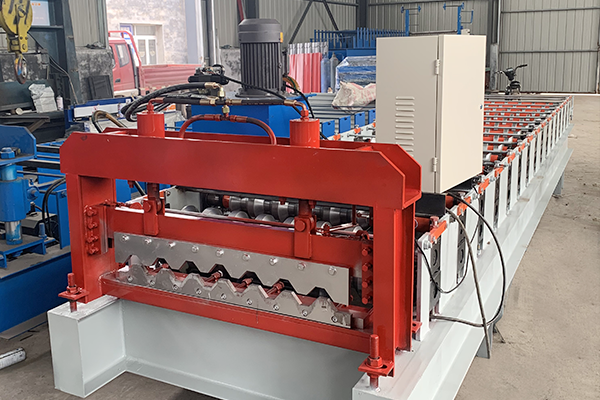

Carriage panel forming machine processing characteristics, applicable panel materials and pit selection guide
Time:2026-11-04 03:14:22 Author:益商贝贝超管理员 Views:97
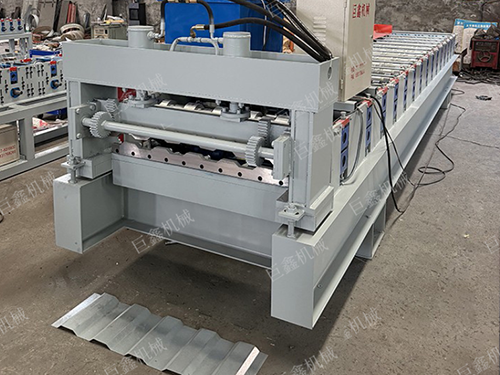
The carriage panel forming machine is a special equipment for cold-bending continuous forming. It is mainly used to produce corrugated or flat ribbed carriage panels such as vans, refrigerated carriages, container side panels, and roof panels. It relies on multiple sets of forming rollers to gradually bend and shape the coil. It is different from the single-stage stamping forming of a bending machine. It is suitable for the continuous production of large-volume, long-size carriage panels. Many buyers tend to only compare equipment prices and ignore the matching of actual processing conditions. Later, problems such as plate deviation, plate bulging, molding springback, shear fracture deformation, etc. will occur. The following is a combination of front-line production conditions and selection information to sort out the core content clearly.
1. Routine processing conditions of carriage panel forming machine
The stable operation of the carriage panel forming machine is based on matching working condition parameters. Different production scenarios have greatly different equipment configuration requirements.
Commonly used raw materials in raw material working conditions are mainly galvanized steel coils, color-coated steel coils, and aluminum alloy coils. Some projects also use stainless steel sheets. The thickness range of conventionally processed plates is concentrated in 0.6–2.0mm, and the upper limit of the thickness of aluminum alloy carriage plates can be up to 2.5mm. The inner diameter of raw material rolls is mostly Φ508mm, and the roll weight is usually 3-8 tons; the surface condition of the raw material will directly affect the molding quality. Color-coated sheets require wear-resistant polishing treatment on the roller surface to avoid scratching the paint surface. Galvanized sheets are relatively more fault-tolerant, but attention should be paid to the problem of the zinc layer falling off and sticking to the roller. The feeding method is divided into single roll loading and double-station uncoiling. For production lines with stable orders and need to reduce roll change downtime, dual uncoiling configurations are preferred.
Molding speed, no-load debugging speed and actual production speed should be treated separately. The conventional stable production speed is 4-12 m/min; aluminum alloy plates have good plasticity and low forming resistance, so the speed can be higher than the upper limit; thick steel plates and high-strength high-strength steel raw materials have high forming resistance, so the production speed needs to be reduced to 3-6 m/min. Forcibly increasing the speed can easily cause plate waves, unstable rib height and size, and excessive splicing gaps for subsequent loading. The speed is not as fast as possible. It must match the back-end tracking cutting and palletizing rhythm. The bottleneck of many production lines is not in the molding host, but in the cutting and blanking collection links.
Common types of carriage panels in forming and cutting conditions: corrugated corrugated boards, flat plates with reinforced ribs, and integrated side folding panels. After continuous molding, the mainstream method is to track and cut with flying saws, which move and cut synchronously with the plate to avoid stopping the machine and ensuring the plate length accuracy; the fixed-length accuracy can generally be controlled within ±2mm. If you are producing small plates with short specifications, you can also choose the stop-cut solution, but the production efficiency will be significantly reduced, so it is suitable for small batches and multi-version orders. The working conditions of the production workshop also need to consider the environment: the open-air simple workshop has a high humidity environment, and the electronic control and hydraulic components need to be protected against moisture; the workshop is dusty, and the roller guide rails and transmission parts need to be equipped with dust covers to reduce wear and tear.
After the discharging process is completed, the carriage plate is long and weak in stiffness. The support spacing of the discharging frame is unreasonable, and the plate is prone to falling and twisting. The standard discharge rack will be equipped with multiple sets of rollers. For long board production, it is recommended to install negative pressure adsorption or limit guide devices to prevent the board from moving left and right and ensure the flatness of the board surface.
2. Instructions for choosing a carriage panel forming machine (focus on avoiding pitfalls)
The core logic of selection: first determine the product version and raw materials, then select the host configuration, and finally match the supporting auxiliary machines, instead of directly selecting equipment based on tonnage quotation.
1. First clarify the layout drawing and determine the roller material
The roller is the core vulnerable part of the forming machine and also the area with the largest price difference. For ordinary color plates and galvanized sheets, the rollers can be made of 45# steel that has been tempered and quenched; for long-term processing of high-strength steel and stainless steel, it is recommended that the rollers be made of Cr12MoV material, polished after finishing, and have a longer wear-resistant period. Note: For the same host machine, changing different plate types requires replacing the entire set of rollers. If you plan to frequently switch between corrugated boards and stiffened boards in the future, you must confirm in advance whether the rack supports a quick roll change structure, otherwise it will take more than half a day of work to debug the plate change.
2. How to choose the frame and transmission mode
The frame is divided into welded frame and integral casting frame. Stable batch production, long-term 24-hour two-shift working conditions, priority is given to casting frames, which have strong deformation resistance, and the plate consistency is not easy to deviate during long-term operation; intermittent orders, daily production hours, and limited budgets, the welding frame can meet the demand, but after long-term full-load operation, the frame is prone to slight deformation and dimensional drift. The transmission is divided into chain transmission and gearbox transmission. Chain transmission has low cost and is suitable for small-capacity production lines; gearbox transmission has low noise, small transmission gap, and better synchronization. Gear transmission is given priority in thick plate and high-speed production scenarios.
3. Key points for selecting hydraulic and electronic control systems
Flying saw cutting relies on hydraulic drive. The flow rate of the hydraulic station and the thrust of the cylinder must match the thickness of the plate. If the thrust of the cylinder is insufficient when cutting thick plates, burrs and tears will appear in the cut. Electronic control priority independent PLC numerical control system, touch screen input fixed length, batch quantity, built-in counting and fault alarm functions. It is not recommended to use the simple relay control version. When changing specifications in multiple batches, parameter modification is troublesome and troubleshooting is difficult. If there is a need for automation upgrades, communication interfaces are reserved in the early stage and can be connected to automatic palletizing and packaging equipment in the later stage.
4. Selection of supporting auxiliary equipment that is easily overlooked
Uncoiler: Thick and heavy coils must be equipped with brake damping to prevent the coil from being inertially thrown away and causing the feed to pile up;
Leveling mechanism: When the raw material coil itself is warped and the sickle bend is relatively large, a pre-leveling device needs to be added to the front end of the forming, otherwise it will be difficult to correct the distortion of the board after forming;
Lubrication device: When processing stainless steel and high-strength steel, a small amount of oil supply lubrication can be selected to reduce roll wear and plate strain;
Collecting and discharging materials: Manual unloading is suitable for small orders. For large batches, automatic palletizing racks are recommended to reduce manual lifting plate deformation and safety hazards.
3. Daily production adaptation suggestions to reduce equipment failure rate
Check the thickness and hardness of the raw materials before they are rolled. If the raw materials fluctuate too much in the same batch, the molding gap should be fine-tuned in time, and do not directly use the original parameters;
Do not adjust the roll gap too large at one time, and adjust it step by step to prevent cracks from excessive bending of the plate at one time. Pay special attention to springback compensation for aluminum alloy plates;
When the machine is shut down for a long time, the roller surface should be cleaned and rust-proofed, and the remaining coating debris on the roller surface should be cleaned before each roll change in the color-coated plate production line;
Regularly check the transmission synchronization. The left and right rollers are out of sync, which is the most common cause of ripples on one side of the carriage board and dimensional deviations.