
You are here:HOME > PRODUCT > Fence equipment >
Fence crossbeam forming machine
13803170595

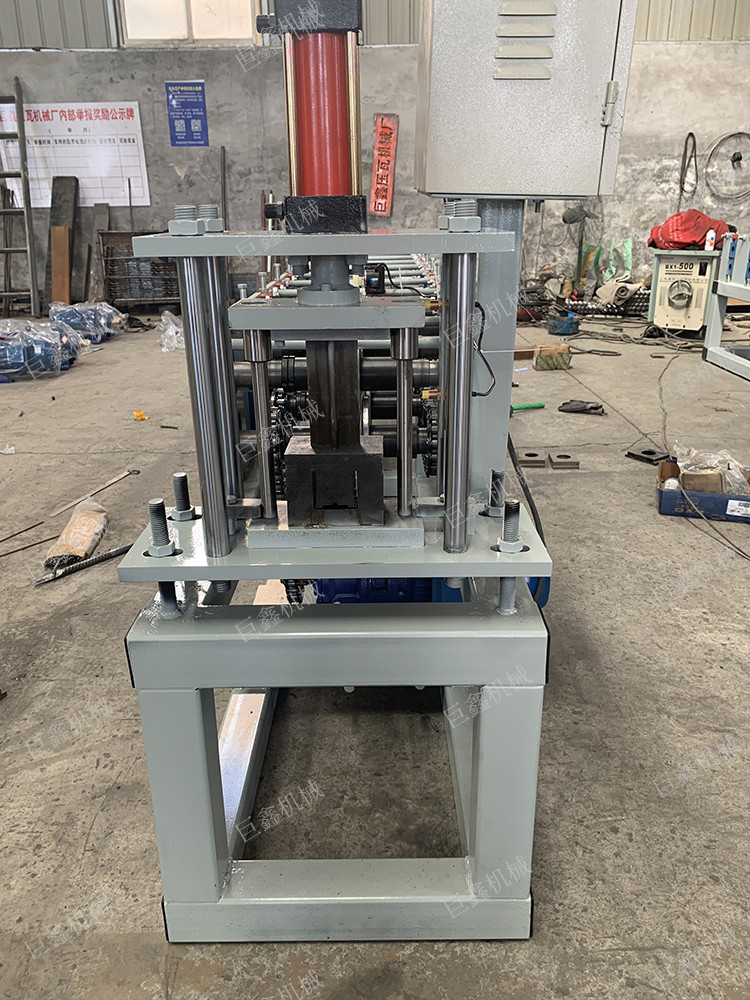
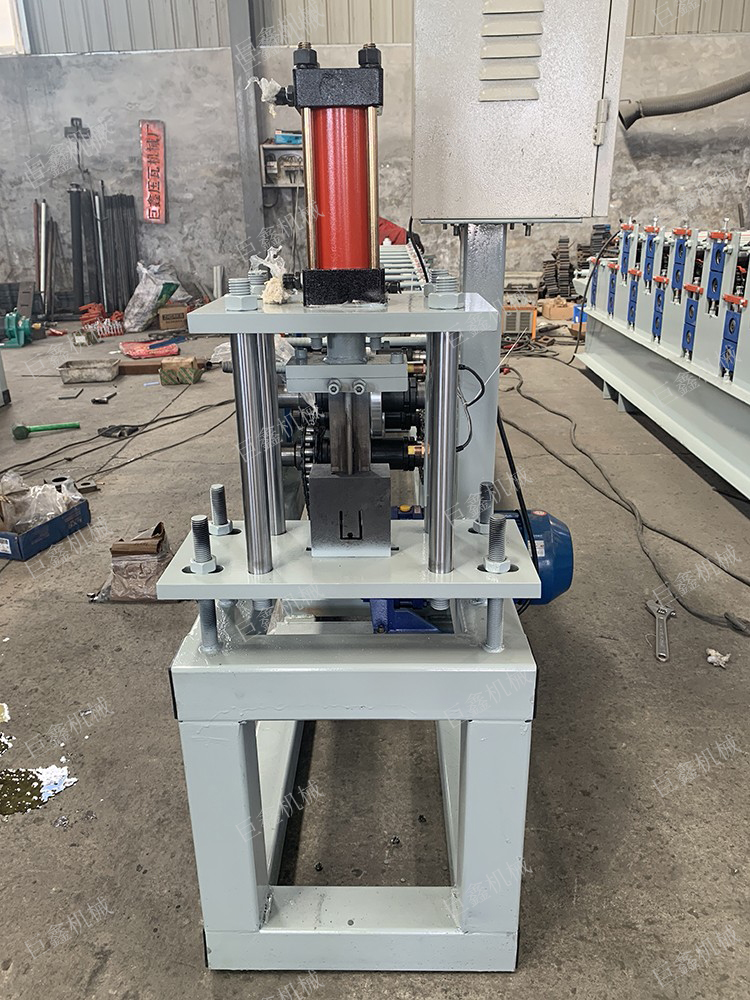
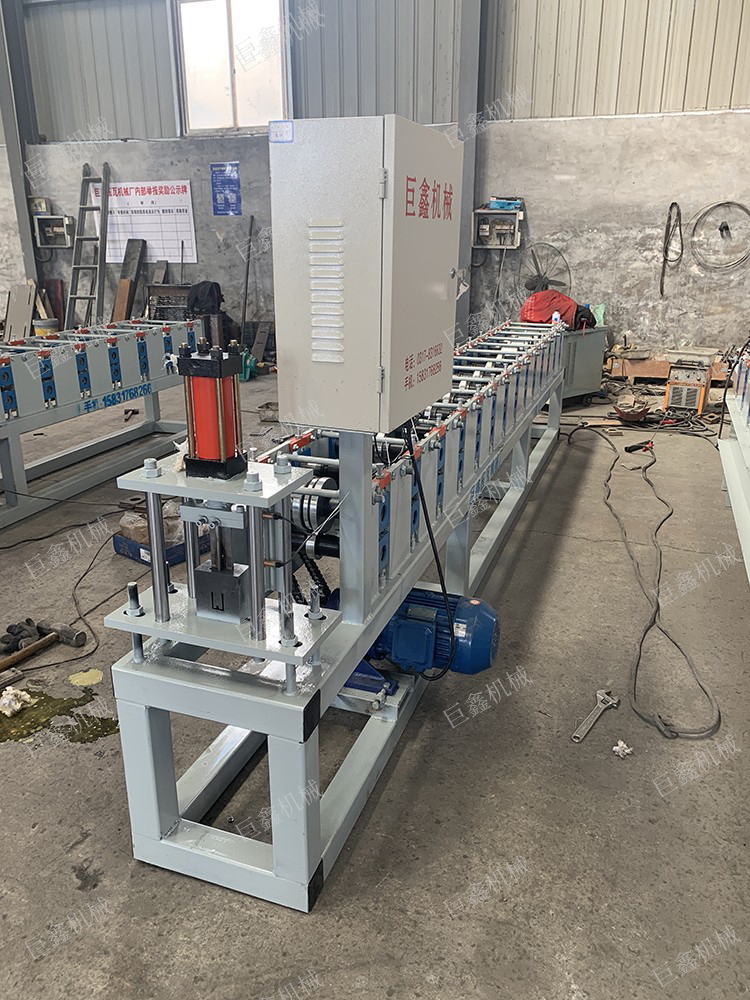
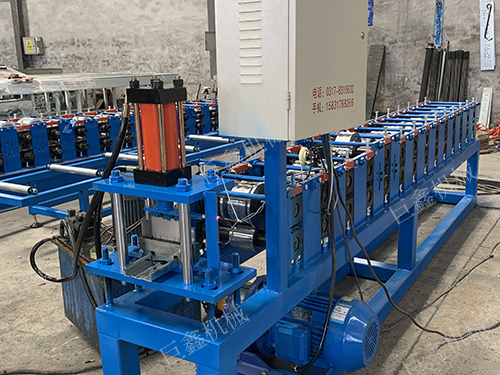
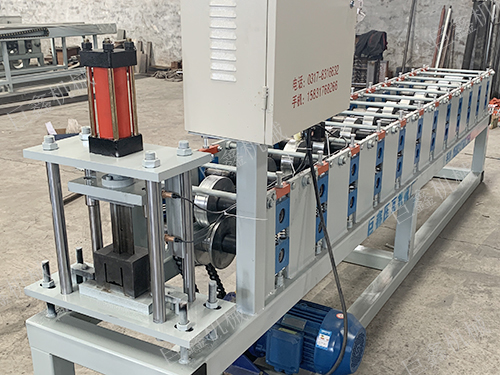
The fence crossbeam forming machine is a specialized cold bending automation equipment for the transverse connection of prefabricated fence frame systems. It relies on the principle of step-by-step rolling plastic deformation at room temperature to bend, press, and fold flat metal strip coils through multiple sets of rollers, forming long crossbeam profiles with regular cross-sections, reinforced bars, and butt folded edges. The entire processing process does not use high-temperature heating, which can effectively protect the surface protective coating structure of the metal sheet and maintain the original tensile and bending physical properties of the substrate. The cross-sectional size of the formed crossbeam is uniform, and docking structures are reserved at both ends. It is mainly installed between two fence columns, playing a role in horizontal tension, dispersing external forces, and stabilizing the overall fence frame. It is an important component of the complete fence stress system. The equipment integrates a complete set of processes such as coil feeding support, plate guiding and correction, multi-stage roll forming, hydraulic cutting to length, and finished product unloading. The raw materials can be transported on the shelf at once to complete the entire processing flow, reducing the impact and deformation caused by multiple material turnover, and ensuring that each beam profile produced in bulk has consistent assembly dimensions.
The overall equipment adopts a thickened steel welded integrated base, which is subjected to aging stress relief treatment after forming, effectively resolving the internal stress generated by welding, reducing the shaking of the machine body and frame displacement during long-term continuous operation of the equipment, and providing a solid and stable installation carrier for the roller press host, transmission system, and hydraulic shearing mechanism. The front-end is equipped with a coil feeding bracket for placing the entire coil of metal raw materials. The bracket is equipped with a damping braking device, which controls the release speed of the coil based on resistance, avoiding problems such as loose coil, deviation, wrinkles, and interlayer misalignment caused by the inertia of the coil due to its own weight. A guide limit correction component is installed at the rear end of the feeding rack, consisting of manually adjustable material blocking plates and upper and lower pressing rollers, which provide bidirectional constraints on the moving sheet metal, ensuring that the strip metal is smoothly fed into the forming machine along the central axis of the equipment. This avoids the phenomenon of asymmetric bending angles, rib offset, and uneven side edge folding height during the feeding process.
The roll forming host is the core working unit of the equipment, and multiple sets of progressive forming rollers are arranged internally according to the cross-sectional structure of the enclosure beam. The roller follows the processing logic of gradually increasing depth and gradually deforming in stages. Firstly, the concave convex reinforcement ribs are pressed in the middle of the flat plate to enhance the rigidity of the profile. Then, the two sides of the plate are folded step by step. Finally, the end overlapping parts are closed and shaped. Multiple small bends can effectively release the deformation stress of the sheet metal, avoiding surface coating cracking and metal substrate cracking caused by excessive bending angles in a single bend, and maximizing the protection of the appearance integrity of the finished profile. The rollers are made of wear-resistant materials, and the working surface has undergone hardening treatment. Long term repeated rolling of metal plates is not easy to produce wear, grooves, and scratches. The roller shaft is equipped with heavy-duty bearings at both ends, which have low rotational resistance and smooth operation. The entire set of rollers adopts a synchronous gear linkage transmission mode, and the corresponding roller speeds of the upper and lower parts are kept consistent to prevent the single side of the board from being stretched and thinned due to force. The overall width of the crossbeam, the spacing between the ribs, the height of the folded edge, and the uniformity of the overlapping groove are precisely controlled, and the later fitting and assembly with the column are smooth.
The crossbeam profiles that have been fully rolled and shaped are transported backwards to the end cutting station. The cutting mechanism adopts a hydraulic driven gantry cutting structure, and the upper and lower cutting tools are tightly fitted, resulting in a flat and smooth cutting section without the need for additional polishing and finishing. The equipment is equipped with a high-precision length measurement and counting system. The operator pre-set the length of the finished beam on the control panel. After the profile is transported to the set value, the system automatically triggers the cutting action, completing a series of processes such as cutting, counting, and automatic reset. The cutting repetition accuracy is stable and suitable for large-scale standardized cutting. The cut crossbeam profile slowly slides down along the inclined discharge bracket, making it easier for workers to organize and stack it.
The power transmission system is equipped with a variable frequency speed regulation module, which can flexibly adjust the operating speed of the entire production line according to the thickness of the processed sheet metal and the hardness of the metal material, adapt to the forming requirements of different raw materials, reduce the mechanical impact of transmission components such as gears, bearings, and chains during start stop and load switching, reduce losses, and extend the overall service life of the equipment. The operation end is equipped with a simple and intuitive control panel, which only requires inputting basic parameters such as finished product length and running speed. The equipment can achieve automatic feeding, automatic roll forming, automatic cutting to length, and automatic counting throughout the entire process. The operation logic is simple and easy to understand, and after a short period of learning, daily production work can be independently completed. All exposed gears, shafts, and transmission chains are equipped with protective shells to prevent metal debris from falling into the operating gaps during processing, and to enhance the safety protection level of on-site equipment operations.
The enclosure crossbeam forming machine can be adapted for processing commonly used thin-walled metal coils such as galvanized thin sheets and color coated steel strips. The formed crossbeam comes with an integrated reinforcement structure, which has stronger lateral bending resistance. After multiple crossbeams are connected to columns in layers, a grid like load-bearing frame can be formed to enhance the overall wind and external impact resistance of the enclosure. The two sides of the profile are folded to form a simple overlapping structure, which can be fixed by docking with the column slot. The disassembly operation is simple, and the disassembled crossbeam can be disassembled and stored, and reused for subsequent fence construction. The closed folding structure can also reduce rainwater infiltration, slow down the corrosion rate of metal components, and improve outdoor durability.
This device is an integrated floor to ceiling assembly line structure with a compact body layout, occupying less workshop space. A single device can independently complete the molding and processing of all enclosure beams without the need for multiple devices to be connected in series. The daily maintenance content is relatively routine, mainly including regularly adding lubricating grease to bearings, gears, and transmission chains, cleaning dust and metal debris attached to the surface of rollers, checking the sealing status of hydraulic pipelines, verifying the integrity of cutting tool edges, and checking the fit clearance of forming rollers. By implementing basic maintenance according to the cycle, the equipment can maintain stable and efficient operation for a long time. The fence crossbeam forming machine relies on mature cold bending forming technology and focuses on the automated mass production of fence transverse load-bearing tie profiles, providing size standardized and structurally sturdy frame supporting components for various construction site isolation fences.