
You are here:HOME > PRODUCT > Double layer tile press machine >
860-900 double-layer tile press machine
13803170595

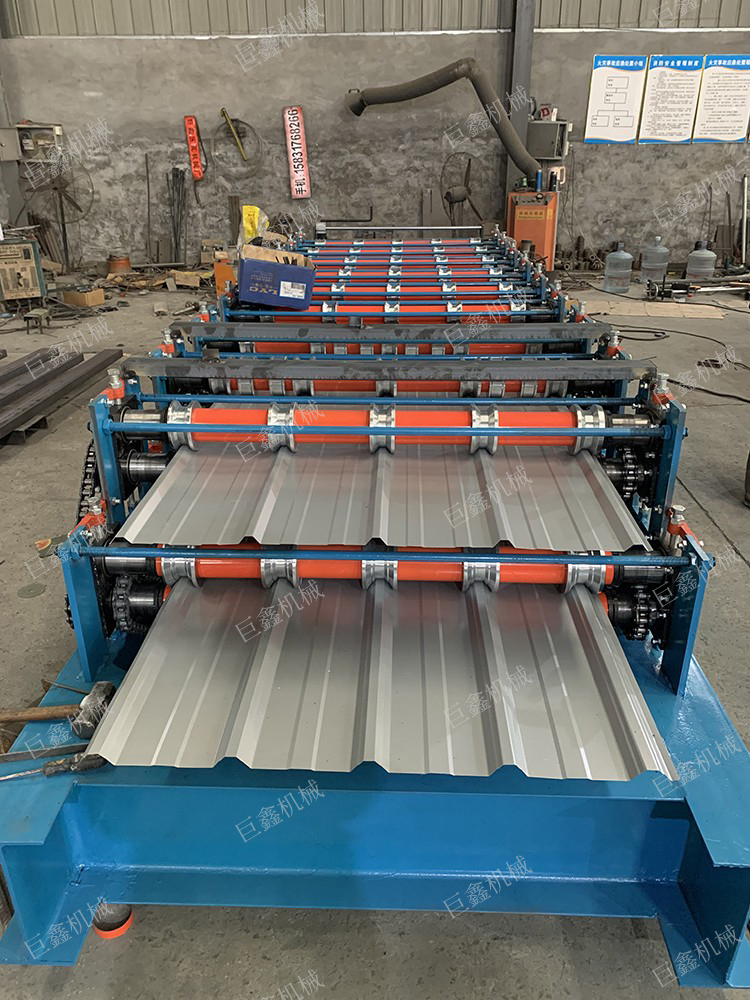
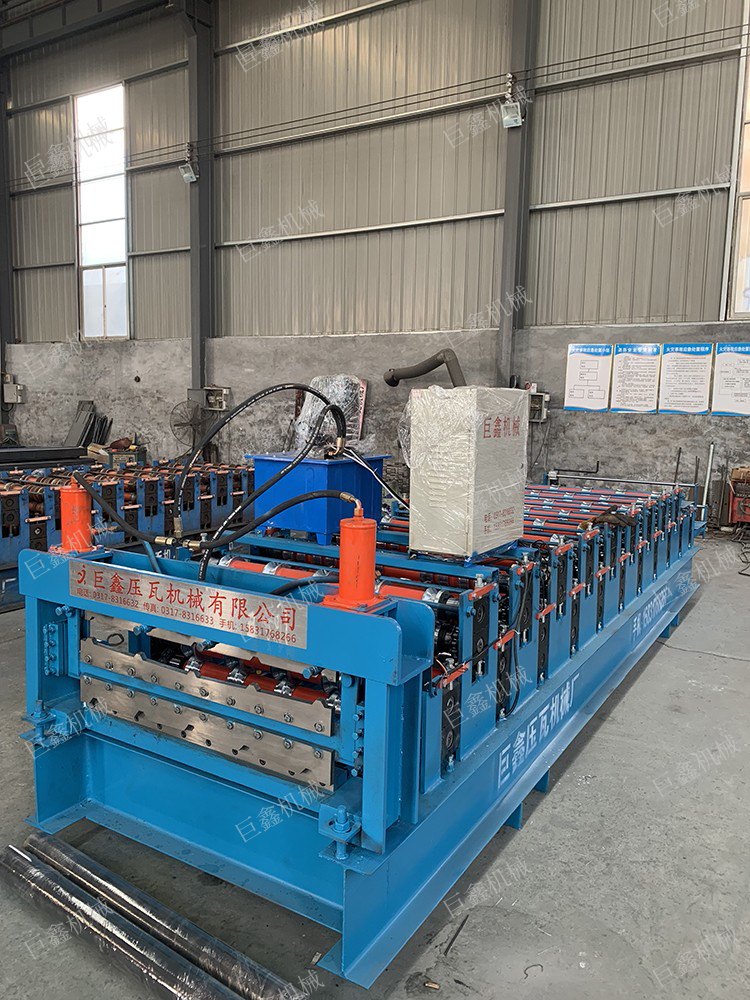
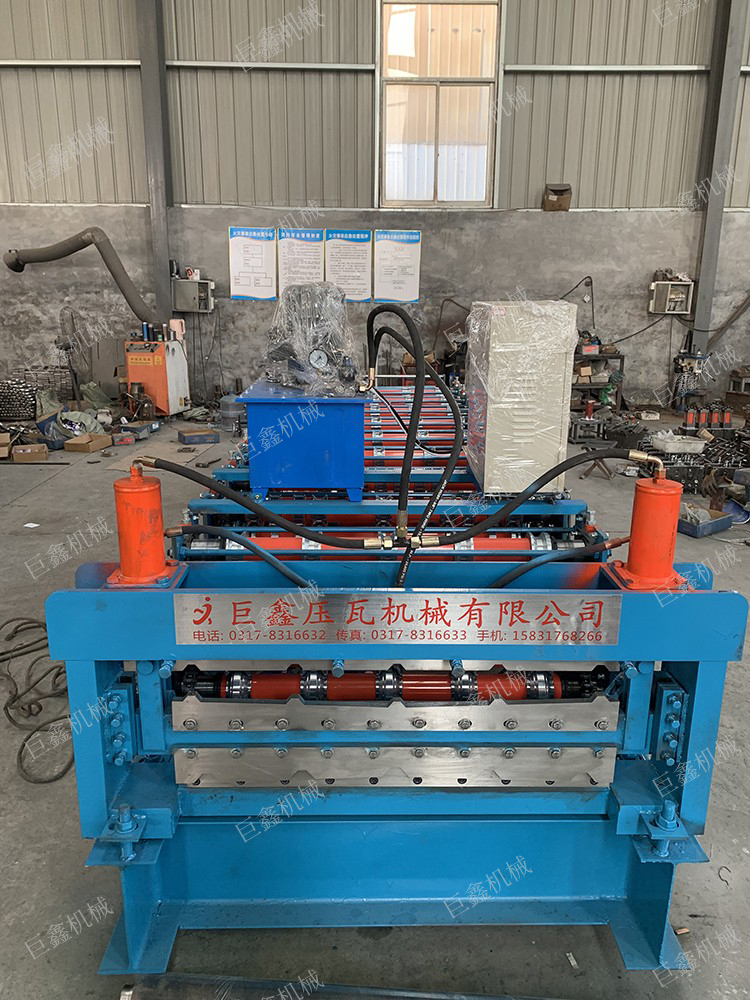
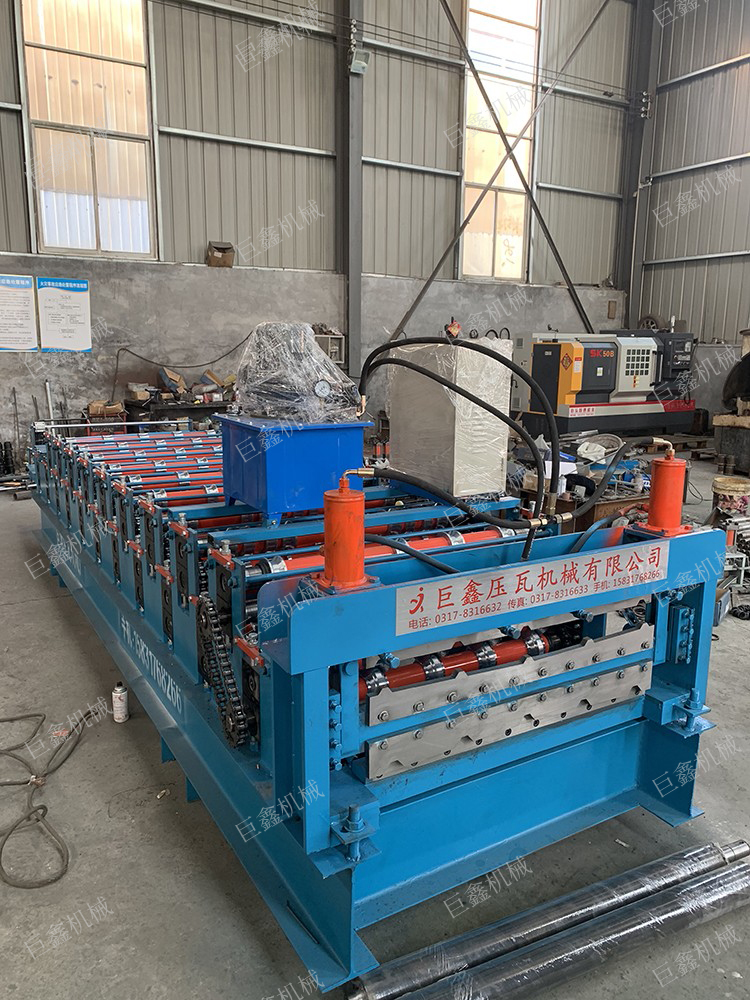
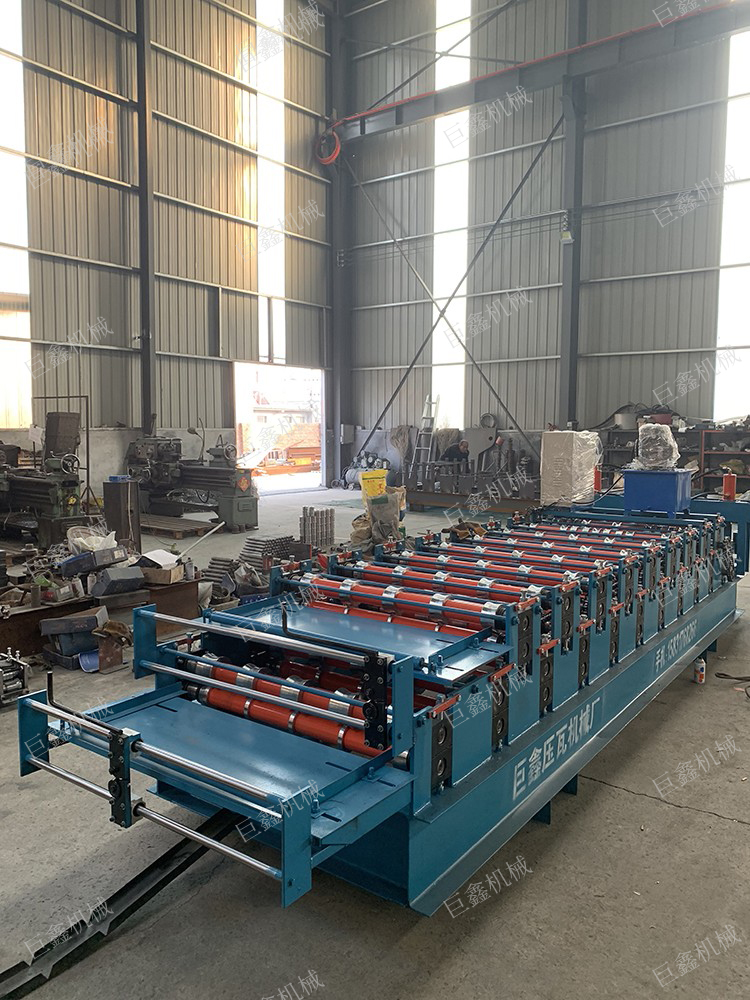
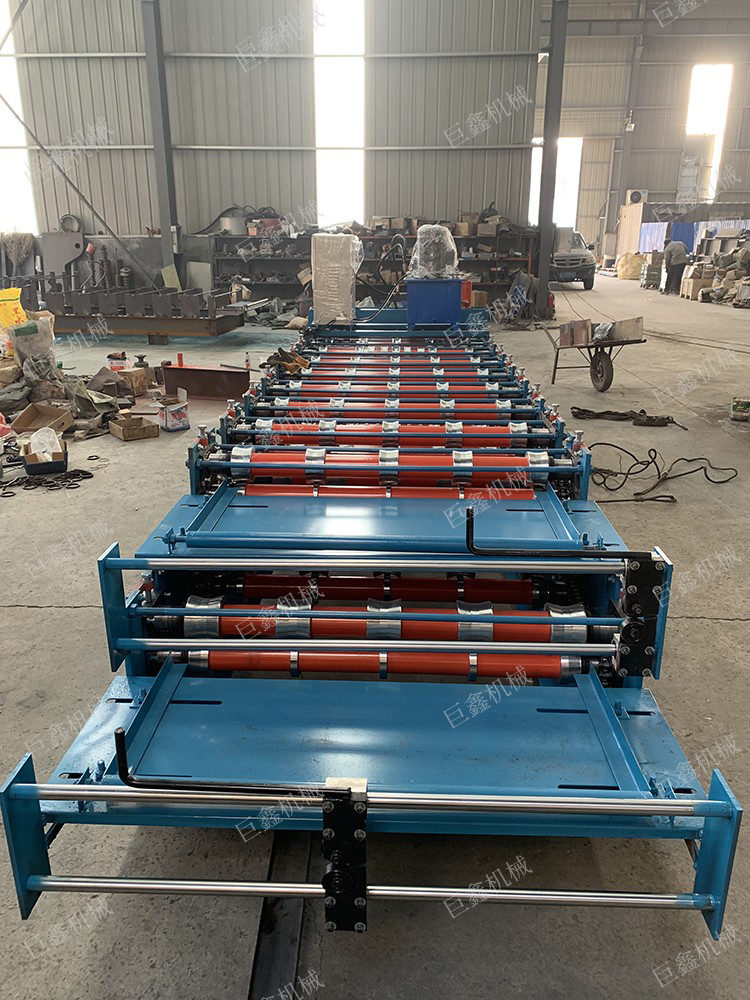
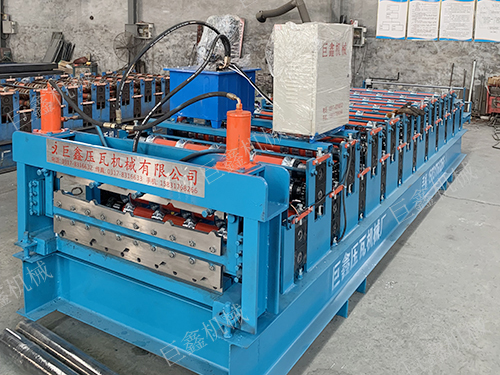
The 860-900 double-layer tile press is a classic fixed double plate cold bending and forming machine in the color steel industry. The whole machine shares a set of thickened main machine frames and is divided into two independent forming channels: the upper layer is specially processed for 860 type wall decoration hanging panels, and the lower layer produces 900 type roof waterproof color steel tiles. It relies on multiple progressive rollers to compress and deform at room temperature, rolling the color steel coil into wave arcs, overlapping tongue and groove, and reinforcing bars in one go. The equipment adopts pure cold pressing technology throughout the process, without high-temperature heating treatment, which can preserve the surface paint and galvanized anti-corrosion layer of the color steel plate intact, effectively preventing coating cracking and peeling during the bending process, ensuring the appearance and long-term outdoor weather resistance of the board. One device simultaneously covers two commonly used panels for exterior wall enclosure and roof waterproofing. Compared to purchasing two separate machines, it significantly saves factory floor space, reduces equipment investment, electrical wiring, foundation installation, and daily maintenance costs. It is a highly versatile main molding equipment for small and medium-sized color steel processing plants. The entire production line consists of a manual feeding rack, a bidirectional adjustable feeding guide assembly, a double-layer independent roller press host, a shared hydraulic cutting system, a variable frequency electric control cabinet, and a double-layer split discharge bracket. After the steel coil is put on the rack, the tile production can be changed by simply switching the feeding guide position. The entire process of feeding, step-by-step pressing, fixed length cutting, counting and discharging is automated, and the consistency of batch production dimensions is stable.
The overall base of the equipment is made of national standard channel steel and square tube welded together. After welding, it undergoes aging stress relief treatment to fully eliminate residual internal stresses in the frame welding, effectively offsetting the resonance of the machine body caused by the synchronous operation of the double-layer roller group, avoiding problems such as frame shaking and slight deformation during long-term continuous heavy load operation, and providing a high rigidity and stable bearing foundation for the double-layer roller assembly, transmission chain, and hydraulic pump station. The front-end is equipped with a universal steel coil feeding bracket, which is suitable for color steel coil materials with conventional width and inner diameter. The bracket is equipped with a damping braking device, which releases the steel strip at a constant speed based on damping resistance, avoiding feeding faults such as deviation, wrinkling, and edge flipping caused by the rapid loosening of the coil due to its own weight inertia. The feeding position is equipped with adjustable limit baffles on both sides, combined with upper and lower pressure rollers. When switching between 860 upper layer or 900 lower layer production, the guide position is synchronously adjusted to ensure that the metal strip is always straight and fed into the forming roller conveyor along the central axis of the equipment. From the source, the forming defects such as uneven wave peaks, misaligned overlapping edges, and side bending of the plate surface are controlled to ensure that the forming accuracy of the two standard tile shapes meets the industry's general acceptance standards.
The double-layer roller forming host is the core structure of this machine, and the upper roller group is arranged with multiple forming wheels according to the 860 wall tile section parameters. The surface of the board is flat, and the ribs are fine and regular. It is mainly used for wall enclosure, factory interior wall edge sealing, and wall top cover; The lower roller group matches the peak height and overlapping groove of 900 roof tiles, with a reasonable drainage slope and outstanding rainproof and anti-seepage performance. It is widely used in steel structure factories, warehouses, breeding sheds, and simple house roofs. Both layers of rollers follow the principle of multiple small step pressing, gradually extruding from shallow to deep to fully release the internal stress of the board bending, and maximize the protection of the color steel surface paint surface integrity. The rollers are precision machined with wear-resistant steel, and the working surface is quenched and hardened. The long-term continuous rolling of the color steel plate results in minimal wear. Heavy duty rolling bearings are installed at both ends of the roller shaft, ensuring smooth rotation and low resistance. The entire machine operates with low noise and vibration. The upper and lower layers are equipped with independent synchronous gear transmission systems to ensure that the speed of each set of upper and lower rollers is completely synchronized, preventing the steel strip from being stretched and thinned on one side. The wave spacing, wave height, effective coverage width, and overlap depth of the 860 and 900 plate types are strictly locked, and the tile joints are evenly spaced. The roof rainwater flow is smoothly guided, and the anti-seepage effect is reliable. The double-layer structure shares a set of main frames, with a compact and reasonable layout. The two forming channels operate without interfering with each other, and there is no need to disassemble the roller components for pattern switching. Only adjusting the feed guidance and control system parameters can quickly switch production, and the operation is simple and time-saving.
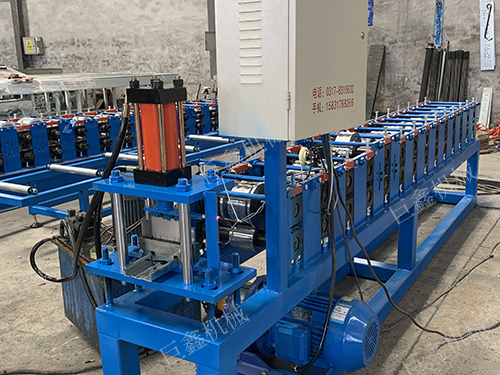
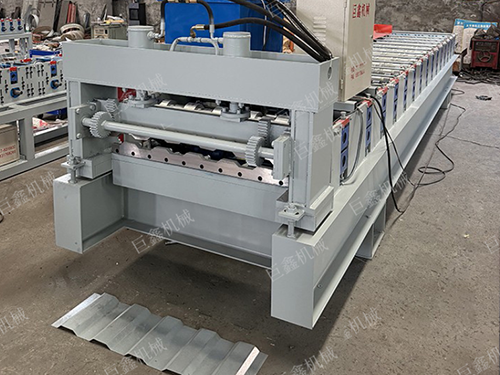
After the steel strip enters the corresponding level and completes complete roll forming, it is transported to the shared hydraulic cutting station at the tail end. The gantry type hydraulic knife holder has width compatibility and can cut 860 wall panels and 900 roof panels separately. The tool closure gap is tight, the cutting section is smooth and flat, without burrs or curled edges, and does not require manual secondary polishing and finishing. The equipment is equipped with a high-precision pulse length counting system. The operator inputs the required length of the finished product for the order on the electronic control panel. When the board runs to the set size, it automatically triggers a complete cycle of hydraulic cutting, counting, and oil cylinder reset. The cutting error is small, meeting the standardized cutting requirements of construction engineering. The cut 860 wall panels and 900 roof panels slide down along the upper and lower independent discharge brackets, making it easy to separate and stack, bundle and pack.
The power transmission system is equipped with a variable frequency speed controller, which can flexibly adjust the operating speed of the whole machine according to the thickness of the color steel plate, reduce the mechanical impact of the double-layer transmission gears, bearings, and chains during start stop and load changes, reduce component wear, and extend the overall service life of the equipment. The layout of the buttons on the centralized electronic control console is clear. By selecting the production level, setting the length and running speed of the board, fully automatic production can be started, achieving automatic feeding, double-layer roll forming, automatic hydraulic cutting, and automatic counting closed-loop operation. After a brief explanation, operators can proficiently complete tile type switching and daily on duty production. All exposed gears, shafts, and transmission chains of the entire machine are equipped with enclosed safety protective shells to prevent paint debris from falling into the operating gaps during processing, while meeting the safety operation standards of mechanical equipment.
The 860-900 double-layer tile press is mainly suitable for raw materials such as color steel coated coils and galvanized color steel strips. The 900 roof tile arch structure produced is resistant to pressure and wind, with tongue and groove overlap to prevent rainwater leakage. The 860 wall tiles have good flatness and strong decorative properties. The combination of the two types of panels can fully cover the roof and exterior walls of a steel structure building. The dual plate all-in-one machine occupies less space, and the later maintenance is centralized and convenient. The on-site installation and overlapping of formed boards are easy, and old and locally damaged parts can also be replaced separately, with strong turnover and reusability.
The equipment is a floor to ceiling integrated fixed structure, with a sturdy rack and standardized installation and debugging processes. The daily maintenance work is simple and easy to carry out, mainly by regularly adding lubricating grease to the double-layer transmission bearings, gears, and chains, cleaning the dust and paint debris adhering to the roller surface layer by layer, checking for oil leakage in the hydraulic pump station pipeline, verifying the sharpness of the hydraulic cutting edge, and regularly calibrating the coaxiality and feed guide clearance of the double-layer roller group. According to the regular maintenance cycle, the equipment can produce 860 type wall tiles and 900 type roof tiles in a stable and uninterrupted rotation for a long time. The 860-900 double-layer tile press, with its mature fixed double tile integrated architecture, meets the dual processing needs of roofs and wall panels, and has become a widely used economical tile press forming equipment in the color steel building materials processing industry with high cost-effectiveness and high space utilization.