
You are here:HOME > PRODUCT > Double layer tile press machine >
840-900 double-layer tile press machine
13803170595

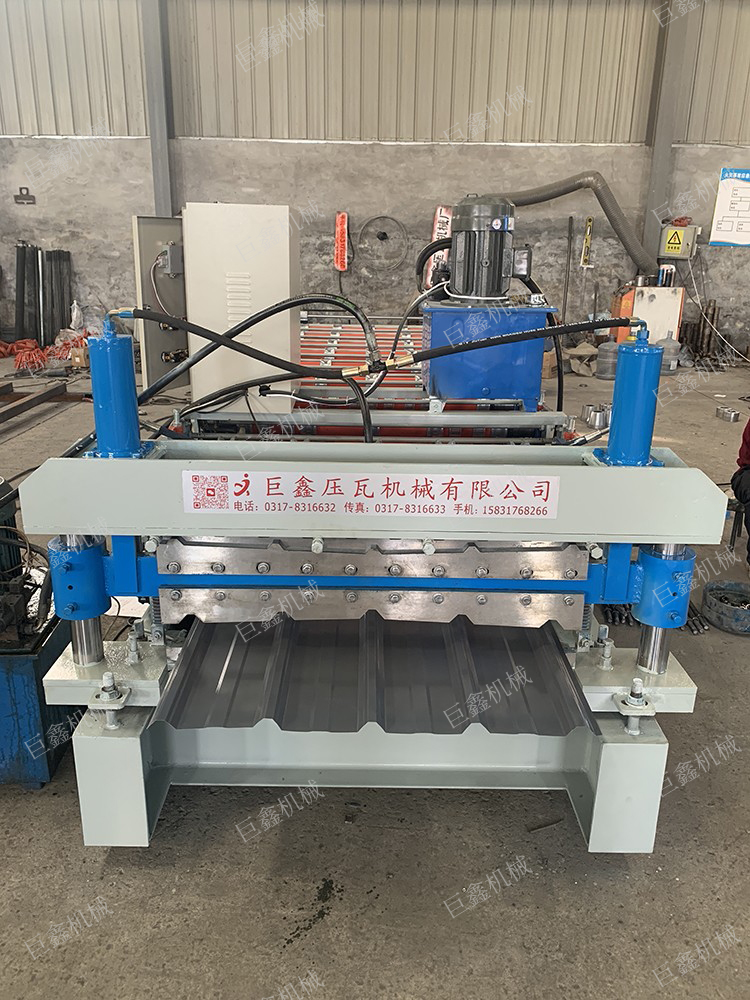
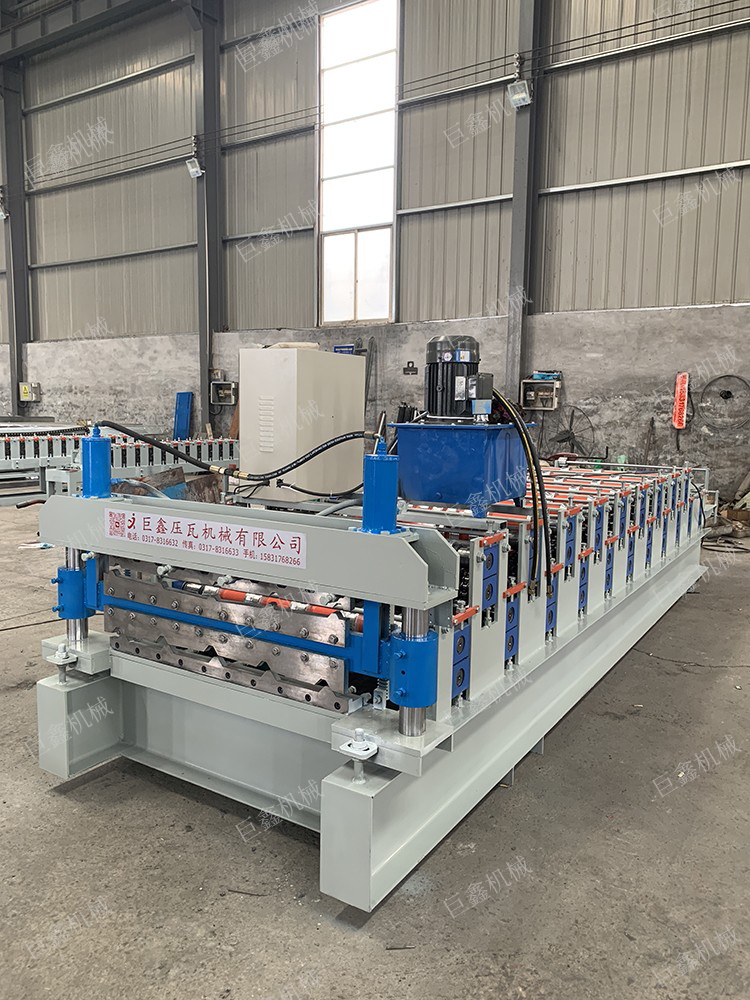
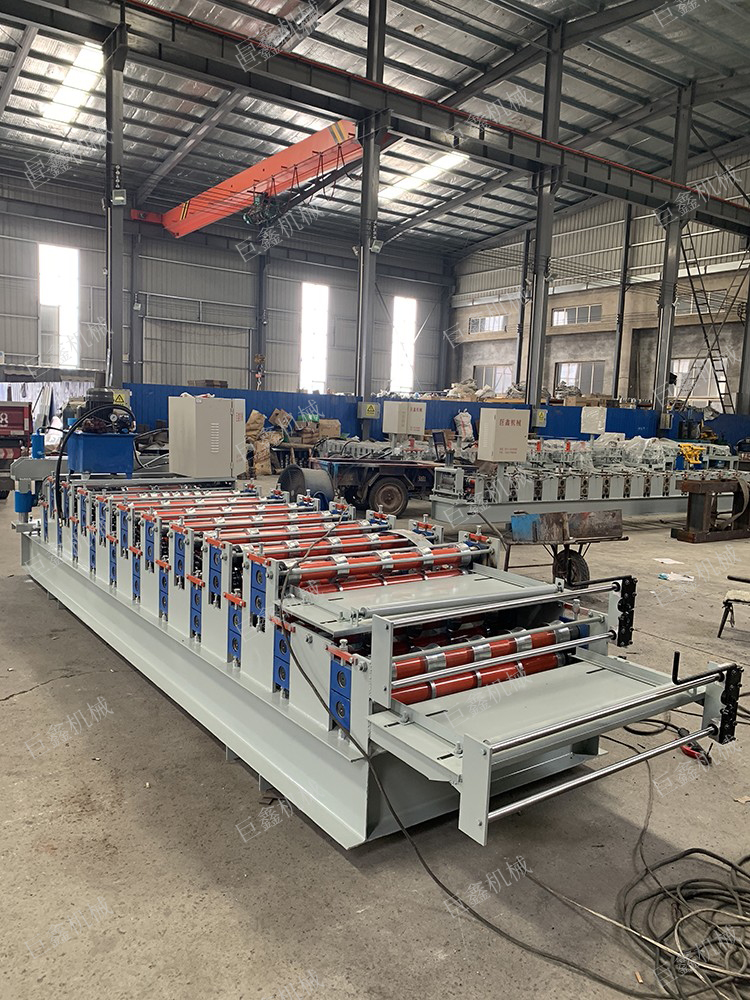
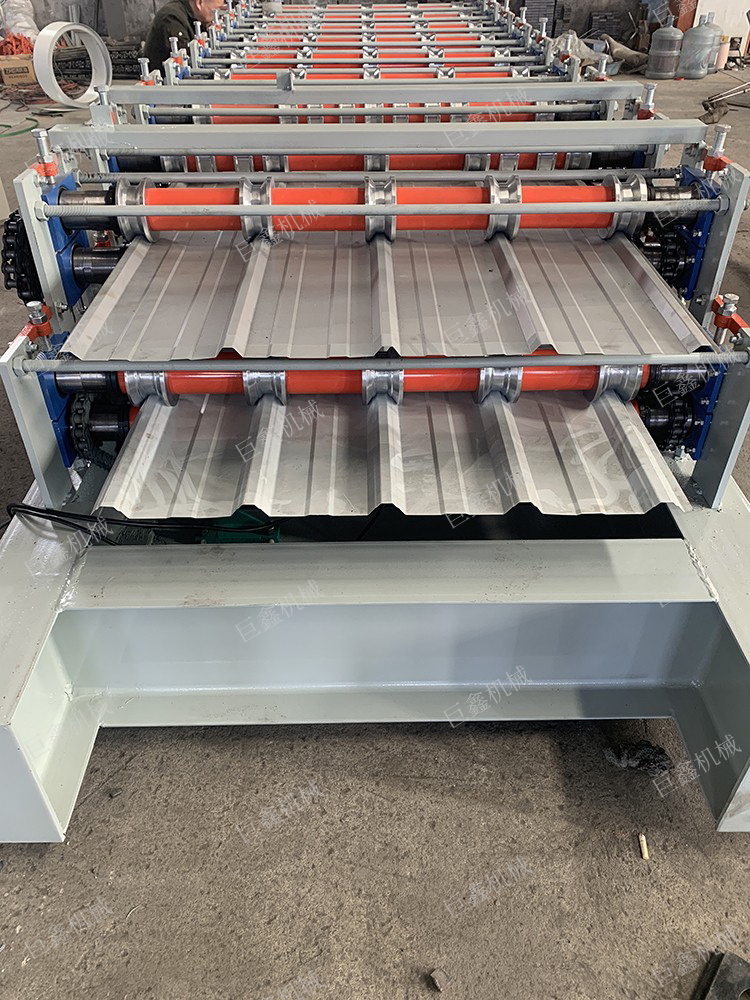
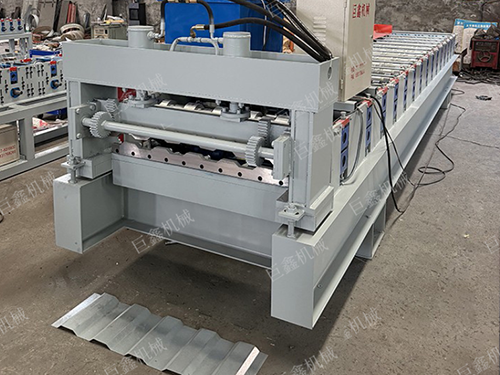
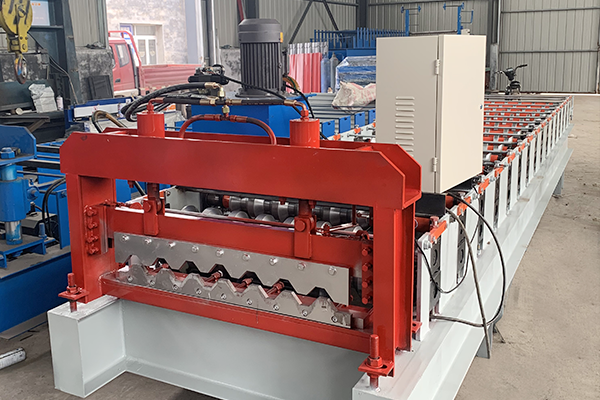
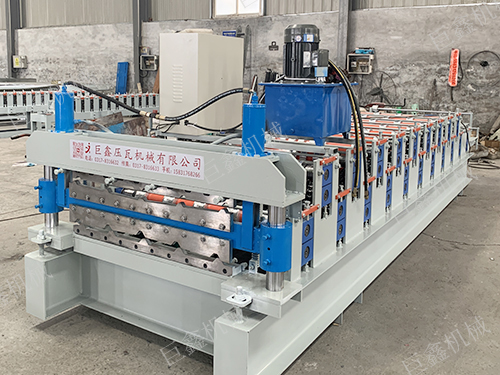
The 840-900 double-layer tile press is a highly versatile dual tile integrated forming equipment in the color steel processing industry. It adopts an integrated thickened main frame and is divided into two independent roller forming channels on the upper and lower layers. The upper roller group accurately forms 840 type color steel roof tiles, and the lower roller group processes 900 type color steel roof tiles. By relying on multiple stages of gradual room temperature roller rolling deformation technology, the color steel coil is pressed into a complete roof panel with wave curvature, drainage wave peaks, and side overlapping tongue and groove. The entire process of the machine adopts cold pressing molding technology, without high-temperature heating process, which can preserve the paint coating and galvanized anti-corrosion layer on the surface of the color steel plate intact, avoiding stress cracking and peeling off of the coating during the bending process of the plate, ensuring the appearance quality of the finished plate and long-term outdoor corrosion resistance and weather resistance. Compared to purchasing two single-layer tile pressing equipment separately, the double-layer integrated structure significantly reduces the occupied area of the factory building, reduces multiple costs of equipment procurement, circuit laying, foundation construction, and daily operation and maintenance, and is suitable for processing plants to undertake different roof pattern orders for alternating production and use. The entire production line consists of a manual feeding bracket, an adjustable feeding guide and correction mechanism, a double-layer independent roll forming host, a shared hydraulic cutting assembly, a variable frequency control system, and a double-layer split discharge bracket. After the steel coil is erected in place at once, only the feeding guide position and system parameters can be adjusted to switch tile shapes. The entire process of feeding, step-by-step pressing, fixed length cutting, counting and discharging is fully automated, and the size of the batch produced sheet metal is uniform, and the forming stability is reliable.
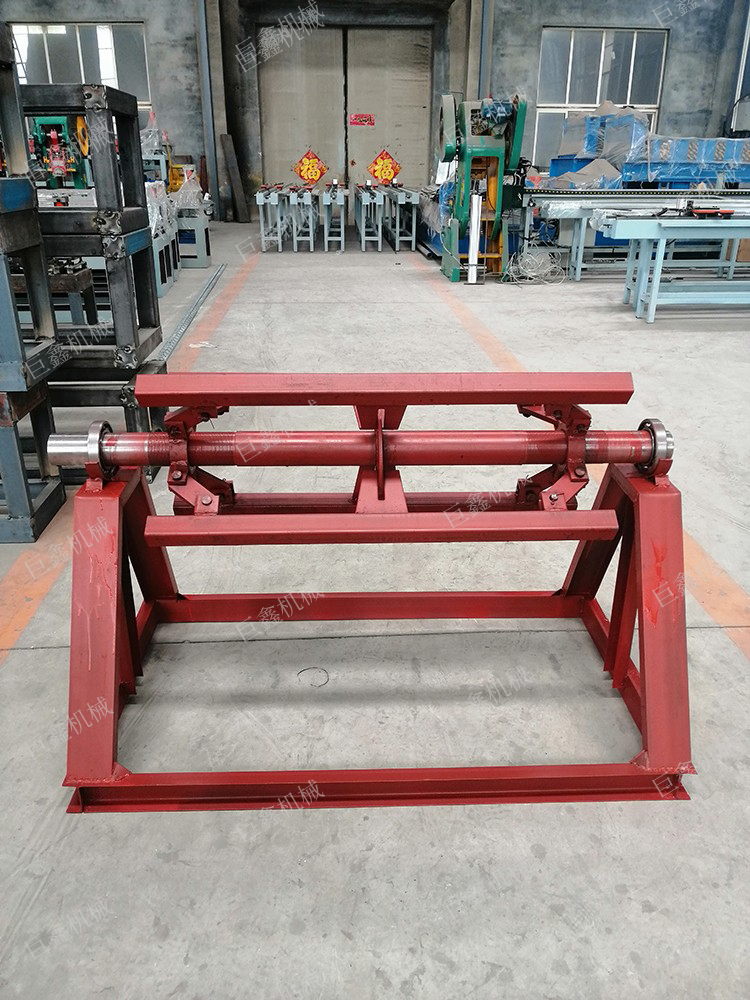
The equipment base is formed by welding national standard channel steel and thickened square tube as a whole. After welding, it is subjected to aging stress relief treatment to completely release the internal residual stress generated by welding, effectively weaken the resonance of the machine body caused by the synchronous operation of the double-layer roller group, and prevent problems such as rack shaking and slight deformation of the frame caused by long-term full load continuous operation of the equipment. This provides a high-strength and high stability bearing base for the double-layer roller assembly, transmission chain, and hydraulic pump station. The front end is equipped with a universal steel coil feeding rack, which is suitable for the industry's conventional inner diameter and width of color steel coil materials. The bracket is equipped with a damping braking structure, which releases the steel strip at a constant speed by relying on damping resistance to avoid feeding faults such as deviation, wrinkling, edge warping, and skewed feeding caused by rapid loosening of the coil due to its own weight inertia. The feeding area is equipped with a wide range adjustable limit baffle and upper and lower pressure rollers. When switching between 840 upper layer or 900 lower layer production, the guide spacing is synchronously adjusted to ensure that the metal strip always enters the corresponding forming roller conveyor along the central axis of the equipment, eliminating forming defects such as inconsistent wave peaks, misaligned overlapping edges, and side bending of the plate surface from the source, and ensuring that all parameters of the two standard tile types meet the industry's universal acceptance standards.
The double-layer roller forming host is the core component of this equipment, and the upper and lower roller wheel systems are arranged with forming wheel sets according to two exclusive cross-sectional parameters for roof tiles, 840 and 900. The 840 version has a moderate peak height, effective coverage is regular, roof paving is tightly overlapped, and drainage is smooth; The 900 version has higher laying efficiency, stronger overall rigidity, and excellent wind pressure resistance. Both are the most commonly used roof waterproofing materials for factories, warehouses, breeding sheds, steel structure warehouses, and simple houses. The two-layer rollers all follow the forming logic of small deformation in stages, gradually extruding the corrugated surface and locking edge overlap groove from shallow to deep, dispersing and bending multiple times to fully release the internal stress of the board, and protecting the integrity of the color steel paint surface to the maximum extent possible from damage. The rollers are made of wear-resistant steel for precision machining, and the working surface has undergone quenching and hardening treatment. The long-term continuous rolling of the color steel plate has a low wear coefficient. Heavy duty silent rolling bearings are installed at both ends of the roller shaft, resulting in low rotational resistance and smooth operation with minimal vibration. The upper and lower layers are each equipped with independent synchronous gear transmission mechanisms to ensure that the speed of each pair of upper and lower paired rollers is completely consistent, avoiding the steel strip from being stretched thin on one side. The wave spacing, wave height, effective coverage width, and overlap depth of the 840 and 900 watt types are strictly controlled. After the panels are spliced, the gaps are tight, and rainwater is not easy to penetrate. The waterproof performance of the roof is stable. The double-layer structure shares a set of main frames, with a compact and orderly layout. The two forming channels operate without interfering with each other, and the tile switching does not require dismantling the roller components, making the operation convenient and time-saving.
After the color steel plate is fully rolled and shaped at the selected level, it is transported to the shared hydraulic cutting station at the end of the equipment. The gantry hydraulic knife holder has good width compatibility and can cut two different widths of plates, 840 and 900, respectively. The tool closure gap is precise, the cutting section is flat and smooth, without burrs or curled edges, and does not require manual secondary polishing and finishing. The equipment is equipped with a high-precision pulse length measurement and counting module. The operator inputs the required cutting length of the finished product on the electronic control panel. When the sheet runs to the set size, it will automatically trigger a complete cycle of hydraulic cutting, counting, and oil cylinder reset. The cutting error is small, fully meeting the standardized cutting requirements of construction projects. The two types of roof tiles that have been cut slide down along the independent inclined discharge brackets on the upper and lower layers, making it convenient for workers to classify, stack, and bundle them.
The power transmission system is equipped with a variable frequency speed controller, which can flexibly adjust the operating speed of the whole machine according to the thickness of the color steel plate, reduce the mechanical impact of the double-layer transmission gears, bearings, and chains during start stop and load fluctuation, delay the wear speed of components, and extend the overall service life of the equipment. The layout of the centralized electronic control console is simple and easy to understand. By selecting the forming level, setting the length and running speed of the board, the fully automatic production mode can be started, realizing automatic feeding, double-layer roll forming, automatic hydraulic cutting, and automatic counting closed-loop operation. After simple explanation and training, operators can independently complete tile switching debugging and daily production duty. All exposed transmission gears, shafts, and transmission chains of the entire machine are uniformly equipped with enclosed safety protection shells to prevent paint debris from falling during processing from entering the mechanical operation gap, while complying with the general safety operation specifications for mechanical equipment.
The 840-900 double-layer tile press is mainly suitable for commonly used roofing raw materials such as color steel coated coils and galvanized steel strips. Both formed tile types have arch shaped mechanical structures, outstanding bending and compression resistance, and resistance to outdoor wind loads. The tongue and groove overlap design can efficiently divert rainwater, reduce leakage hazards, and is widely used in roof topping construction of various steel structure buildings. The intensive design of the one machine dual plate type optimizes the utilization of workshop space, making centralized maintenance and repair more worry free. The formed color steel tiles are easy to lift and lay on site, and local roof damage can be replaced separately in the later stage, resulting in a high reuse rate.
The equipment is a fixed structure with a solid and rigid frame, and the installation and debugging process is standardized. The daily maintenance operation is simple and routine, mainly including regularly adding lubricating grease to all transmission bearings, gears, and chains of the double-layer, cleaning the dust and paint debris adhering to the roller surface layer by layer, checking for leakage in the hydraulic pump station pipeline, verifying the integrity of the hydraulic cutting edge, and regularly calibrating the coaxiality of the double-layer roller group and the feed guide clearance. According to the established cycle standards, maintenance is carried out, and the equipment can produce 840 and 900 standard roof color steel tiles in a stable and alternating manner for a long time. The 840-900 double-layer tile press relies on a mature dual plate integrated cold bending structure, covering the processing needs of two mainstream roof panels with less investment. It is an economical and automated forming equipment with outstanding cost-effectiveness in the field of color steel building materials processing.