
You are here:HOME > PRODUCT > Double layer tile press machine >
840-800 anti resin tile double-layer pressing machine
13803170595

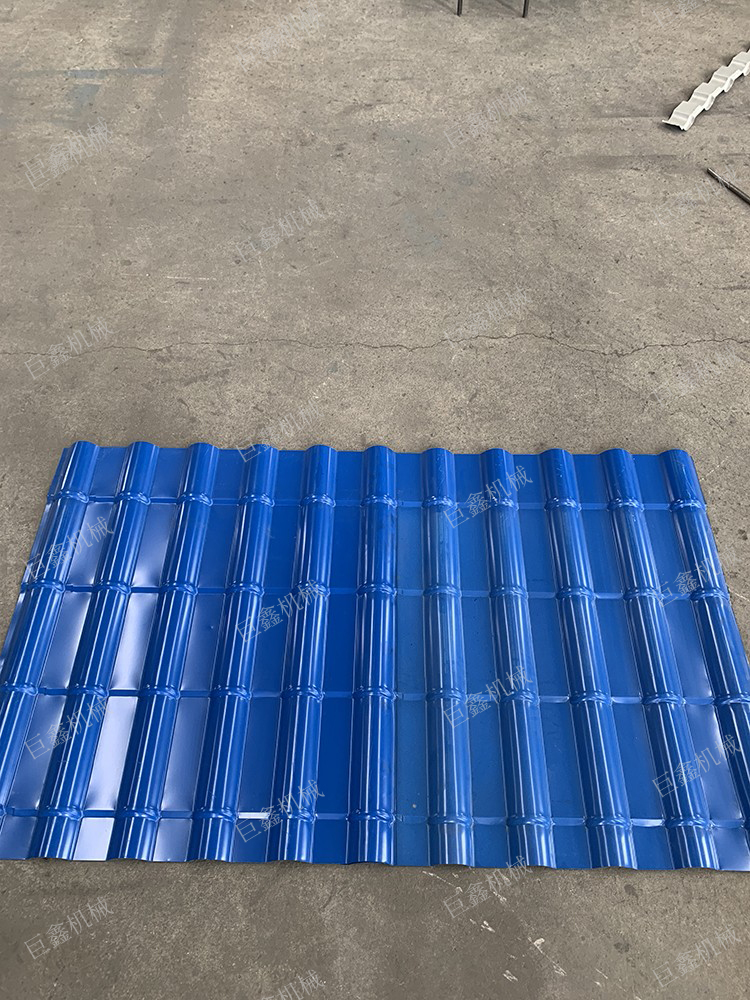
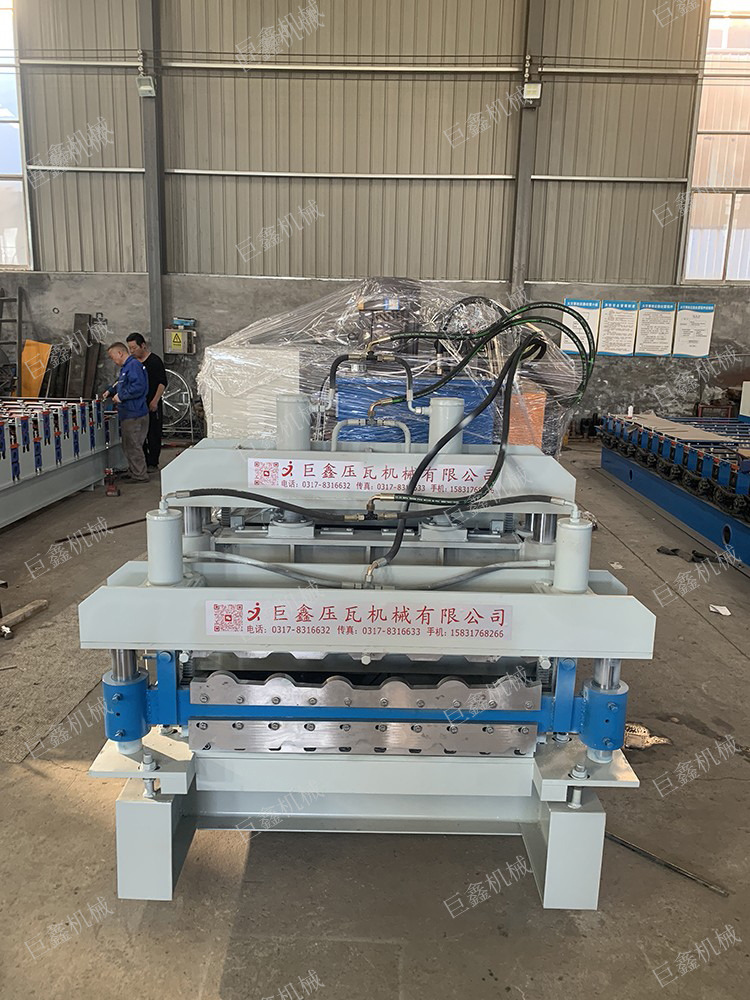
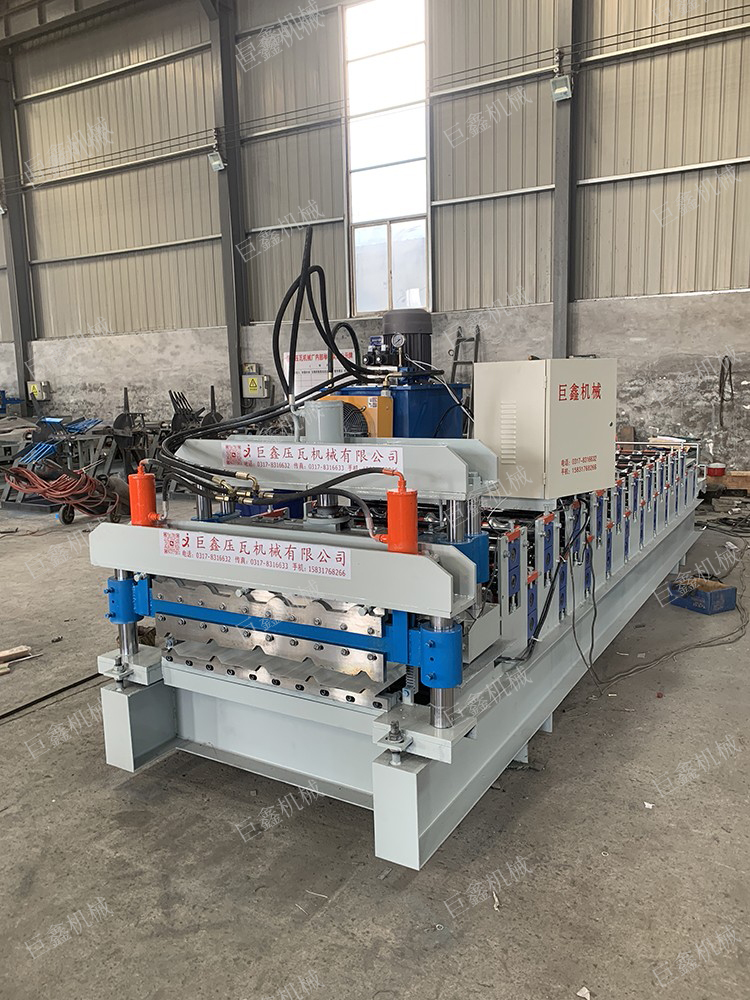
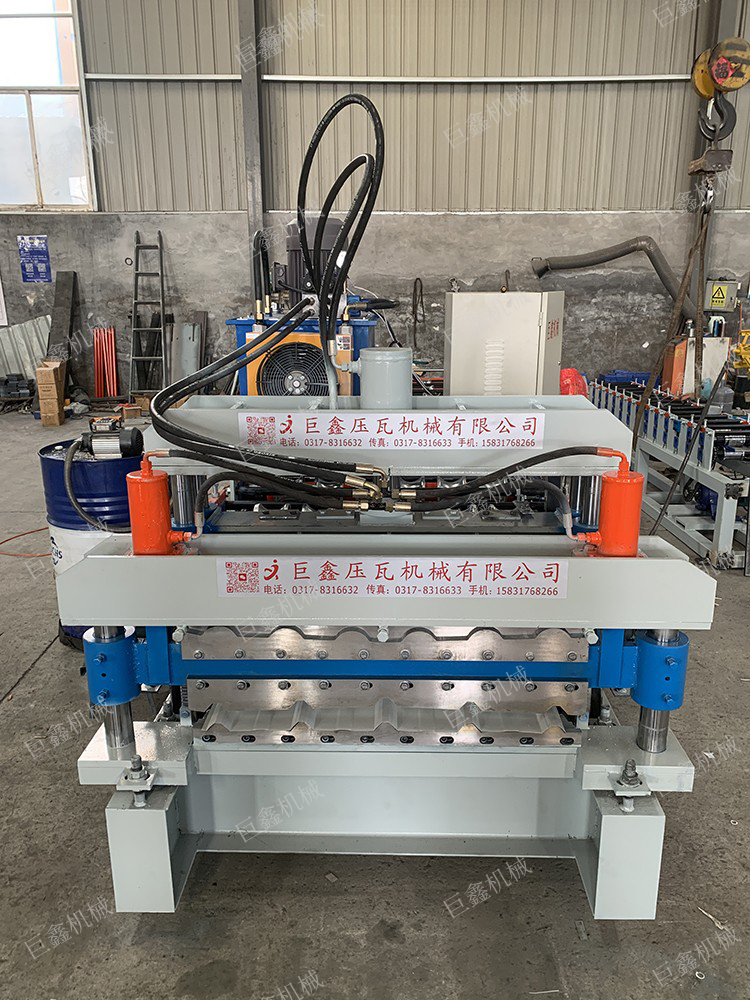
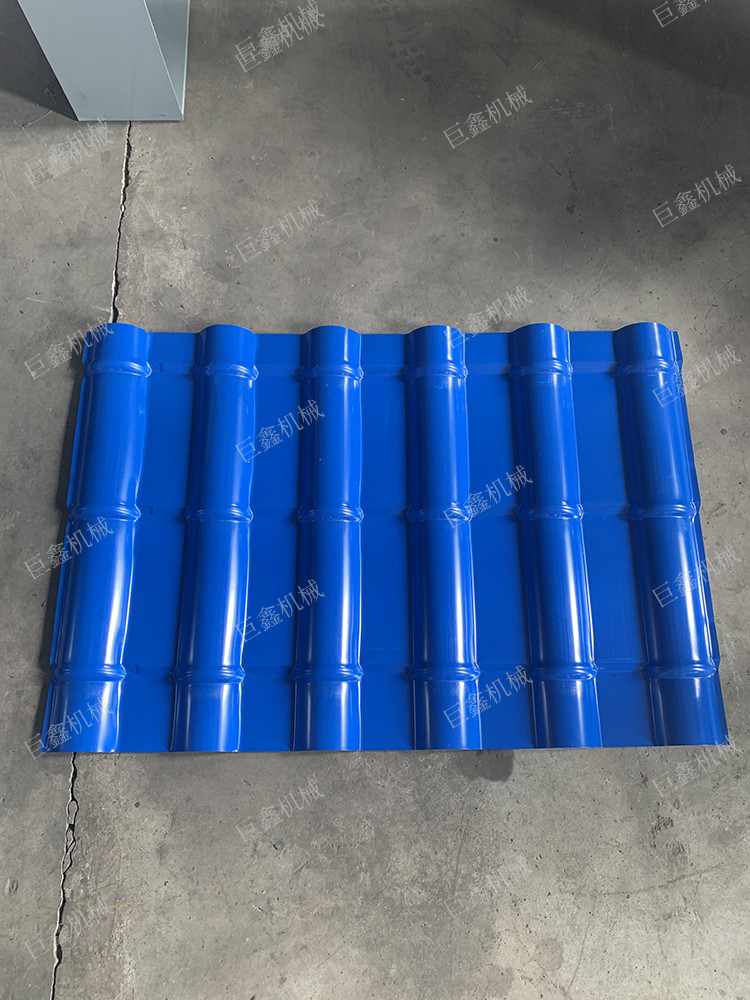
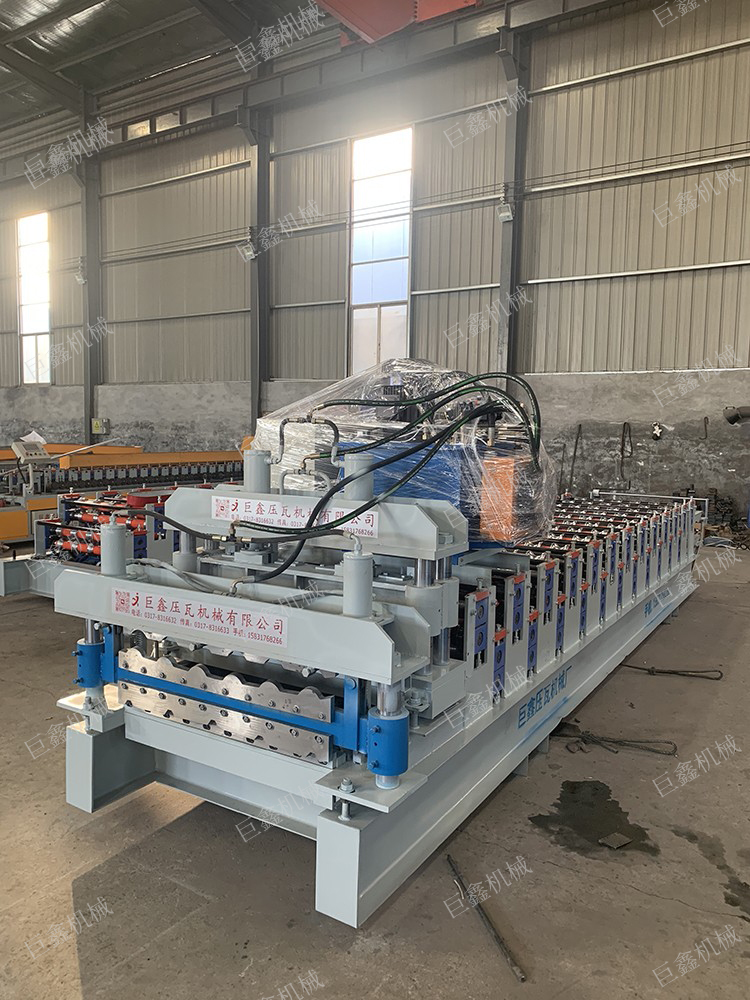
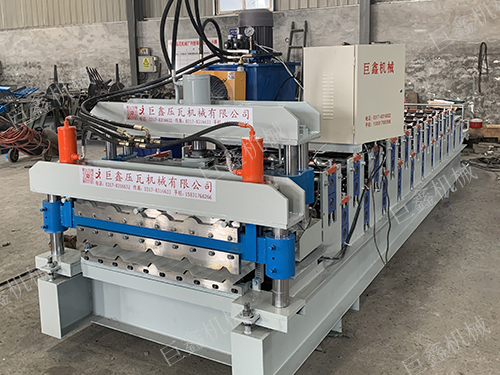
The 840-800 imitation resin tile double-layer pressing machine is a double-layer integrated color steel cold bending forming equipment that focuses on the appearance of antique glass. It shares a set of heavy-duty main frame and is equipped with two independent rolling systems on the upper and lower sides. The upper layer accurately rolls 840 type antique metal glass tiles, and the lower layer produces 800 type imitation resin metal tiles with stronger three-dimensional curvature. Relying on multiple progressive room temperature rolling deformation processes, it presses raw materials such as color steel coils, stainless steel coils, aluminum plates, etc. into decorative roof panels with antique arc corrugated, drip eaves, and overlapping lock edge structures. The entire process of pure cold pressing molding is not subjected to high temperature treatment, and the surface paint and nano anti-corrosion coating of the board are well preserved to avoid cracking and peeling of the paint surface caused by bending stress. The finished tiles have a strong sense of three dimensionality, and the visual effect is close to synthetic resin glazed tiles, balancing the durability of metal sheets with the aesthetic decoration of antique building materials. Compared to purchasing two single machines separately, the double-layer integrated machine significantly reduces the occupied area of the factory, lowers the comprehensive costs of equipment procurement, circuit layout, site infrastructure, and daily maintenance, and is very suitable for mass production of differentiated antique roof orders such as new rural roof renovation, antique homestays, scenic area buildings, villa roofs, and garden structures. The entire production line consists of a manual feeding rack, a stainless steel adjustable feeding platform, a double-layer independent roller press host, a slide hydraulic shearing assembly, a PLC variable frequency electric control system, and a double-layer split discharge bracket. After the steel coil is lifted and loaded in one go, only the feeding guide position and system parameters can be adjusted to quickly switch between 840 and 800 plate types. The automation closed-loop completes the entire process of feeding, step-by-step three-dimensional pressing, fixed length hydraulic shearing, counting and discharging. The batch forming of tile shapes has regular curvature and controllable size errors.
The base of the equipment is made of national standard H-shaped steel and thickened channel steel, which are welded together to form a whole. After welding, the aging stress relief treatment is carried out to completely release the residual internal stress of the frame welding, effectively offsetting the resonance of the machine body caused by the synchronous high-speed operation of the double-layer roller group, and preventing problems such as frame shaking and slight deformation of the side plate during long-term full load continuous operation. This provides a high rigidity and stable bearing base for the double-layer heavy-duty roller assembly, external transmission chain, and high-power hydraulic pump station. The front-end configuration is equipped with a widened universal steel coil feeding support frame, which is suitable for color steel, stainless steel, and aluminum coil materials with a conventional unfolding width of 1 meter. The bracket is equipped with a damping braking damping structure, which releases the steel strip at a constant and gentle speed to prevent feeding faults such as deviation, wrinkling, edge flipping, and plate surface distortion caused by the inertia loosening of the coil weight. The feeding area is equipped with a wide range of adjustable limit baffles and upper and lower pressure rollers. When switching between the upper 840 version or the lower 800 version for production, the guide gap is synchronously calibrated to ensure that the metal strip is always straight and fed into the forming roller conveyor along the central axis of the equipment. From the source, it controls the appearance defects such as inconsistent arc curvature of the antique tile, misaligned overlapping eaves, and side bending of the running board, ensuring that the three-dimensional shape of the two antique tiles is full and symmetrical.
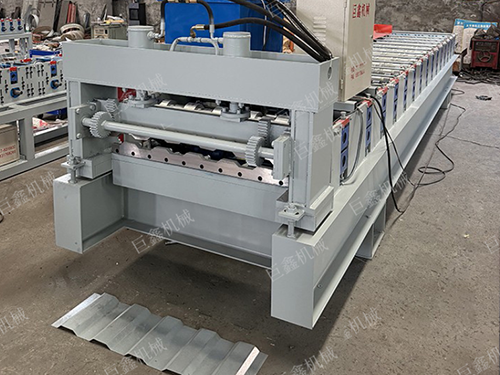
The double-layer roll forming host is the core structure of this equipment. Both the upper and lower layers are designed with multiple rows of heavy-duty solid spindle roller sets. The 840 layer roller wheels are arranged according to the conventional antique glazed tile curvature to form the wheels, with a regular tile surface and strong universal overlap; The 800 layer roller deepens the circular wave shape, giving a three-dimensional appearance closer to synthetic resin tiles. The drainage ditch is deeper, and the roof's water guiding and anti-seepage performance is more outstanding. The two-layer rollers all follow the small angle multiple step molding process, gradually extruding from shallow to deep to create an antique curved surface, side tongue and groove, and front drip eaves structure. Multiple dispersed bending fully releases the internal stress of the board, and maximizes the protection of the anti-corrosion decorative layer on the surface of the board from damage. The rollers are made of bearing steel or 45 steel precision turning processing, and the working surface is quenched and hardened, chrome plated and wear-resistant treated. The wear of stainless steel and thick color steel plates is minimal after long-term rolling. The 70mm thick solid spindle is matched with national standard heavy-duty bearings, resulting in low rotational resistance, low vibration and noise during machine operation. The upper and lower floors are equipped with independent synchronous gears and external chain transmission mechanisms to ensure that the speed of each set of paired rollers is completely synchronized, avoiding the steel strip from being stretched thin on one side. The wave spacing, wave height, effective coverage width, and locking edge depth of the two types of plates are strictly locked. After tile paving, the splicing gaps are fine, and the overall appearance of the antique roof is coherent and atmospheric. The double-layer structure shares a single main frame, which is compact and does not interfere with each other. The pattern switching does not require disassembling the roller components, and only fine-tuning the feeding platform and electrical control parameters can complete the production change. Debugging is simple and time-saving.
After the metal sheet is fully three-dimensional rolled and shaped at a selected level, it is transported to the shared double guide column hydraulic shearing station at the end of the equipment. The dovetail slide type thickened knife holder is suitable for cutting two different widths of antique tiles. The blade is made of high hardness alloy material, and the cutting edge of the stainless steel sheet is still sharp. The cutting section is flat without burrs or curled edges, and does not require manual secondary polishing and finishing. The equipment is equipped with a high-precision pulse length counting module. The operator inputs the required cutting length of the finished product on the color touch screen electronic control panel. When the board runs to the set size, it automatically triggers a complete cycle of hydraulic cutting, counting, and oil cylinder reset. The precision of fixed length cutting is high, and it can be strictly cut in sections according to the standardized size of the roof paving. The 840 and 800 antique tiles that have been cut can slide smoothly along the independent inclined discharge brackets of the upper and lower layers, effectively preventing the tile shape from colliding and deforming, and facilitating the classification, stacking, packaging, and bundling of the workers.
The power transmission system is equipped with an independent variable frequency speed controller, which can flexibly adjust the overall operating speed of the machine according to the different thicknesses of color steel plates, stainless steel plates, and aluminum plates, reduce the mechanical impact of double-layer transmission gears, bearings, and chains during start stop and load fluctuations, delay component wear, and extend the overall service life of the equipment. The centralized touch control system is intuitive and easy to understand to operate. By selecting the forming level, setting the length and running speed of the board, the fully automatic production mode can be started, realizing the closed-loop operation of automatic feeding, double-layer antique tile roll forming, automatic hydraulic cutting, and automatic counting. After a brief calibration training, the operator can independently complete the pattern switching and daily production on duty. All exposed transmission gears, shafts, and external chains of the entire machine are uniformly equipped with enclosed safety protection shells to prevent paint and metal debris from falling during processing from entering the gaps of mechanical operation, while complying with general safety operating standards for mechanical equipment.
The 840-800 imitation resin tile double-layer pressing machine can process various raw materials such as colored coated steel coils, galvanized sheets, stainless steel coils, nano aluminum plates, rubber composite insulation boards, etc. After molding, the two antique metal tiles rely on the arch mechanical structure to enhance the overall bending and compression resistance of the roof, and have excellent outdoor wind pressure and hail resistance performance. The tongue and groove overlapping structure efficiently diverts rainwater and reduces roof leakage hazards. Compared to traditional clay glazed tiles, metal antique tiles are lighter in weight, have a shorter installation period, and have stronger anti-corrosion and weather resistance. They are widely used in beautiful rural slope conversion projects, antique temples, supporting buildings in cultural and tourism scenic spots, farm homestays, courtyard gatehouses, factory roof decoration and other scenes. The intensive design of one machine with dual antique version optimizes the utilization rate of workshop space, making centralized maintenance and repair more convenient. The on-site lifting and laying of formed tiles is easy, and partial damage in the later stage can be replaced by a single piece, resulting in a high reuse rate.
The equipment is a fixed heavy-duty structure with a solid load-bearing frame, and the foundation installation and debugging process is standardized. The daily maintenance operation is simple and standardized, mainly including regularly adding lubricating grease to all double-layer transmission bearings, gears, and external chains, layer by layer cleaning of paint debris and dust impurities adhered to the surface of the rollers, checking for leaks in the hydraulic pump station air cooling system and pipelines, verifying the integrity of the hydraulic cutting edge, regularly calibrating the coaxiality of the double-layer roller group and the clearance of the feeding guide platform. According to the established cycle of basic maintenance, the equipment can produce 840 type antique glazed tiles and 800 type resin imitation three-dimensional metal tiles in a stable and alternating manner for a long time. The 840-800 imitation resin tile double-layer pressing machine, with its double antique tile type integrated cold bending structure, balances decorative aesthetics and processing practicality, providing a cost-effective and space efficient automated molding solution for antique roof building material processing factories.