
You are here:HOME > PRODUCT > Container board forming machine >
Container board machine
13803170595

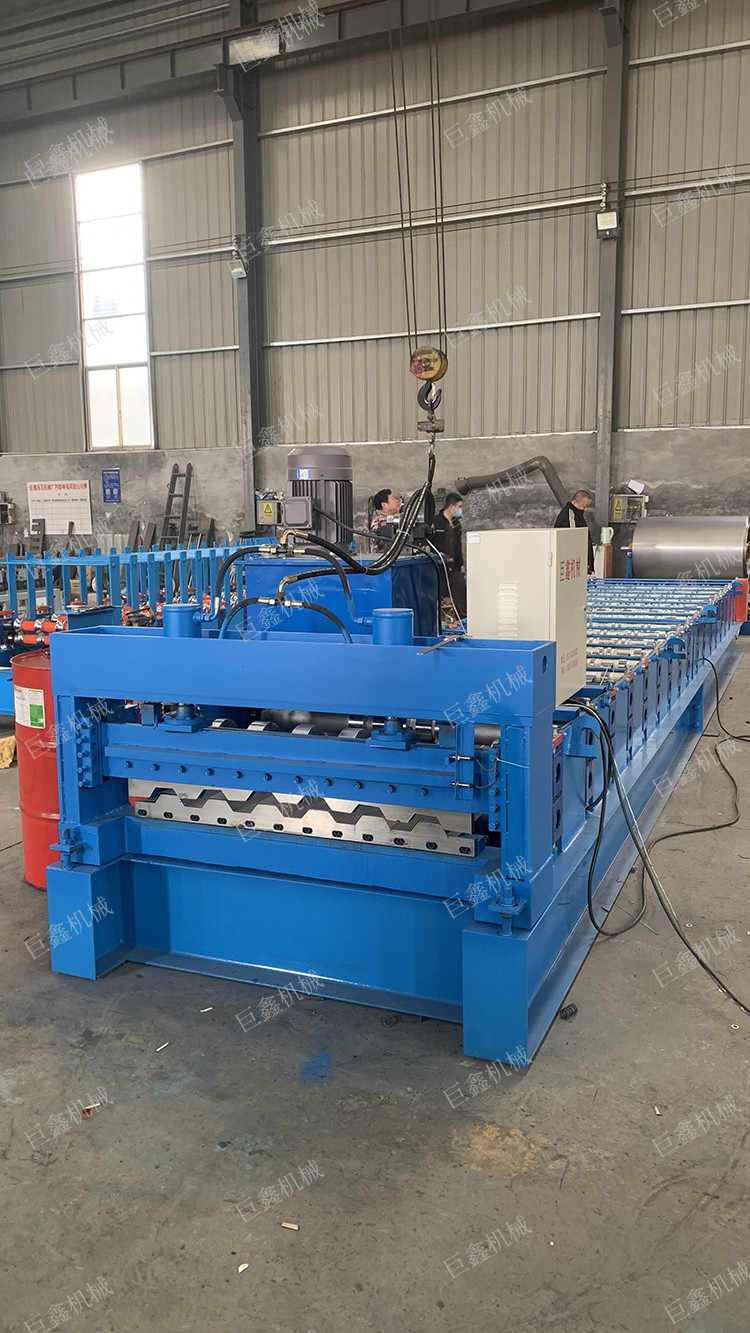
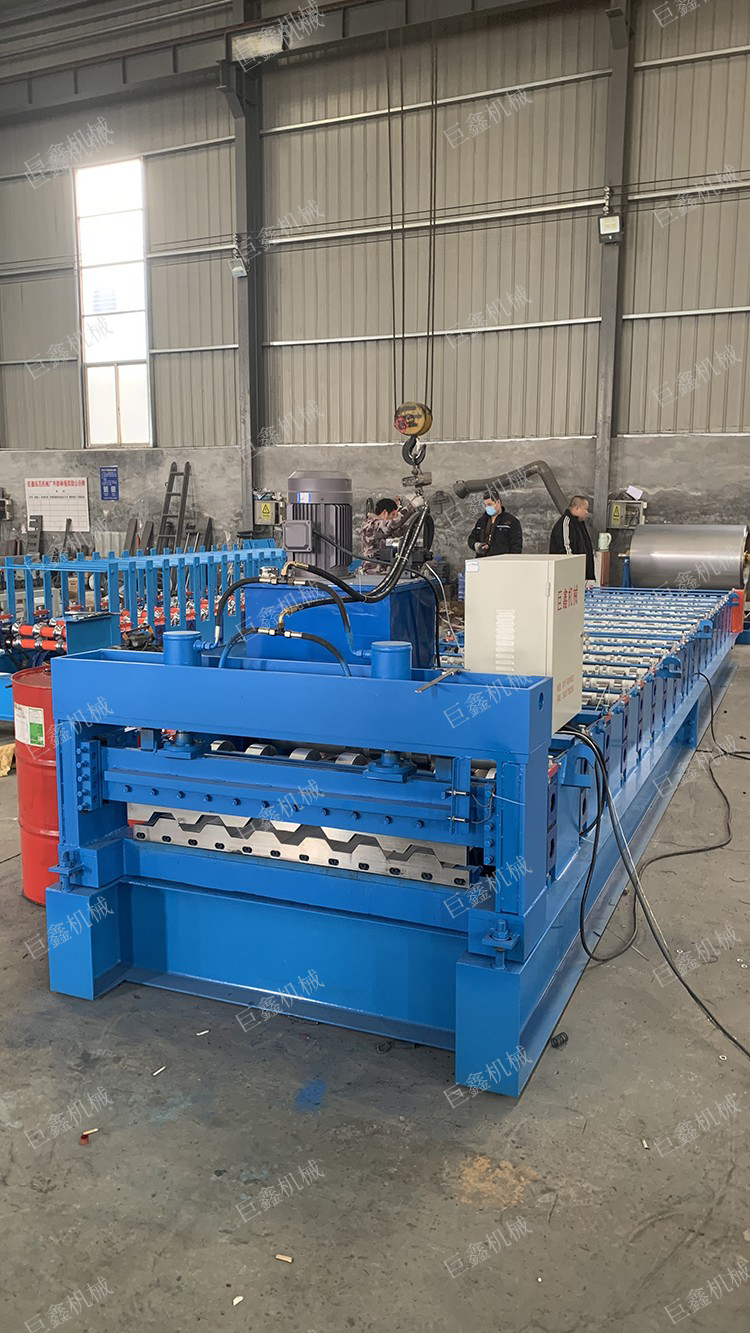
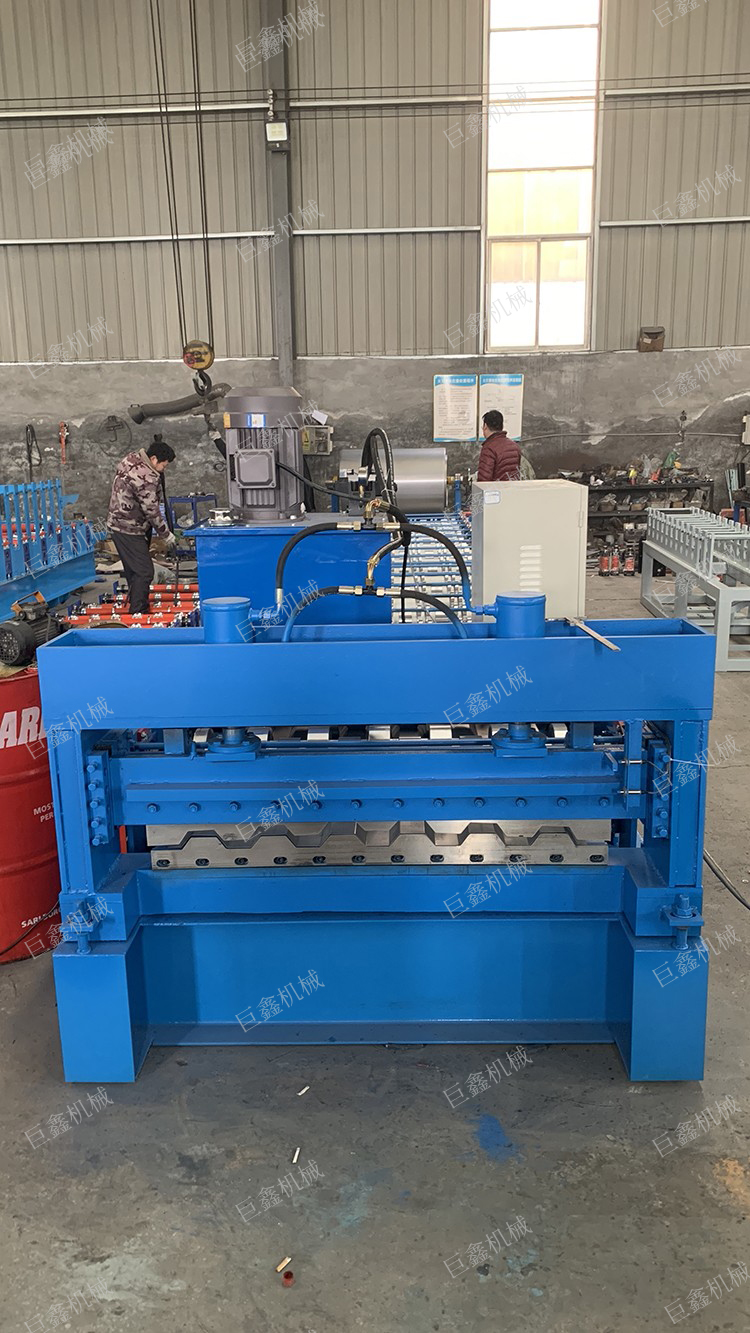
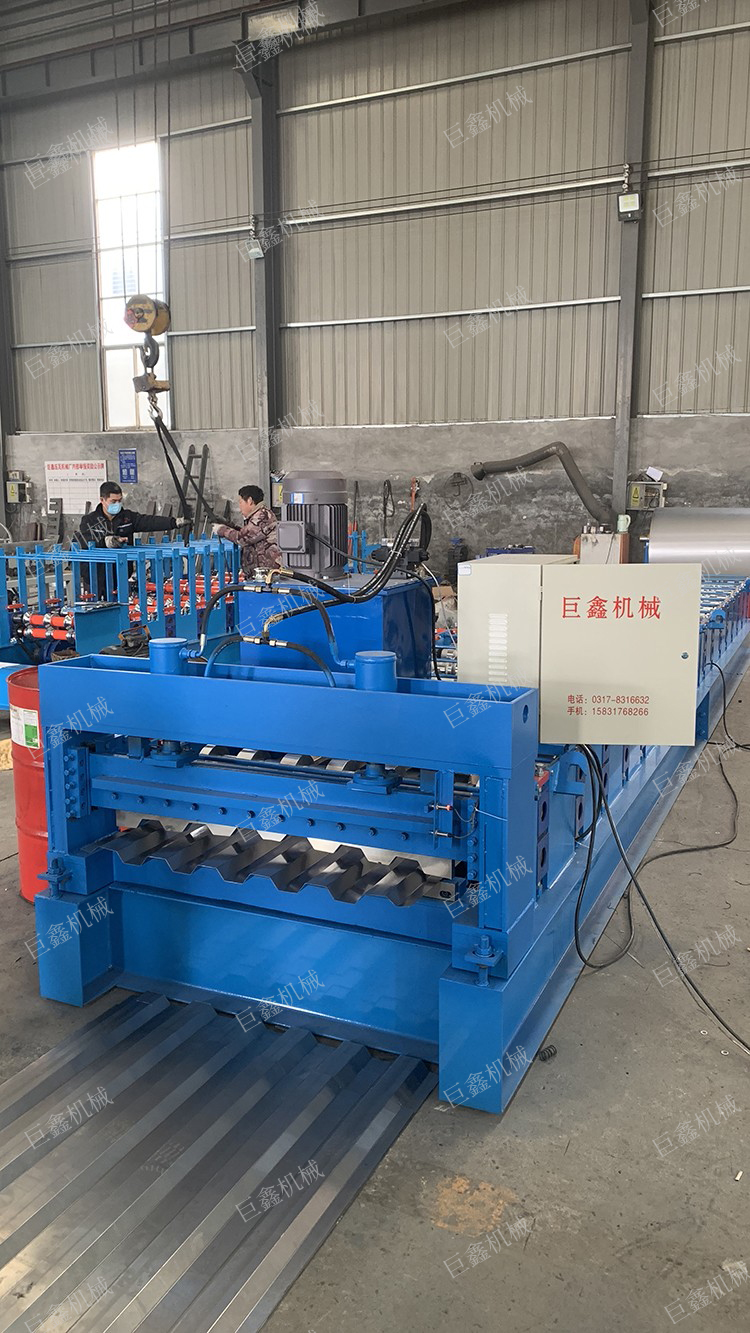
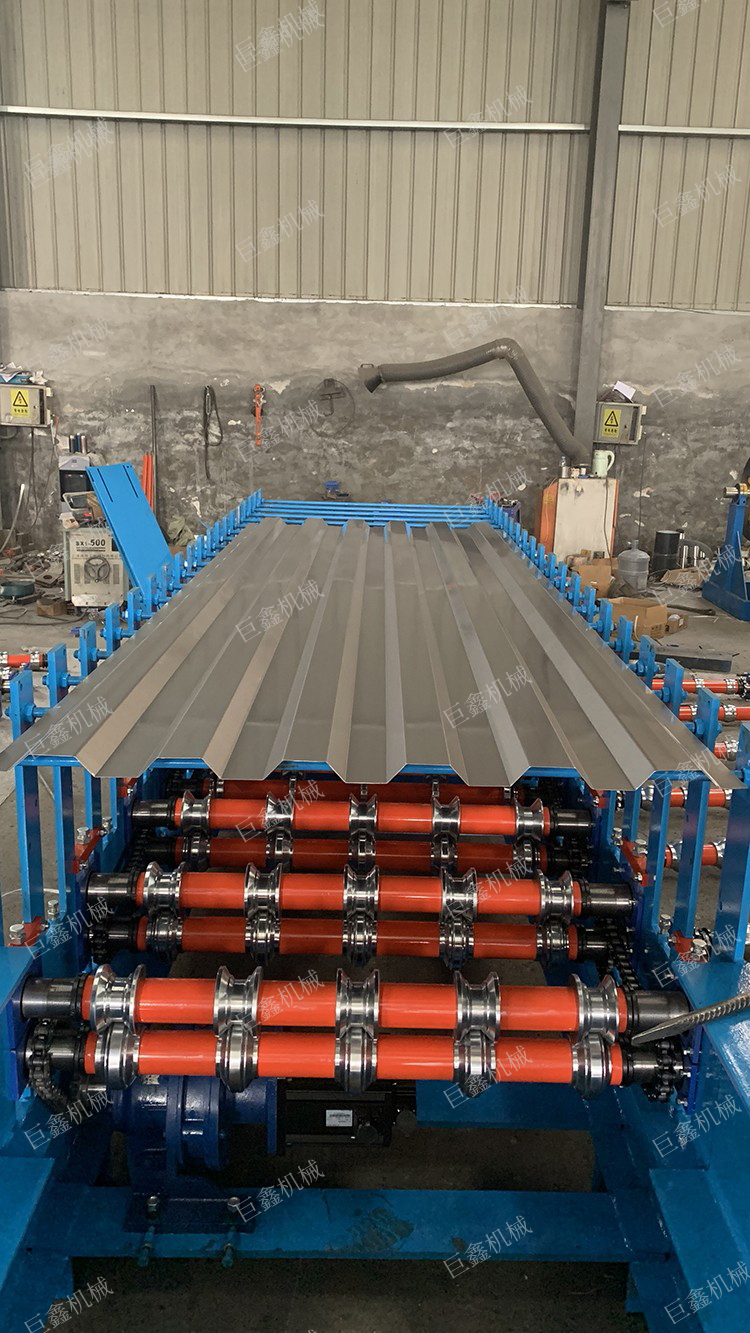
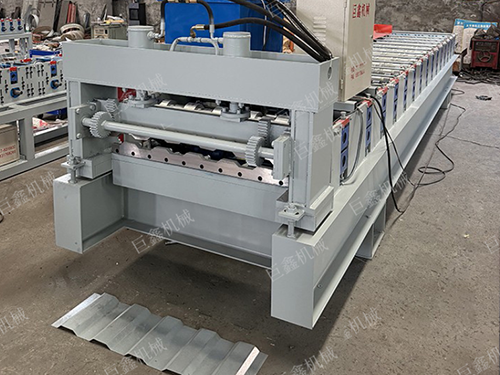
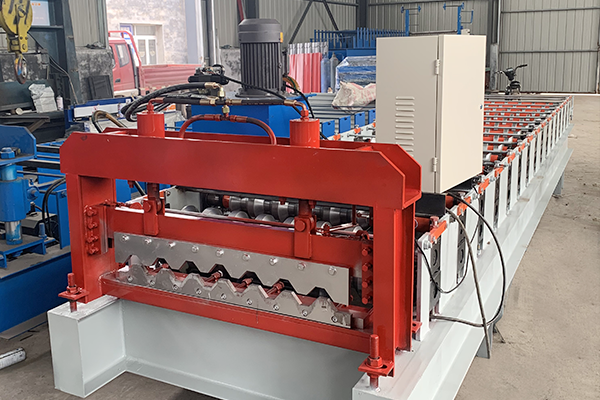
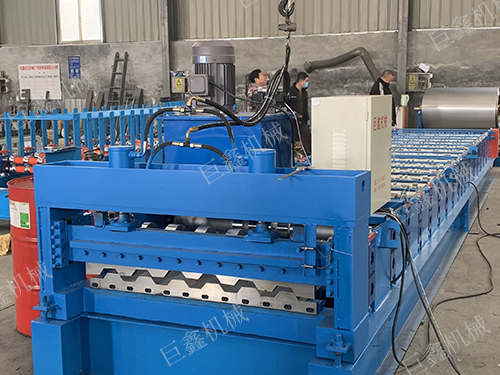
Container board machine is a specialized cold bending equipment developed for container enclosure panels. It relies on progressive roll cold processing technology to continuously shape flat steel coils into box side panels and top panels with fixed corrugated structures. The formed panels have stronger structural bending resistance and are the core forming equipment in the manufacturing process of standard freight containers, refrigerated containers, modular integrated houses, field temporary shelters, and other shells. The whole set of equipment integrates multiple processes such as feeding, guiding, roll forming, cutting to length, and discharging, and runs smoothly and automatically throughout the process, providing standardized basic components for box welding and assembly.
The overall operation of the equipment follows the principle of metal plastic deformation at room temperature, without changing the physical properties of the steel itself or the surface anti-corrosion coating throughout the process. The raw material steel coil is placed on the unwinding device to release the plate at a constant speed. The plate is guided by independently adjustable guide mechanisms on both sides of the feeding port to limit and correct deviation, avoiding deviation or offset during the feeding process and ensuring that the plate enters the forming host straight. The internal arrangement of the host is composed of multiple rolling rolls, which are arranged in sequence according to the preset corrugated section size. By using a step-by-step extrusion method, the sheet is gradually bent into standard concave convex ripples, dispersing the deformation stress of a single molding process and reducing problems such as sheet rebound, wrinkles, and surface strains. After complete roll forming, the sheet metal moves to the cutting station, and the hydraulic driven cutting mold completes automatic cutting according to the length set by the control system. The finished sheet metal is smoothly transported to the discharge platform, completing the entire processing flow of a single workpiece. The entire process is cyclical and can achieve uninterrupted and continuous operation.
The mechanical framework of the entire machine is constructed by welding thick steel plates as a whole. After welding, it undergoes aging stress relief treatment to release internal stresses in the structure. During long-term high-frequency heavy load rolling operations, the frame is less prone to shaking, deformation, and rail misalignment, ensuring the consistency of wave height and distance from the hardware foundation for a long time. The forming roller is made of wear-resistant alloy material and processed into shape. After heat treatment, the surface hardness and wear resistance are improved. It is not easy to wear or scratch the mold cavity when rolling steel plates in large quantities for a long time. The roller shaft core is precision machined, with uniform coaxiality control and smooth rotation process, reducing the pattern error caused by operating vibration. The roller group adopts a modular layout structure. If different types of plates need to be replaced, the corresponding roller components can be disassembled and adjusted to meet the production needs of different specifications of box plates.
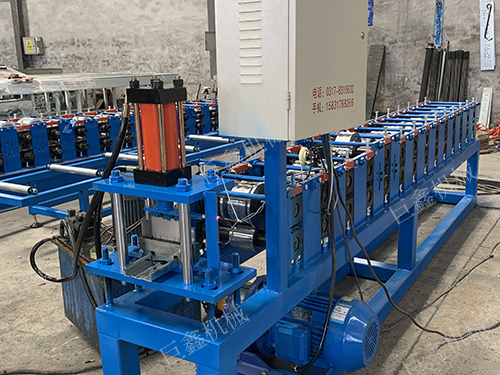
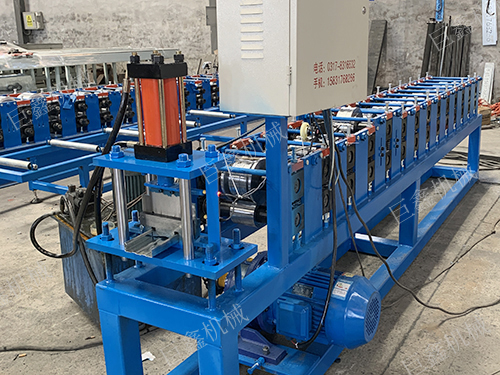
The cutting unit adopts an independent hydraulic drive structure, and the cutting frame has sufficient rigidity. The gap between the cutting molds can be slightly adjusted, and the cutting effect is optimized for different thicknesses of box steel plates. The incision is smooth and flat, reducing the additional workload of subsequent polishing and trimming. The hydraulic oil system is equipped with impurity filtration and overload pressure relief protection devices. When the plate is stuck or foreign objects enter the cutting station, the pressure is automatically relieved to protect the oil cylinder, pipeline, and tool from damage and improve the stability of equipment operation. The feeding guide component is independently adjusted in both directions by manual screws, which can accurately limit the width of the sheet and adapt to the feeding requirements of different sizes of rolls, effectively avoiding the problem of forming scrap caused by sheet skewing.
The equipment is equipped with an integrated intelligent electronic control system, and the core adopts a programmable controller system
Complete machine operation, equipped with touch screen operation interface and photoelectric encoder length counting component. The operator can directly input parameters such as the processing length, quantity, and running speed of a single piece of board in the interface. The system automatically completes the closed-loop operation of feeding, forming, counting, cutting, and resetting. The length measurement error is controlled within a small range, and the size uniformity of the boards produced in the same batch is good. The control system can store multiple sets of model parameters, and when switching production specifications, the preset program can be directly called, simplifying the parameter debugging steps. The operation panel has clear functional zoning and is equipped with two operating modes: manual jog and automatic loop. It can be flexibly switched between daily debugging and batch production, with a low threshold for manual operation.
At the practical application adaptation level, the equipment mainly processes the corrugated side walls and top sealing plates of the container body. The formed corrugated structure can greatly improve the compressive and bending resistance of the thin plate itself, meeting the structural stress requirements during container stacking, lifting, and long-distance transportation. In addition to standard sea freight dry cargo containers, it can also be used for the processing and production of enclosure panels such as insulated refrigerated containers, equipment transport containers, temporary modular living quarters on construction sites, and storage enclosed containers. The equipment can form a complete sheet metal processing assembly line with the shearing machine and bending machine mentioned earlier, which can complete the deep processing of box shaped sheet metal in one stop from coil unwinding, fixed length cutting, corrugated forming to corner bending, improving the processing accuracy and production continuity of the entire set of components.
The daily maintenance and upkeep system of the equipment is simple and easy to understand. Protective barriers are installed on the exterior of the machine to prevent metal debris and dust from entering the roller drive, hydraulic oil circuit, and electrical control cabinet, thus delaying the aging and wear of components. All rotating and sliding points of the entire machine are equipped with standardized lubrication filling ports, and lubricating grease is added according to a fixed cycle to ensure smooth operation of moving parts such as roller shafts, guide rails, and chains, and reduce mechanical friction losses. Hydraulic oil only needs to be regularly checked for cleanliness, and the filter element and hydraulic oil should be replaced on time to maintain stable power output. Regular dust and moisture prevention inspections of the electrical system can ensure long-term stable operation without the need for complex professional maintenance techniques. It is suitable for the equipment operation and maintenance management mode of small and medium-sized metal component processing plants.
The accuracy of corrugated forming of container body panels directly determines the sealing and overall structural strength of the welded joints of the panels. The cold bending roll forming process, with its advantages of high efficiency, stability, and low consumable consumption, has become the mainstream method for industrial mass production of container body panels. This container plate machine relies on a sturdy mechanical structure, a graded progressive forming roller set, a precise hydraulic cutting mechanism, and an intelligent control system to stably output corrugated box boards that meet assembly standards. With a wide range of material adaptability, convenient specification switching, and low difficulty post operation and maintenance characteristics, it continues to play a core role in automated sheet metal forming in industries such as container manufacturing, modular housing processing, and special box production, providing reliable equipment support for the industrial production of various steel box bodies.