
You are here:HOME > PRODUCT > Steel tray forming machine >
Iron tray forming machine
13803170595

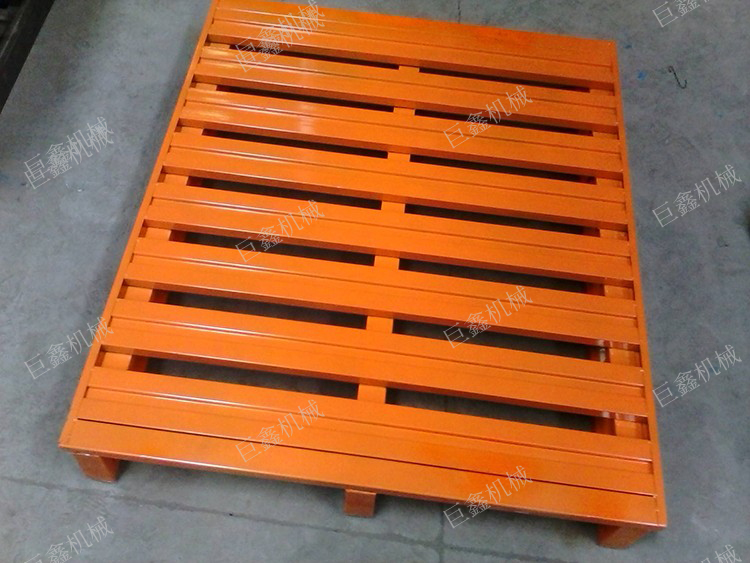
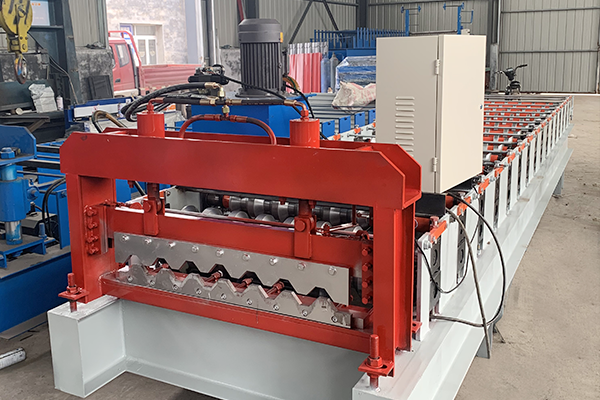
The iron tray forming machine is an integrated fully automatic cold bending and rolling equipment specialized in producing steel logistics tray load-bearing panels. It relies on the metal room temperature progressive plastic cold bending process to roll the entire roll of cold-rolled steel strip and galvanized steel strip step by step into an integrated pallet profile with concave convex reinforcement ribs. With the rib structure, the bending and compressive resistance of the thin plate is greatly improved. After the finished sheet is spliced and welded, it forms a fully steel heavy-duty tray. Compared with wooden and plastic trays, it has the advantages of anti-collision, moisture-proof and fireproof, long cycle service life, and large load-bearing tonnage. It is mainly used in large-scale warehousing and logistics centers, heavy industry production workshops, chemical raw material warehouses, port freight turnover, cold chain warehousing and other heavy-duty handling scenarios. It is the core specialized processing equipment for large-scale production of steel structural components in warehousing and logistics.
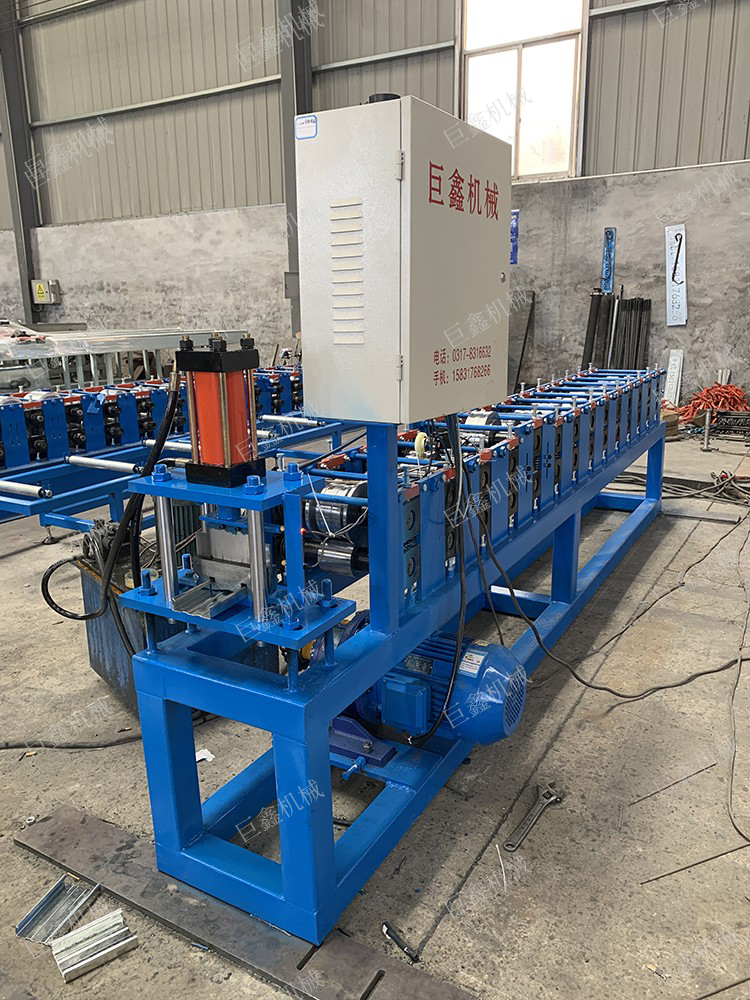
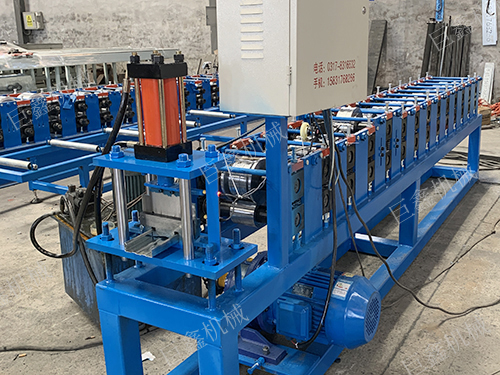
The entire equipment is formed by pure physical cold processing without high-temperature heat treatment process, which will not damage the mechanical strength of the steel substrate itself and the surface galvanized anti-corrosion protection layer. Ordinary carbon steel strip, hot-dip galvanized steel strip, weather resistant steel plate and other commonly used industrial coils can be stably put into production. The entire production line is modularly connected in series according to a continuous process flow, consisting of hydraulic tension unwinding frame, multi roll sheet leveling unit, feed correction guide mechanism, servo online punching station, multi pass roll forming host, hydraulic flying saw synchronous cutting unit, finished product automatic discharge bracket, and PLC integrated electrical control system. Each unit is coordinated and linked through electronic control signals to achieve uninterrupted closed-loop automated continuous production from coil loading to finished sheet unloading. The steel coil is loaded onto a hydraulic expansion and contraction unwinding bracket, and equipped with a damping brake device to smoothly release the strip, effectively avoiding problems such as loose coil, uneven tension, and one-sided deviation during the unwinding process. The released steel strip is sent to the leveling unit, and the original internal stress and surface curvature of the coil are eliminated through the staggered arrangement of pressure rollers, ensuring that the sheet entering the forming process is completely straight, and eliminating quality defects such as asymmetric ribs, twisted surface, and finished product size deviation from the source after forming.
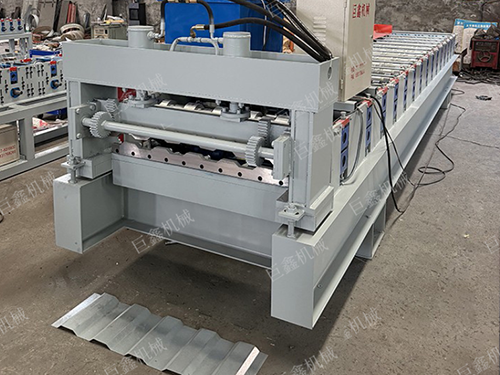
As the core unit of the entire production line, the forming host is equipped with a multi-component rolling mill station according to the complexity of the tray rib plate section. It adopts a forming logic of step-by-step and micro bending, gradually extruding the sheet metal to form protruding reinforcement ribs and folding buckle structures from shallow to deep, slowly releasing the internal stress caused by steel deformation, and minimizing adverse phenomena such as sheet rebound, edge tearing, and galvanized coating scratching and peeling. The main frame of the equipment is constructed by welding thick heavy-duty national standard steel as a whole. After welding is completed, the aging stress relief treatment is carried out to completely dissolve the accumulated structural internal stress of welding. Under long-term high-frequency heavy load rolling conditions, the equipment will not have problems such as shaking, beam distortion, guide rail displacement, and roll parallelism deviation, ensuring the uniformity of various dimensional parameters such as reinforcement height, plate width, and folding angle in the long run. The forming rollers are forged from high resistance running in steel and undergo overall quenching heat treatment to improve the hardness and wear resistance of the roller surface. Large quantities of long-term rolled steel plates are less prone to cavity wear and contour deformation. The rollers adopt a modular split clamping structure. If it is necessary to change the specifications of the pallet rib plate or disassemble and grind the worn roller body, the disassembly and debugging process is simple and fast, greatly reducing the downtime of the production line.
After the board is leveled, it can enter the front servo punching station and punch positioning connection holes on both sides of the board according to the welding assembly requirements. The punching accuracy is stable and the hole spacing is uniform, eliminating the need for subsequent separate secondary punching processes. The completed roll formed sheet is transported to the end cutting station, using a follow-up hydraulic flying saw cutting structure. The blade holder follows the sheet to cut synchronously, without blocking the continuous feeding of the entire production line. The bite gap of the cutting tool can be flexibly adjusted according to the thickness of the processed sheet. The cut end face is flat and smooth with minimal burrs, reducing the workload of manual secondary polishing and finishing. The hydraulic oil system is equipped with a high-precision impurity filter element and an overload automatic pressure relief protection valve group. In the event of abnormal working conditions such as plate jamming, hard debris getting stuck in the cutting edge, and system oil pressure overload, the oil circuit will immediately automatically relieve pressure, providing comprehensive protection for core load-bearing components such as hydraulic cylinders, high-pressure pipelines, and cutting tools, and improving the overall operational safety redundancy factor of the equipment. The front-end feeding guide frame can be adjusted in both directions by manual screws, and can adapt to steel coil materials with different unfolding width specifications. The material adaptation range is flexible and wide.
The equipment is equipped with an intelligent closed-loop electronic control system composed of programmable logic controllers, paired with touch operated display screens and high-precision length counting encoders. Operators only need to input basic parameters such as the processing length of a single pallet board, production line operating speed, punching spacing, and single cycle output on the human-machine interface. The entire equipment can automatically complete the full process automation operation of feeding, leveling, punching, roll forming, length detection, synchronous flying saw cutting, and mechanism reset. The control system can store multiple sets of operating parameters for different rib plate types. When switching production specifications, the preset program can be directly retrieved, greatly improving debugging efficiency. The equipment distinguishes between manual jog debugging mode and fully automatic continuous production mode. During the debugging stage, low-speed verification of punching accuracy and rib forming effect is carried out. During batch production, automatic mode is turned on to continuously produce without interruption. The operation logic is simple and intuitive, and operators can independently complete daily start stop and parameter control after a brief pre job training. The electrical control cabinet has been treated with dust-proof, shockproof, and moisture-proof sealing protection, which can perfectly adapt to the complex working environment of steel structure processing workshops with high dust content, frequent equipment vibration, and high oil pollution, effectively reducing the occurrence rate of electrical component short circuits, moisture aging, and other faults.
Steel pallets rely on reinforced rib panels to disperse and concentrate loads, making them less prone to bending and breaking when stacked under heavy loads. In addition to directly assembling logistics iron pallets, the pallet panels produced by this equipment can also produce components such as shelf shelves, equipment base load-bearing protective plates, and container internal pads with slight adjustments to the roller plate shape. They can be combined with pipe cutting machines, column bending machines, automatic welding equipment, and finished product palletizing machines to build a complete deep processing line for storage steel pallets, achieving integrated processing from coil unwinding, rib plate roll forming, punching and cutting to automatic stacking of finished products, improving the processing consistency and on-site welding and assembly matching of the entire storage load-bearing product.
The daily operation and maintenance system of the equipment is mature and simple. A fully enclosed protective barrier is installed on the outside of the body to prevent metal cutting debris and workshop dust from entering the roller transmission gear, hydraulic valve group, and electrical wiring cavity, delaying the aging and wear rate of transmission components. All rotating, sliding, and bearing activity points of the entire machine are equipped with standardized lubrication nozzles. By adding gear oil and grease according to the established production cycle, the smooth operation of rolling mill bearings, transmission reducers, sliding guides, and other components can be ensured, reducing mechanical friction losses. The hydraulic system only needs to regularly check the hydraulic oil level and oil clarity, replace the hydraulic oil and oil circuit filter elements on time, and maintain stable hydraulic power output for a long time. The overall maintenance does not require high-frequency professional maintenance personnel to be on duty, which is in line with the normal equipment management rhythm of the storage steel structure processing plant.
The accuracy of the forming section and consistency of the length dimension of the reinforced panel of the iron tray directly determine the overall load-bearing capacity, welding flatness, and long-term stability of the tray. The cold bending progressive roll forming process has become the mainstream process for industrial mass production of steel logistics tray panels due to its core advantages of high raw material utilization rate, strong automation continuous production efficiency, and outstanding batch stability of finished products. This fully automatic iron pallet rib plate cold bending production line relies on a rigid and solid heavy-duty welding frame, multi pass precision grading forming roller group, servo punching synchronous flying saw cutting mechanism, and closed-loop intelligent electronic control system to stably produce steel pallet load-bearing plates that meet the storage heavy load standards. With a wide range of steel substrate adaptation capabilities, convenient pattern specification switching methods, and economically controllable long-term maintenance costs, it plays an important role in logistics warehousing equipment manufacturing, industrial steel structure matching processing and other industries, providing solid and reliable heavy industrial equipment support for the large-scale and automated industrial production of all steel heavy-duty turnover pallets.