
You are here:HOME > PRODUCT > Steel tray forming machine >
Steel tray forming machine
13803170595

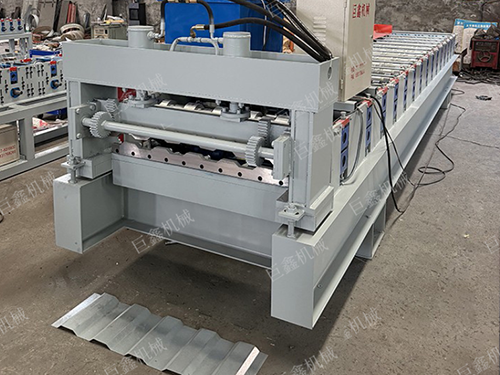
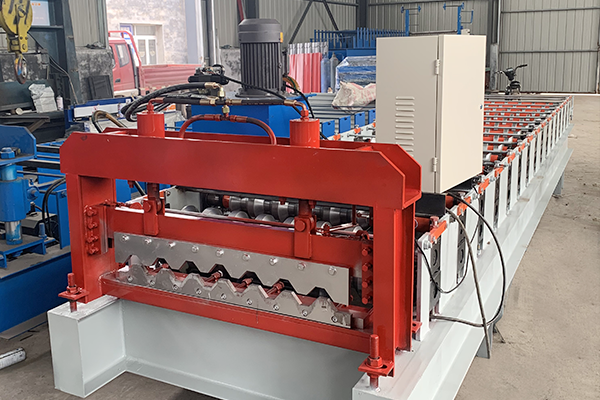
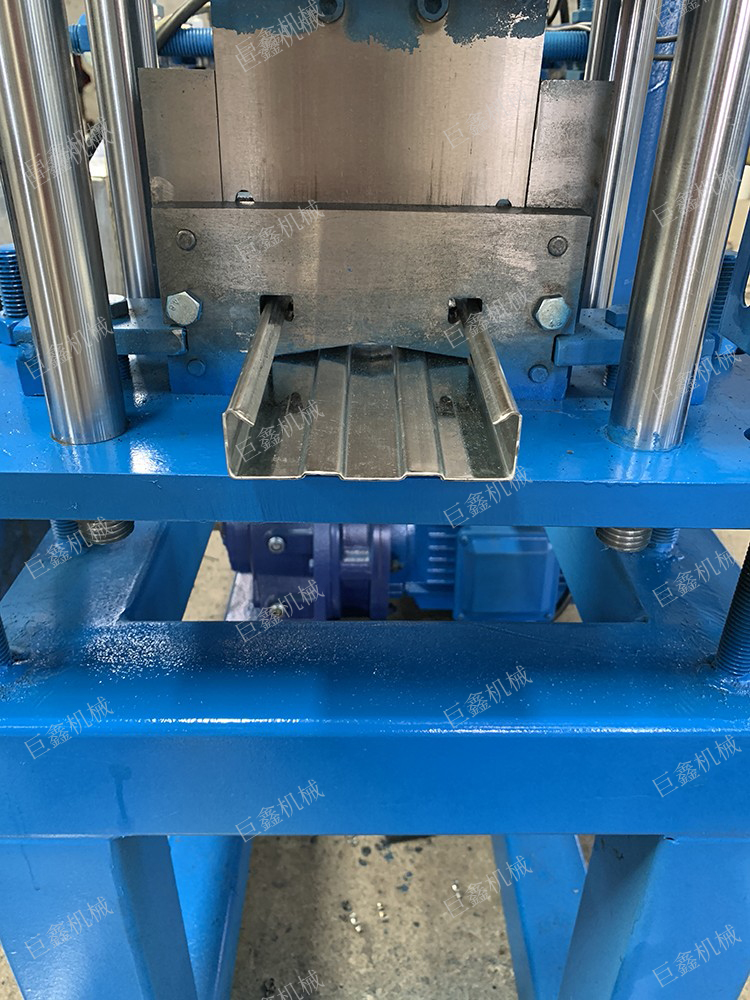
The steel tray forming machine is an integrated cold bending equipment used for industrial production of heavy-duty steel tray load-bearing panels in logistics. It relies on the metal room temperature progressive plastic deformation process to continuously roll form the entire roll of cold-rolled steel strip and galvanized steel strip. Multiple concave convex reinforcement ribs and double-sided folding buckle structures are pressed on the surface of the sheet, greatly improving the bending, compression and torsion resistance of the sheet through three-dimensional groove reinforcement. The steel pallet assembled by welding this profile has the advantages of strong load-bearing capacity, impact resistance, waterproof and fireproof, long-term cyclic use, and resistance to decay and deformation. It is widely used in large-scale e-commerce warehousing centers, machinery manufacturing plants, chemical raw material warehouses, port and dock cargo turnover, cold chain logistics warehouse areas and other heavy-duty cargo transfer scenarios. It is the core automated processing equipment in the field of steel structure equipment manufacturing for warehousing and logistics.
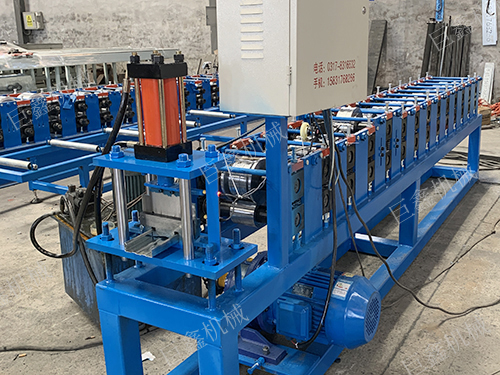
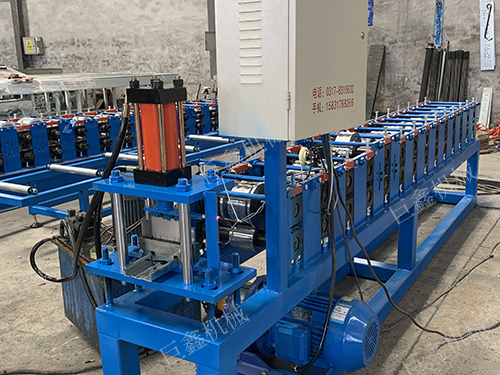
The entire equipment adopts pure physical cold processing method throughout the process, without high temperature heating process, which will not damage the mechanical properties of the steel itself, nor will it damage the galvanized anti-corrosion coating on the surface of the steel strip. Conventional industrial raw materials such as carbon structural steel coils, hot-dip galvanized steel coils, and cold-rolled thin plate coils can be adapted for production. The entire production line is modularly arranged in series according to the process sequence, consisting of hydraulic expansion and contraction unwinding feeding rack, multi roll leveling unit, feed correction guide mechanism, servo online punching unit, multi pass roll forming host, hydraulic flying saw synchronous cutting device, finished product discharge platform, and PLC intelligent electronic control system. Each unit relies on electrical signal linkage operation to achieve uninterrupted closed-loop automation production from coil release to finished sheet material discharge. The steel coil is placed on the hydraulic tension unwinding rack, and the damping braking device is used to smoothly and uniformly discharge the material, effectively avoiding problems such as loose coil, tension fluctuation, and left and right deviation of the plate. After the steel strip is fed into the leveling mechanism, the pressure rollers arranged in a staggered manner are used to eliminate the curvature and surface stress of the coil, ensuring that the sheet entering the forming host is completely straight and reducing quality problems such as rib skewness, surface warping, and dimensional deviation after forming from the source.
The forming host is the core part of the entire production line. Based on the complex cross-section of the tray panel, a multi component rolling mill station is designed. The forming method adopts a step-by-step micro bending method, gradually extruding the reinforcing ribs and assembling the folded edges from shallow to deep, fully releasing the internal stress generated by steel deformation, effectively reducing defects such as sheet rebound, edge tearing, and galvanized layer scratching and peeling. The main frame of the equipment is made of heavy-duty thickened steel and welded as a whole. After welding is completed, it is subjected to aging stress relief treatment to dissolve the internal stress generated by welding. Under long-term continuous heavy load rolling conditions, the frame will not shake, cross beam twist, guide rail offset, roller parallelism misalignment, etc., ensuring consistent and stable dimensions such as rib height, plate width, bending angle, etc. for a long time. The forming rollers are forged from high hardness alloy steel and undergo quenching heat treatment to improve wear resistance and impact resistance. Large quantities of rolled steel plates are less prone to roller surface wear and cavity deformation. The rollers adopt a modular disassembly and assembly structure, making it easy to replace tray plates, repair and polish roller bodies, and minimize production line downtime.
After the board is leveled and guided, it can enter the servo punching station to punch fixed connection holes on the side of the board according to the welding assembly requirements, with precise and uniform hole spacing, eliminating the need for subsequent separate secondary punching processes. After being shaped by all the rollers, the sheet is transported to the end cutting station, where a hydraulic follow-up flying saw cutting structure is used. The blade holder synchronously cuts with the sheet conveying speed, without hindering the continuous feeding of the production line. The gap between cutting tools can be fine tuned according to the thickness of the board, resulting in a flat cutting end face with fewer burrs, greatly reducing the workload of manual secondary polishing. The hydraulic oil system is equipped with precision filter elements and overload automatic pressure relief valves, which automatically relieve pressure when the plate is stuck, foreign objects are stuck, or the system pressure is overloaded, protecting key components such as oil cylinders, pipelines, and cutting tools, and improving the safety of equipment operation. The front guide frame relies on manual screws to adjust the limit width in both directions, which can adapt to steel coil raw materials of different widths and has strong universality.
The equipment is equipped with a programmable controller electrical control system, paired with a touch screen and high-precision length encoder. The operator inputs parameters such as the length of a single tray board, operating speed, punching spacing, and production quantity on the interface. The equipment can automatically complete the entire process of feeding, leveling, punching, roller forming, length detection, synchronous cutting, and mechanism reset. The system can store multiple sets of configuration parameters, and when switching specifications, the program can be directly called, resulting in higher debugging efficiency. The equipment is equipped with two modes: manual jog debugging and fully automatic continuous production. During the debugging stage, the molding and punching effects are checked at low speed. During mass production, the automatic mode is turned on for continuous operation. The operation logic is simple and easy to understand, and the staff can operate independently after brief training. The electrical control cabinet has been equipped with dust-proof, shockproof, and moisture-proof protection, which can adapt to the working environment of steel structure workshops with high dust, vibration, and oil pollution, reducing the probability of electrical failures.
The steel tray panel with reinforced rib structure is subjected to uniform force when stacked for load-bearing, making it less prone to bending and sinking. In addition to assembling standard logistics steel trays, adjusting the roll pattern can also produce components such as storage shelf shelves, equipment base pads, and container internal load-bearing liners. This equipment can be combined with pipe cutting machines, column bending equipment, automatic welding machines, and finished product automatic palletizing machines to form a complete pallet processing assembly line, achieving integrated deep processing of coil unwinding, roll forming, punching and cutting, and finished product stacking, improving the processing accuracy and welding assembly fit of the entire storage equipment.
The daily maintenance process of the equipment is simple and easy to execute. A closed protective barrier is installed outside the body to block iron filings and dust from entering the transmission gears, hydraulic valve groups, and electrical junction boxes, delaying the aging and wear of components. All active points such as bearings, chains, sliding guides, etc. are reserved with lubrication filling ports, and lubricating grease can be added periodically to ensure smooth operation. Regularly check the oil level and cleanliness of the hydraulic system, and replace the hydraulic oil and filter element on time to maintain power stability. The electrical part only needs to regularly clean the dust and tighten the wiring terminals, without the need for complex professional maintenance, adapting to the routine equipment management rhythm of steel structure processing plants.
The forming accuracy and overall size consistency of the reinforcing bars of steel pallet panels directly determine the welding flatness and long-term heavy-duty service life of the pallets. The cold bending roll forming process has become the mainstream process for large-scale manufacturing of steel storage pallet panels due to its advantages of high material utilization, high automation continuous production efficiency, and good stability of batch products. This fully automatic steel tray cold bending production line relies on high-strength heavy-duty welding frames, multi-stage progressive precision rolling mill sets, servo punching synchronous flying saw cutting mechanisms, and closed-loop intelligent electrical control systems to stably produce tray load-bearing profiles that meet the standards of heavy-duty warehousing. With extensive substrate adaptability, convenient pattern switching ability, and low long-term operation and maintenance costs, it plays a stable role in logistics warehousing equipment manufacturing and industrial steel structure supporting processing industries, providing reliable heavy equipment support for the industrialization and automation of heavy-duty steel logistics pallets in mass production.
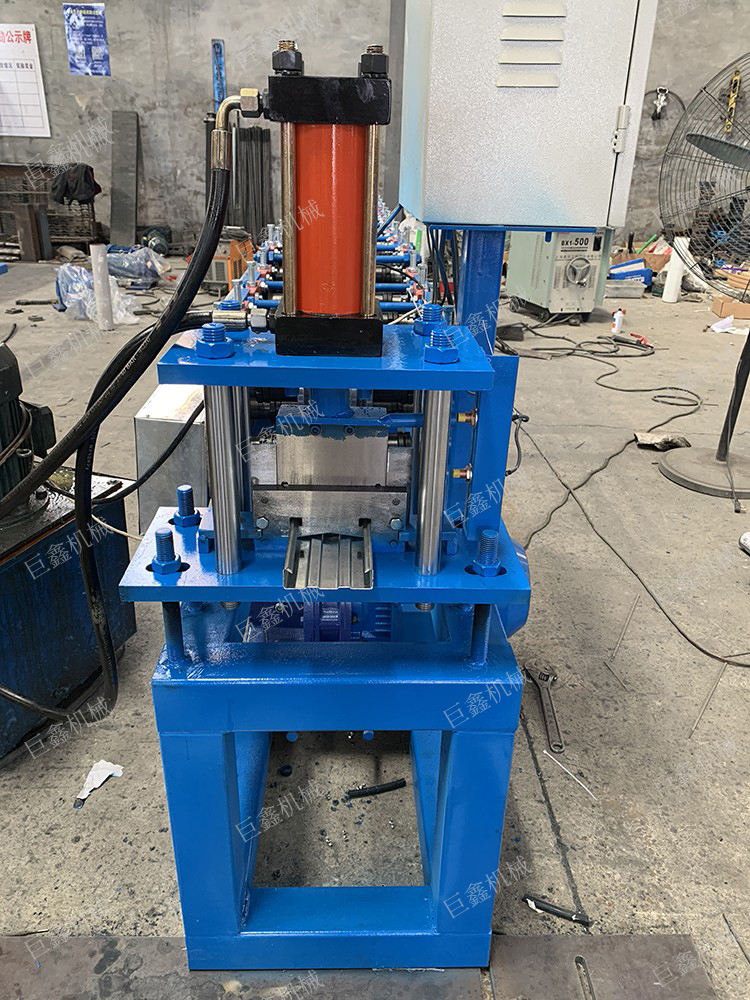
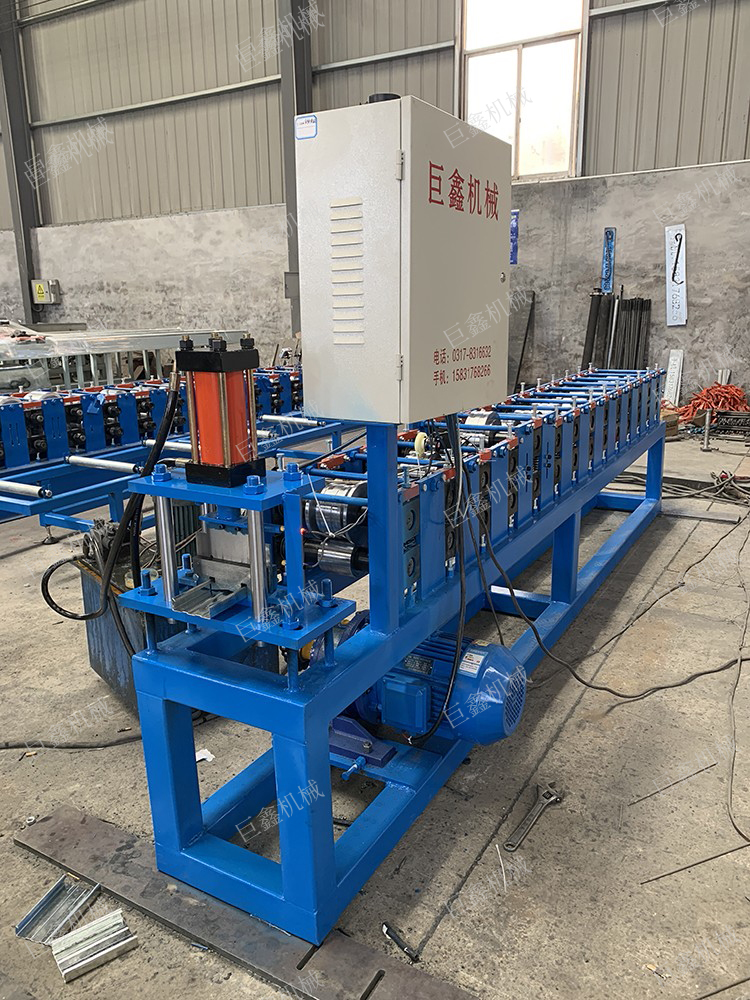
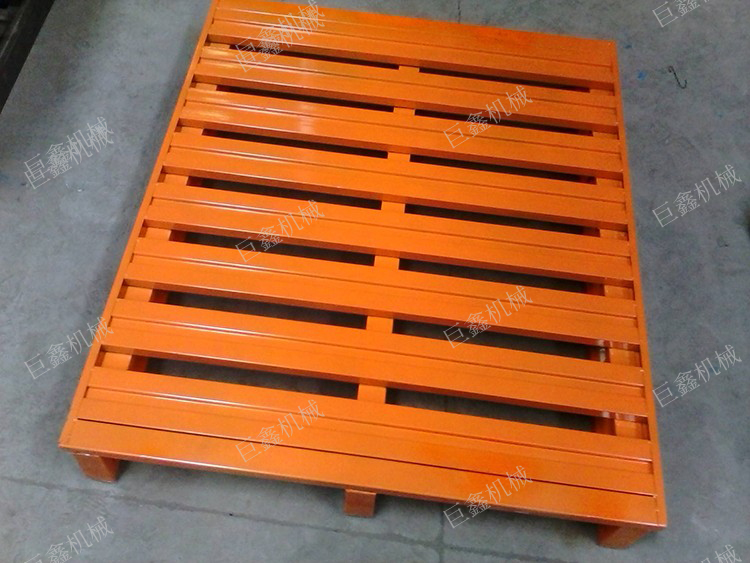
Metal pallets are commonly used steel load-bearing tools in warehousing and logistics. Common products on the market have the characteristics of galvanizing and spraying, thickening and anti slip, and support for customization. They are widely used in logistics warehouse storage and forklift turnover. It is also called a steel pallet or an iron pallet, mainly used to cooperate with forklift handling and shelf storage. It has strong load-bearing capacity and is free of fumigation, suitable for export and heavy cargo turnover.
Metal pallets, steel pallets, and iron pallets are actually the same thing, just with different industry names. The professional name is steel pallets, and the colloquial name is often iron pallets.
Material and process: The core material is Q235 steel or galvanized steel plate, which is formed by cold bending, welded by CO ₂ gas shielded welding, and then sprayed or rust proofed on the surface, making it sturdy and durable.