
You are here:HOME > PRODUCT > High speed guardrail forming machine >
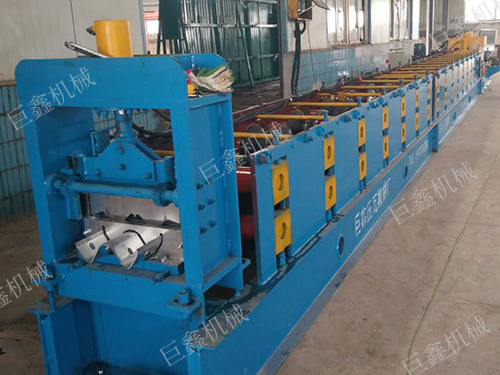
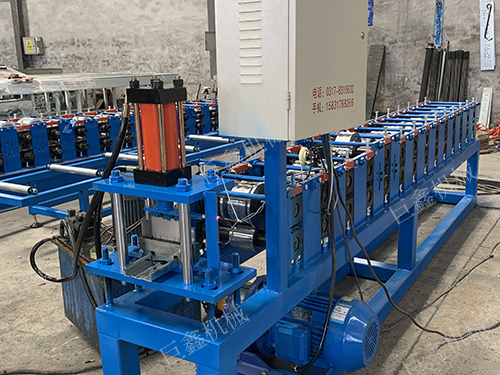
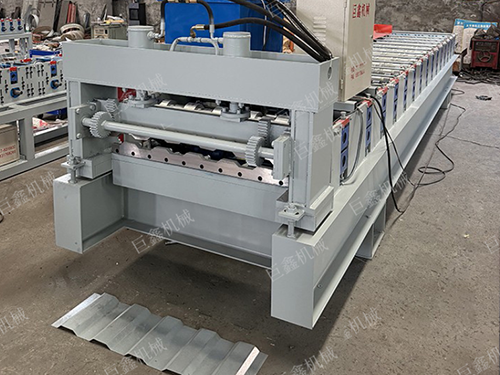
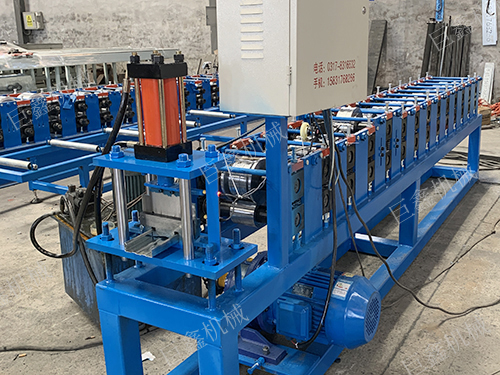
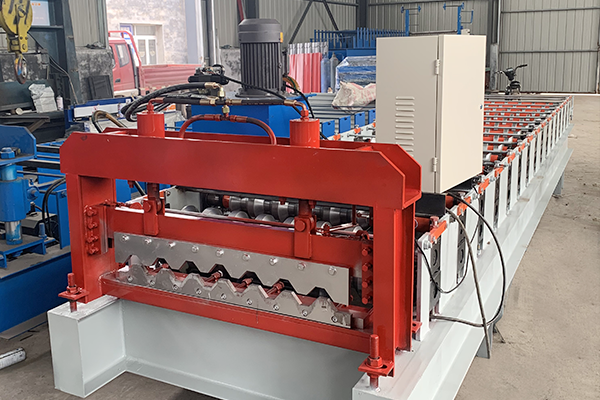
Highway guardrail forming machine
13803170595

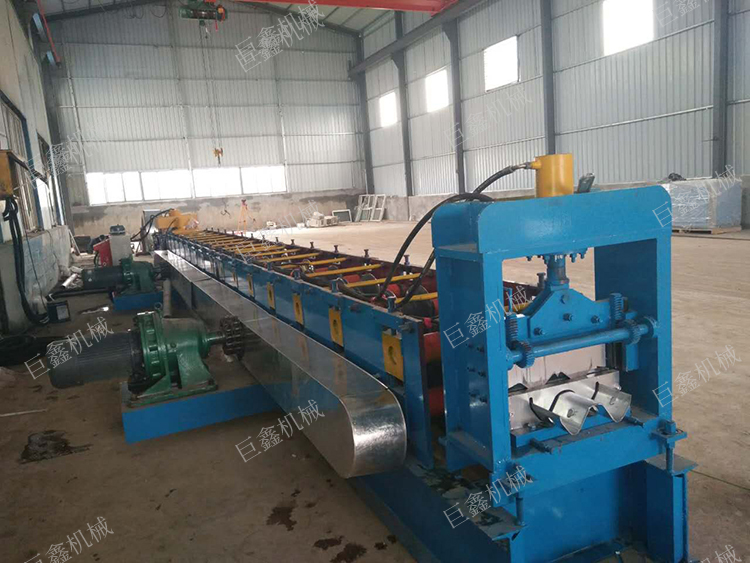
The highway guardrail forming machine is a professional fully automatic cold bending equipment used for producing road waveform anti-collision guardrail panels. It relies on the principle of gradual rolling deformation of metal at room temperature to gradually bend the entire roll of steel into a beam slab structure with continuous wave shapes. The corrugated section is used to enhance the impact resistance and buffering energy absorption effect of the plate material. The formed components are widely used in various levels of highway main roads, mountain bends, bridge decks, road central isolation belts, and can also be put into use in industrial park internal passages, large parking lots, factory boundary anti-collision fences and other scenarios. It is an important heavy-duty specialized processing equipment in the field of municipal transportation infrastructure processing.
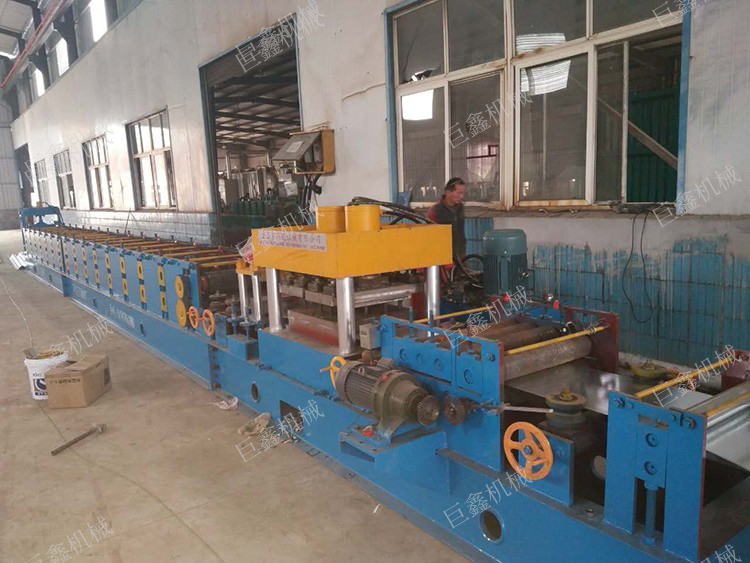
The entire equipment adopts a pure physical cold processing method to complete the shaping process, without high temperature heat treatment throughout the processing, which will not damage the structural strength of the steel itself and the surface hot-dip galvanized anti-corrosion protection layer. Commonly used carbon structural steel strips, galvanized steel strips, weather resistant alloy steel plates and other raw materials can be stably formed on the equipment. The entire production line consists of a unwinding and discharging unit, a plate guiding and correcting mechanism, a multi-stage roll forming host, a hydraulic fixed length cutting device, a finished product discharge bracket, and an electrical control system connected in series. Each module works together to form a continuous and uninterrupted automated production loop. The steel coil is placed on the unwinding bracket to release the strip at a constant speed. The limit guide frame at the front end, which can be adjusted in both directions, corrects the trajectory of the sheet, effectively avoiding the situation of left and right deviation and unilateral force pulling deformation of the long steel strip during transportation, ensuring that the sheet is smoothly and steadily fed into the forming host in a straight state.
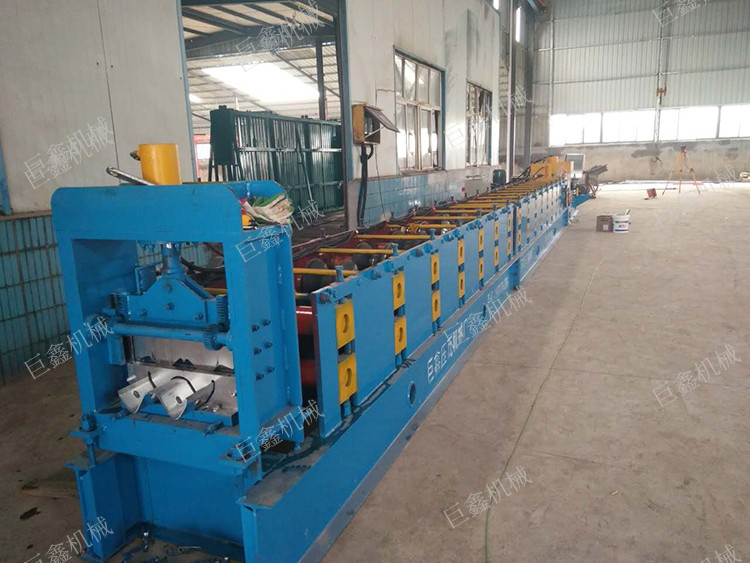
The forming host arranges multiple component rolling rolls according to the bending process sequence inside, using a processing idea of slow bending in stages to gradually extrude the flat steel into a standard wave contour, thereby dispersing the internal stress generated during the metal deformation process, reducing problems such as rebound distortion, uneven corrugation depth, and scratching of the surface coating of the finished sheet metal. The main frame of the equipment is made of thickened steel and welded as a whole. After the welding process is completed, stress relief treatment is carried out to release the internal stress generated by welding. Under the condition of long-term heavy load rolling of thick steel plates, the entire frame can maintain a stable state without the occurrence of frame tilting, guide rail loosening, roller parallelism deviation, etc. From the hardware foundation, the wave height, wave distance, and overall width dimensions of each guardrail plate are guaranteed to be consistent for a long time.
As the core working component of the equipment, the rolling mill is forged and processed with wear-resistant alloy steel material. After heat treatment, the surface hardness is strengthened, and it has good compressive and wear-resistant properties. Long term large-scale rolling of steel is not prone to problems such as roller surface wear and cavity deformation. The rolling mill adopts a modular assembly structure. If it is necessary to adjust the specifications of the guardrail plate or disassemble and grind the worn rolling mill body, the disassembly and assembly process is simple and will not interrupt the production progress for a long time. The transmission shaft of the rolling mill is precision machined, and the meshing clearance of the transmission gears is uniform, resulting in low vibration during the operation of the whole machine, further improving the flatness and cross-sectional regularity of the formed sheet metal.
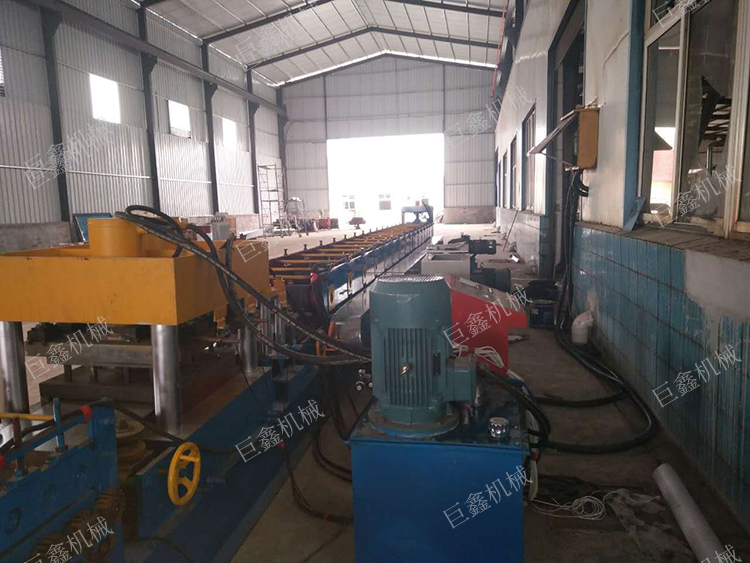
After being shaped by all the rollers, the sheet is transported to the tail cutting station. The hydraulic driven cutting mechanism automatically cuts according to the length set by the control system. The bite gap of the cutting tool can be adjusted slightly according to the thickness of the processed steel plate. The cut end face is smooth and flat, with fewer burrs on the edges, which can reduce the workload of manual polishing and trimming in the future. The hydraulic oil system is equipped with impurity filtering components and overload automatic pressure relief protection devices. When encountering abnormal situations such as steel plate jamming, hard debris getting stuck in the cutting edge, and pressure exceeding the rated load, the system will automatically unload the internal oil pressure, protect key components such as oil cylinders, hydraulic pipelines, and cutting tools, and enhance the safety guarantee of equipment operation.
The equipment is equipped with an intelligent electronic control system composed of a programmable controller, combined with a touch operation screen and a high-precision length counting encoder. The operator only needs to enter the basic parameters such as the processing length of a single guardrail board and the operating speed of the equipment on the interface. The entire equipment can automatically complete the full process automation operation of feeding, roll forming, length detection, hydraulic cutting, and mechanism reset. The control system can store multiple sets of operating parameters for different versions, and when switching production specifications, the preset program can be directly called, greatly reducing the time spent on debugging. The equipment is set to operate in two modes: manual jog debugging and fully automatic continuous production. During the debugging phase, the molding effect is checked at low speed. During batch production, the automatic mode is turned on for continuous output. The operation logic is simple and easy to understand, and after a brief learning, it can be operated independently. The electrical control cabinet has been treated with dust and shock protection, which can adapt to the working environment of heavy processing workshops with high dust and frequent vibration, reducing the probability of electrical failures.
The waveform guardrail relies on the concave convex corrugated structure to disperse external force impact, gradually absorbing kinetic energy in the event of vehicle accidental scratching and impact, reducing the degree of damage caused by accidents, and is an indispensable basic component in the road safety protection system. The guardrail panels produced by this equipment can be used not only for road traffic engineering, but also in combination with columns and connectors to form anti-collision isolation barriers in the factory area and edge protection fences on construction sites. They can be used in conjunction with cutting and punching equipment to build a complete guardrail component processing line, achieving integrated processing from coil cutting, roll forming to punching and cutting, and improving the processing accuracy and assembly fit of the entire protective product.
The difficulty of daily maintenance and operation of the equipment in the later stage is not high. A closed protective shell is installed outside the body to block metal debris and dust from entering the transmission gears, hydraulic valve groups, and electrical circuits, delaying the aging and wear of components. All rotating and sliding activity points of the machine body are equipped with standardized lubrication filling ports. Lubricating grease is added according to a fixed cycle to ensure smooth operation of components such as roller bearings, transmission chains, and sliding guides, reducing losses caused by mechanical friction. The hydraulic system only needs to regularly check the cleanliness of the oil, replace the hydraulic oil and filter element on time, and continuously maintain stable power output. The overall maintenance does not require complex professional maintenance methods, and is suitable for the normalized equipment management mode of steel structure processing plants.
The precision of the formed cross-section of guardrail panels is directly related to the fit and anti-collision buffering effect of on-site installation. The cold bending roll forming process has become the mainstream method for industrial mass production of highway guardrail panels due to its advantages of stable production efficiency, good dimensional consistency of finished products, and low raw material loss. This fully automatic forming machine for highway guardrails relies on a reinforced and reliable machine frame, a graded and progressive precision rolling mill set, a stable hydraulic cutting mechanism, and an intelligent closed-loop control system to continuously produce waveform protective beams and slabs that meet engineering standards. With a wide range of steel adaptability, convenient pattern adjustment methods, and low long-term operation and maintenance costs, it plays a stabilizing role in industries such as road traffic security manufacturing and municipal infrastructure processing, providing reliable industrial equipment support for the large-scale production of various types of road crash barrier boards.
High speed guardrail forming machine: operated by a fully automatic computer numerical control system, straightening → punching → pressing → cutting.
Installation dimensions: 17000mm × 2600mm × 1600mm
Electrical Control System: PLC Variable Frequency Control
Host power: 30KW
Roll material: GCr15
Molding speed: 8m/min
Board thickness: 2.5-4.2mm
Unfolding width of board: 465mm
Board material: Q235
High speed guardrail panels are suitable for long-distance protection scenarios, with the advantages of strong anti climbing performance and durable structure, especially suitable for outdoor long-term exposure environments.
High speed guardrail, also known as waveform anti-collision guardrail: The main body is made of national standard Q235 low-carbon steel plate, which is cold-formed into a corrugated shape. The columns are mostly made of steel pipes, and the surface is hot-dip galvanized or sprayed with anti-corrosion treatment.
New materials: Some road sections have started to test high-strength weather resistant steel to reduce steel consumption and improve corrosion resistance, but Q235 is still the mainstream material at present.
Steel has high strength, good toughness, and plasticity, and can withstand large impact forces without easily deforming or breaking. In high-speed guardrails, steel usually appears in the form of hot-dip galvanized steel pipes or cold-rolled steel plates. After hot-dip galvanizing treatment, a dense zinc layer is formed on the surface of the steel, effectively preventing corrosion of the steel and extending the service life of the guardrail. In addition, steel guardrails can also be sprayed with plastic as needed to increase their aesthetics and weather resistance.