
You are here:HOME > PRODUCT > Billboard Buckling Machine >
Great Wall board machine
13803170595

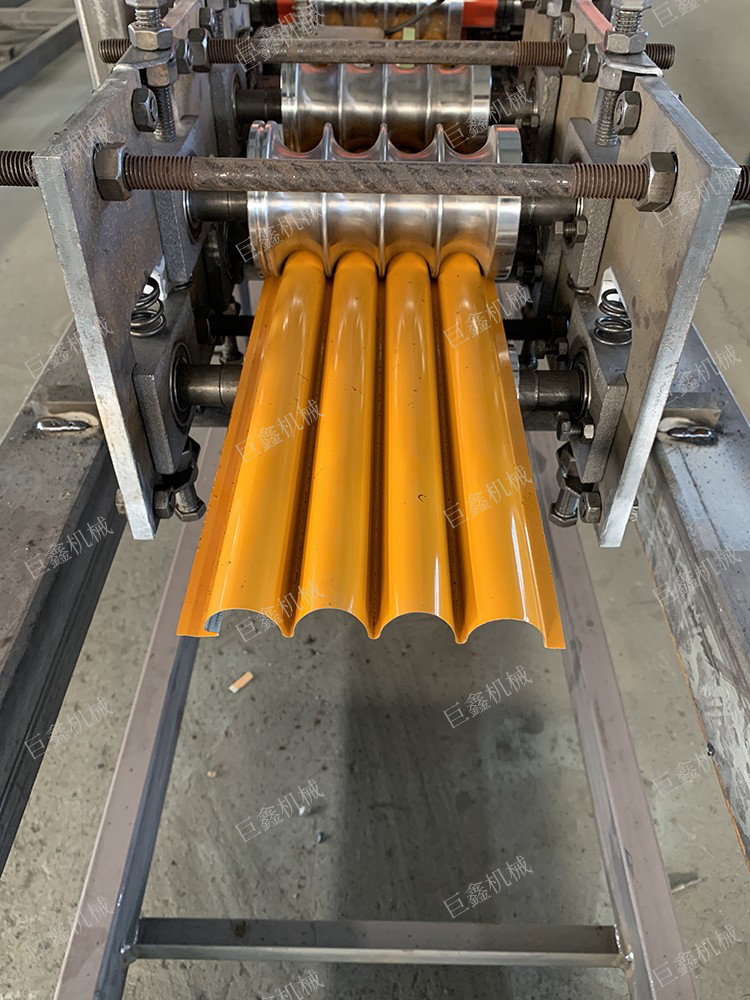
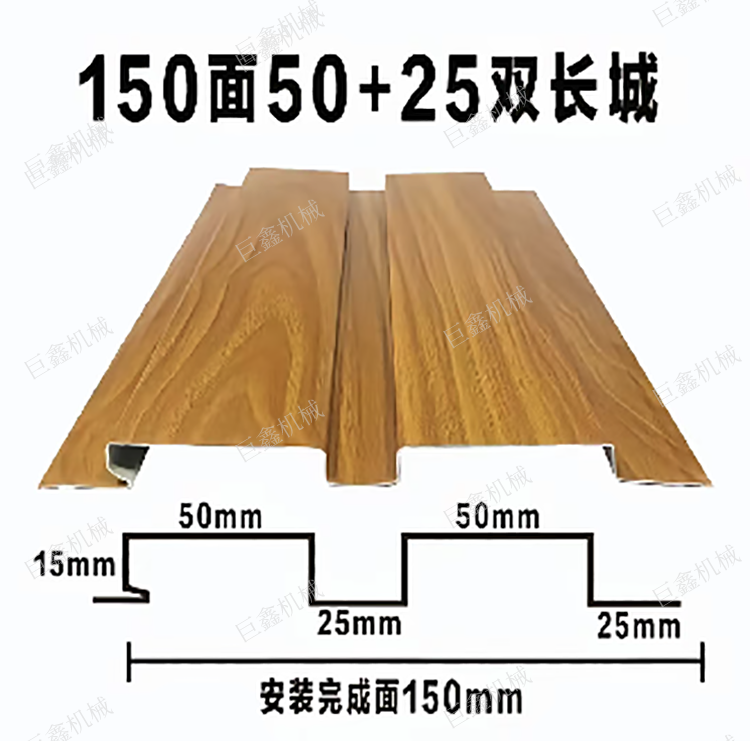
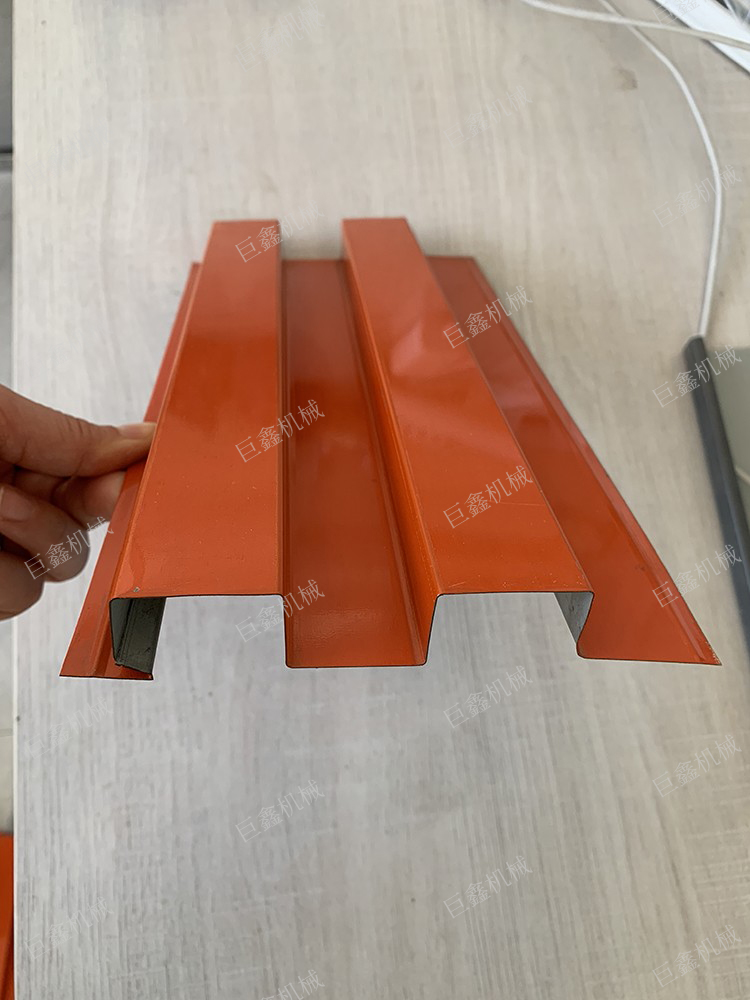
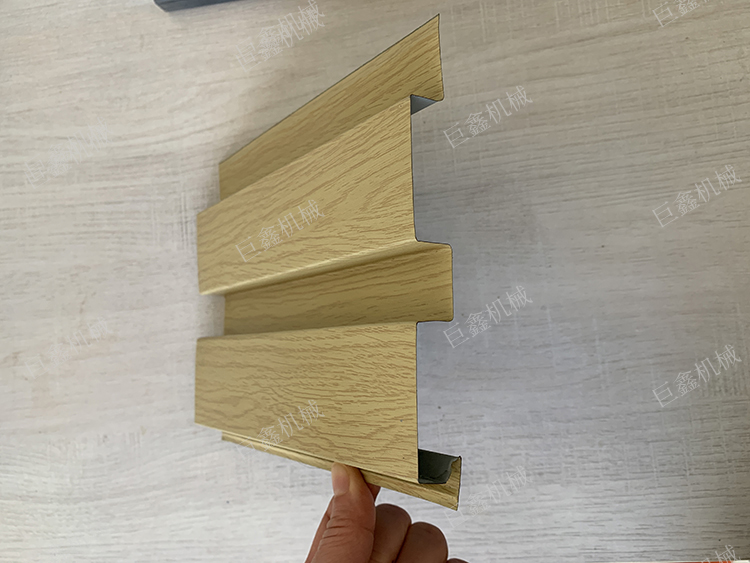
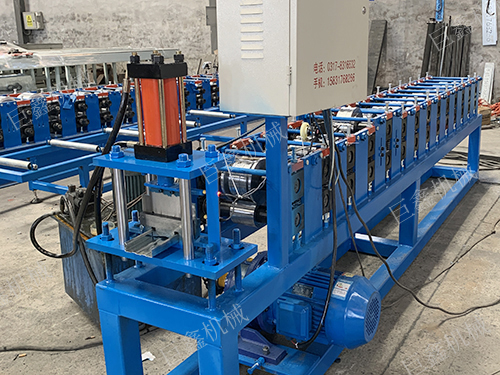
The Great Wall Plate Forming Machine is an automated complete set of processing equipment for metal cold bending forming. Its core function is to process flat metal coils into decorative enclosure panels with continuous concave convex groove structures through a physical deformation method of step-by-step rolling. The formed panels have the structural characteristics of interlocking and splicing, with regular installation and splicing gaps and good three-dimensional appearance. It is widely used in various scenarios such as steel structure factory exterior wall enclosure, commercial building facade decoration, indoor ceiling background wall, integrated box type house facade, and shop door decoration. It is a specialized forming equipment for industrial processing of new decorative building materials.
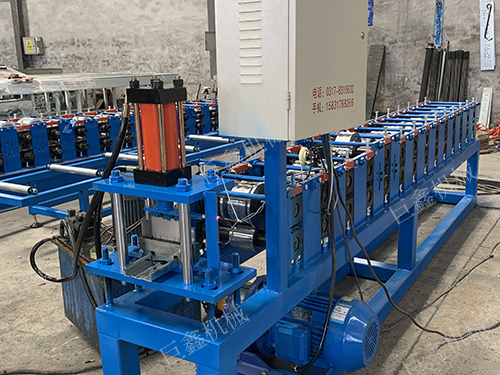
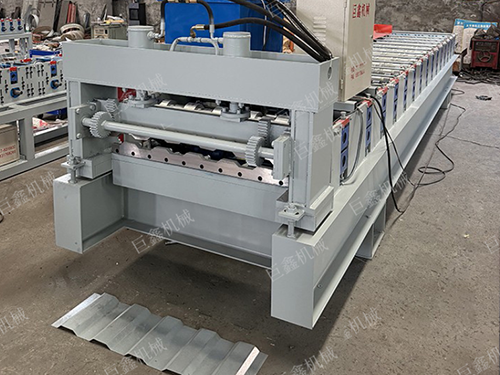
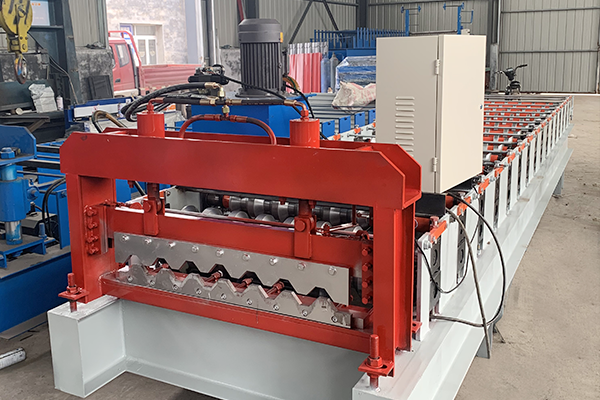
The overall equipment follows the cold bending process at room temperature to complete the shaping of the sheet metal, without generating high temperature processing throughout the process, and without damaging the mechanical properties of the metal substrate itself or the anti-corrosion coating on the surface of the sheet metal. The complete homework process is divided into multiple coherent modules. The raw steel coil is placed on the unwinding support frame to release the strip at a constant speed. The sheet enters the adjustable guide limit mechanism at the front end, and the feeding trajectory is corrected by adjusting the left and right stop blocks to avoid deviation and side slip during the operation of the coil, ensuring that the sheet is fed into the forming host in a straight state. Multiple component rolling rolls are arranged inside the host in the order of bending, using a progressive step-by-step bending design concept to gradually extrude the flat plate into standard protrusions and grooves, dispersing the internal stress generated by single deformation and reducing the probability of plate rebound, surface wrinkles, surface scratches, and other situations. After being shaped by all the rollers, the sheet metal moves to the tail cutting station. The hydraulic driven cutting mold completes automatic cutting according to the preset size of the control system. The finished sheet metal naturally slides down to the discharge tray, and the entire process can run continuously and cyclically.
The main frame of the whole machine is made of heavy-duty steel welding integrated construction. After the welding process is completed, it is subjected to aging stress relief treatment to release the accumulated internal stress of welding. Under long-term continuous rolling and heavy load conditions, the machine frame is not prone to shaking, twisting, guide rail offset and other problems. From the structural level, it ensures the long-term dimensional uniformity of the plate peak height, slot depth, and overall width. As the core consumable component, the forming roller is forged from alloy steel material and undergoes heat treatment processes such as quenching and chrome plating to improve surface hardness and wear resistance. Long term batch rolling of thin plates is less likely to cause roller surface wear and cavity deformation problems. The rolling mill adopts a modular assembly structure. When it is necessary to adjust the plate specifications or perform grinding and maintenance on the roller surface, the disassembly and assembly process is simple and will not interrupt production operations for a long time. The roller drive shaft is precision machined, with uniform coaxiality control. The entire transmission system runs smoothly with minimal vibration during operation, further improving the flatness of the formed sheet metal.
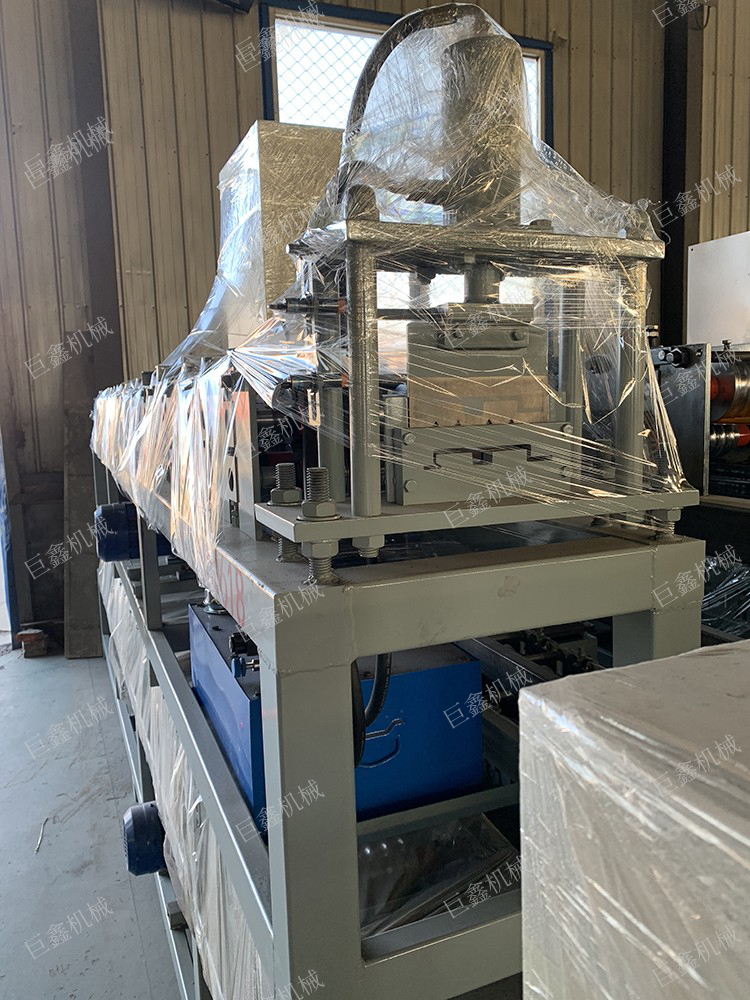
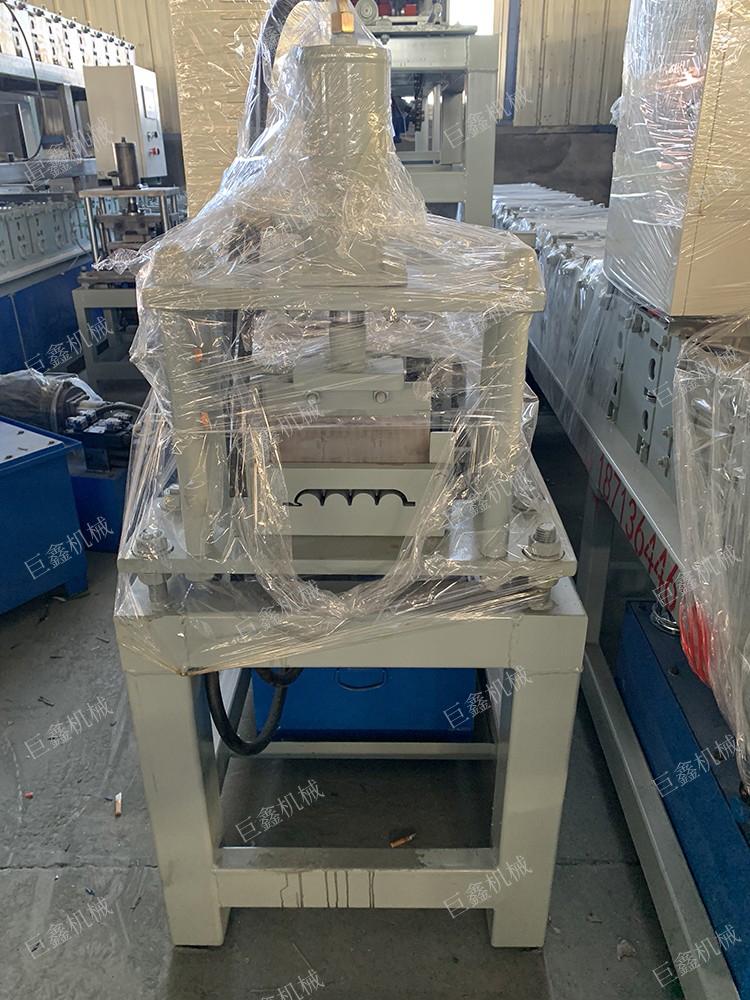
The cutting unit adopts an independent hydraulic power structure, and the cutting tool holder has sufficient rigidity. The bite gap of the cutting tool can be adjusted slightly according to the thickness of the processed sheet. The cut of the sheet after cutting is smooth, with fewer burrs on the edges, and does not require a large amount of manual secondary trimming treatment. The hydraulic oil system is equipped with impurity filter elements and overload automatic pressure relief protection devices. In the event of abnormal conditions such as plate jamming or hard debris getting stuck in the cutting edge, the system will automatically release the oil pressure, providing protection for core components such as oil cylinders, hydraulic pipelines, and cutting tools, and improving the safety and stability of equipment operation. The feeding guide frame relies on manual screws to achieve bidirectional displacement adjustment, which can adapt to metal coils of different width specifications, with a wide range of adaptability.
The equipment is equipped with an integrated electronic control system composed of programmable logic controllers, equipped with a touch operated display screen and a length counting encoder. After the operator inputs basic parameters such as the processing length of a single sheet, the number of single cycles, and the feeding operation speed on the operation interface, the equipment automatically completes the full closed-loop automation operation of feeding, roll forming, length detection, hydraulic cutting, and mechanism reset. The control system can store multiple sets of operating parameters for different versions, and when switching production specifications, the preset program can be directly called to reduce the time spent on repeated debugging. The operation mode is divided into two types: manual jog debugging and fully automatic continuous production. During the debugging stage, the molding effect can be viewed at low speed, and during batch production, the automatic mode can be turned on to continuously produce. The operation logic is simple, and the learning difficulty for beginners is relatively low. The electrical control cabinet has been equipped with basic dust and moisture protection, which can adapt to the dust and water vapor environment of conventional production workshops and reduce the probability of line faults.
In terms of material adaptation and application scope, this equipment can roll form commonly used decorative metal sheets such as color coated steel plates, galvanized sheets, aluminum zinc coated sheets, aluminum alloy sheets, stainless steel sheets, etc., and can stably process metal coils within the conventional thickness range. The Great Wall panels produced rely on the card slot overlapping structure to achieve rapid assembly. They can be used as exterior wall enclosure panels for industrial plants and warehouses, improving the sealing and weather resistance of building facades. They can also be used for exterior wall decoration of office buildings, exhibition halls, supermarkets, as well as indoor grid ceilings, entrance background walls, corridor facade decoration. At the same time, they are suitable for the production of exterior panels in container renovation rooms and modular activity board rooms. Together with shearing machines and bending machines, they form a complete decorative panel processing line, achieving integrated processing from coil cutting, pattern rolling to folding and closing.
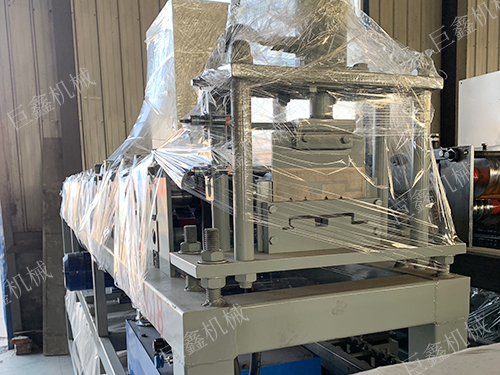
The daily operation and maintenance process of the equipment is simple and easy to execute. A closed protective baffle is installed outside the whole machine to block metal debris and workshop dust from entering the roller transmission gear, hydraulic valve group, and electrical wiring parts, delaying the aging and wear rate of components. All rotating and sliding points of the machine body are equipped with standardized lubrication nozzles, and lubricating grease is added according to the established cycle to ensure smooth operation of moving parts such as roller bearings, transmission chains, and sliding guides, reducing mechanical friction losses. The hydraulic system only needs to regularly check the clarity of the oil and replace the hydraulic oil and filter element on time to maintain stable power output. The overall maintenance does not require professional maintenance personnel to be on high frequency duty, which is in line with the equipment management rhythm of small and medium-sized building materials processing plants.
The forming accuracy of decorative panels directly affects the later assembly effect and the overall appearance texture of the building. The cold bending roll forming process, with its strong continuity and good consistency of the finished product, has become the mainstream process for large-scale production of Great Wall panels. This fully automatic forming equipment for Great Wall panels relies on a stable heavy-duty frame, graded progressive forming roller group, precise hydraulic fixed length cutting mechanism, and intelligent electronic control system to stably produce snap on decorative panels that meet assembly requirements. With a wide range of substrate adaptation capabilities, convenient specification switching methods, and low threshold post maintenance characteristics, it continues to play a role in industries such as building decoration materials, steel structure exterior enclosures, and modular housing processing, providing reliable equipment support for the industrial mass production of new facade decorative panels.