
You are here:HOME > PRODUCT > Square tube corner cutting machine >
Necking machine
13803170595

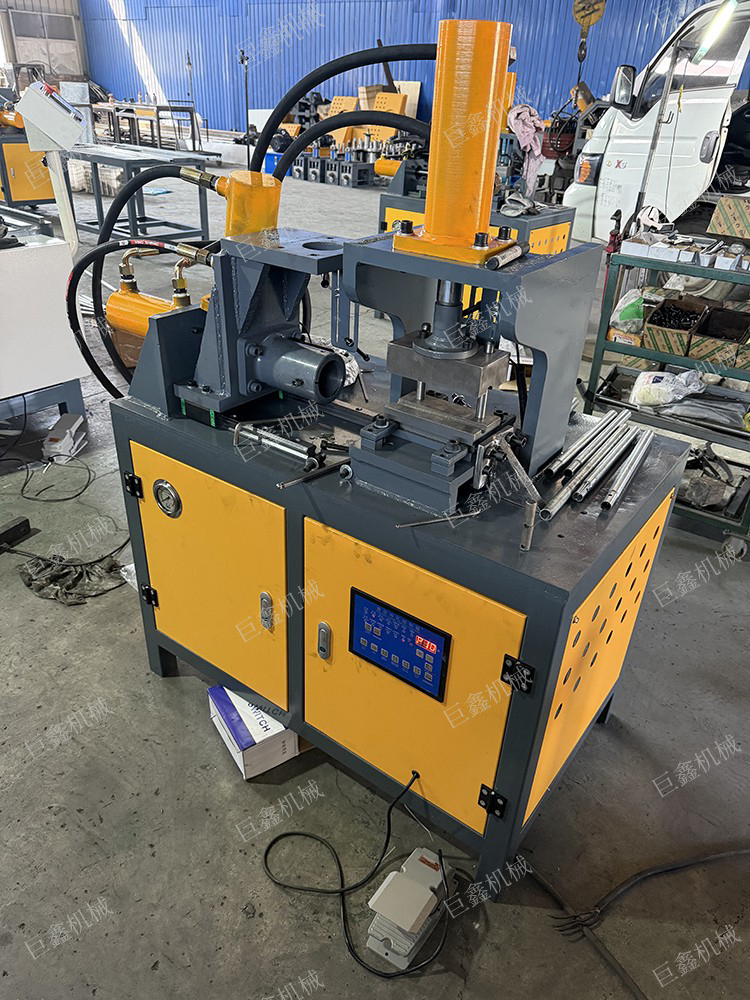
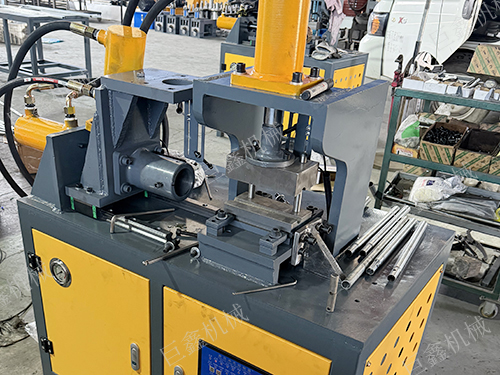
The hydraulic necking machine for pipes is a specialized equipment for deep processing of road traffic guardrail columns. It is mainly used for radial compression and necking of the ends of circular and square steel pipes used in guardrails, synchronously shrinking the inner and outer diameters of one end of the pipe to reduce the size, realizing the insertion and fitting of two columns, simplifying the on-site welding and splicing process, and improving the coaxiality and overall structural strength of the guardrail columns after docking. The finished pipe fittings processed by equipment are widely used in the processing of high-speed waveform guardrail columns, bridge reinforcement support pipes, slope protection rods, and factory anti-collision fence pipes. They are important end forming fixtures in the guardrail steel structure component assembly line.
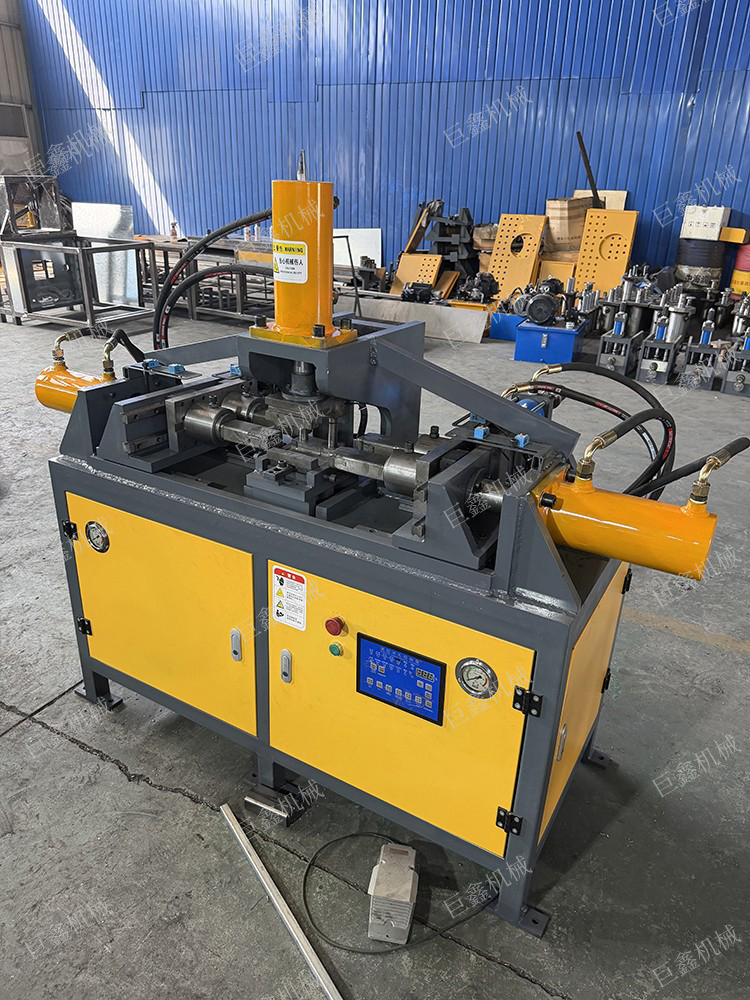
The equipment adopts the normal temperature hydraulic cold extrusion molding process, relying on high-power hydraulic cylinders to drive the shaping mold to apply uniform radial pressure to the pipe ports. The metal material slowly undergoes plastic deformation under external force, without high temperature heating throughout the process, which will not damage the mechanical properties of the steel pipe itself or the hot-dip galvanized anti-corrosion layer on the outer wall of the pipe. After processing, there is no need for secondary anti-corrosion repair before entering the next process. The whole machine is composed of a heavy-duty welded body, a hydraulic power pump station, a workpiece positioning and clamping mechanism, a multi specification necking mold assembly, a travel limit component, and a simple electrical control system. The structure is solid and compact, and a single person can complete the entire cycle of loading, locking, necking, loosening, and unloading, adapting to the continuous large-scale production rhythm of processing plants.
The host frame is formed by welding thick steel plates and large rectangular square tubes as a whole. After welding, it undergoes aging stress relief treatment to completely release the internal stress generated by welding. Under long-term high-frequency compression impact loads, the base of the fuselage will not experience distortion, weld cracking, or worktable depression, providing a stable structural foundation for the consistency of pipe mouth shrinkage size. The workbench has undergone milling precision machining, with high levelness and a matching pipe support frame that can slide forward and backward. The long pipe fittings are placed in a straight line to avoid the deformation of the closing ellipse caused by pipe warping and force deviation during the extrusion process. A semi enclosed protective baffle is installed on the side of the body to prevent a small amount of metal debris from splashing during the extrusion process, improve operational safety, and prevent dust and oil from accumulating at the connection between the hydraulic slider and the pipeline, thereby extending the service life of the components.
The precise positioning clamping mechanism is the core component to ensure the quality of the necking. After the pipe is sent to the workstation, the hydraulic clamp automatically holds the pipe body, firmly fixing the position of the workpiece, preventing the pipe from moving or rotating during squeezing, and effectively eliminating defects such as unilateral wall thickness thinning, wrinkles, cracking, and eccentric necking at the pipe mouth. The equipment is equipped with adjustable travel limit blocks, which can accurately control the depth of the pipe entering the mold. The closing length of each workpiece is completely uniform, and the tightness is consistent during on-site insertion. The necking mold is forged from high hardness alloy tool steel and undergoes quenching heat treatment as a whole. It has excellent compressive and wear-resistant properties and is not prone to mold cavity wear, collapse, and size increase during long-term repeated extrusion of steel pipes. The mold adopts a quick clamping structure. When replacing different pipe diameters and taper specifications, the fastening bolts can be removed to complete the replacement, greatly reducing the downtime for debugging.
The independent external hydraulic power unit provides stable extrusion pressure for the equipment, including a high-pressure oil pump, integrated control valve group, large capacity oil tank, and air-cooled cooling device. The extrusion propulsion speed is stable and uniform, and the return reset is fast. The hydraulic oil circuit is equipped with high-precision oil filter cartridges and pressure overload overflow protection valves. When the pipe is placed askew, the mold is stuck, or the system pressure exceeds the rated value, it automatically releases pressure to protect the oil cylinder, high-pressure oil pipe, mold, and the entire machine frame from overload damage. All hydraulic pipelines are equipped with pressure resistant and explosion-proof hoses, and the joints are tightly sealed to prevent oil leakage during long-term continuous operation.
The electrical control system is designed to be simple and easy to use. The body control panel is equipped with oil pump start, jog forward, and emergency stop buttons, paired with a foot switch linkage mode. After positioning the pipe with the operator's hand, stepping on the foot switch can start a complete necking cycle, and both hands can synchronously place the next pipe to be processed, effectively improving the efficiency of the assembly line operation. The electrical enclosure is equipped with dust-proof, oil proof, and moisture-proof protection levels, which can adapt to harsh working conditions such as high dust, frequent vibration, and high cutting oil stains in steel structure processing workshops, reducing the probability of faults such as circuit aging, short circuit, and contactor failure due to moisture.
In the entire process of processing guardrail components, the shrinkage at the end of the column directly determines the precision of the two steel pipes' insertion and matching. The smooth and uniform closure of the pipe fittings ensures good coaxiality during on-site splicing, and the overall bending resistance is stronger after welding. The processed pipes of this equipment can be directly transferred to the cutting, punching, bending, and spraying processes, and can be matched with pipe bending machines, 130 column punching machines, and guardrail forming machines to build a complete guardrail column full process deep processing production line. After replacing different molds, the equipment can also be used for processing greenhouse steel pipes, scaffold pipes, mechanical component sleeves, and water supply and drainage pipe end closures, with strong versatility.
The daily maintenance and operation of the equipment are simple and convenient. After daily completion, residual iron filings in the workbench and mold cavity are cleaned, and lubricating grease is regularly added to the clamping slide and guide rail to ensure that the sliding parts are not stuck. Check the oil level and cleanliness of the hydraulic system according to the usage cycle, replace the hydraulic oil and filter element on schedule, and prevent impurities from scratching the inner wall of the oil cylinder. The electrical part only requires regular tightening of the wiring terminals and testing of the sensitivity of the foot switch, without the need for complex professional disassembly and maintenance. Long term operation and maintenance costs are low, and it is friendly to the operating threshold of production personnel.
The roundness, wall thickness uniformity, and closure length of the pipe directly affect the quality of the column insertion assembly and the overall stability of the anti-collision structure. Hydraulic cold extrusion equipment, with the advantages of uniform extrusion force, firm positioning, and high repeatability of the finished product, has become the preferred equipment for processing the end of guardrail pipes. This specialized pipe necking machine for guardrails relies on high-strength welding frames, automatic hydraulic locking systems, wear-resistant replaceable molds, and multiple hydraulic safety protection structures to efficiently complete various security column port necking and shaping operations. With its low failure rate, flexible specification switching, and wide range of pipe adaptability, it plays a stable role in the steel structure processing industry of road traffic guardrails, providing reliable end forming tooling support for the industrial mass production of the complete set of column components for waveform guardrails.