
You are here:HOME > PRODUCT > Single layer tile press machine >
910 type tile press machine
13803170595

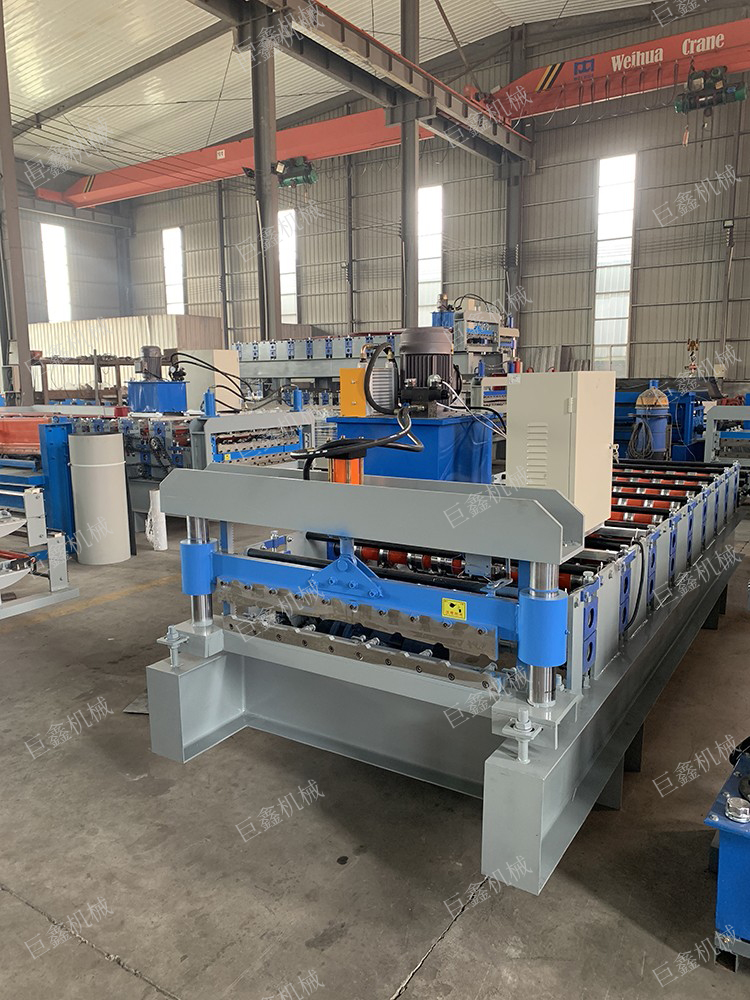
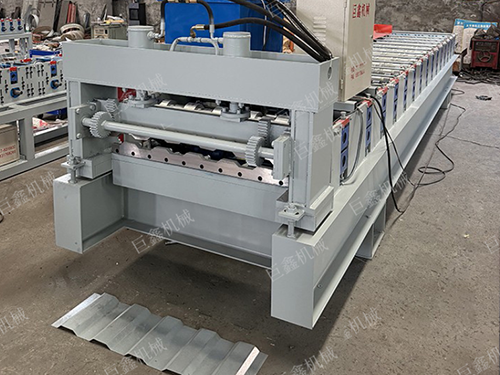
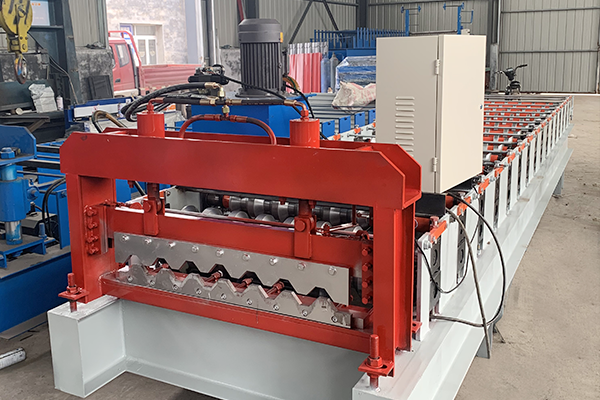
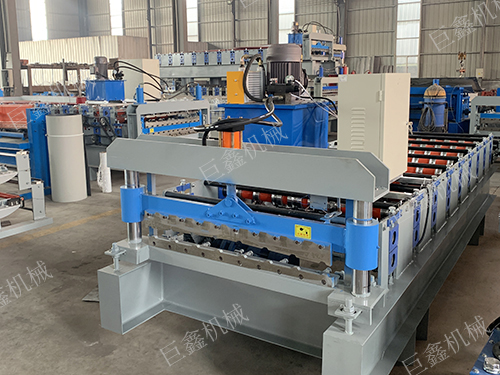
The 910 type tile press is a widely used metal cold bending roll forming equipment, mainly used to continuously bend and shape roll shaped raw materials such as color coated steel plates, galvanized steel plates, aluminum alloy sheets, etc., and process 910 specification roof profiled sheets. The formed sheets are mostly used for roof enclosure of steel structure factories, logistics warehouses, agricultural breeding sheds, and small and medium-sized prefabricated buildings, and can also be used for decoration and laying of some wall facades. The equipment has been fully optimized according to the needs of export use, taking into account long-distance ocean transportation, voltage standards in different regions, temperature and humidity differences in the working environment. Targeted adjustments have been made in disassembly and assembly structure, electrical adaptation, overall durability and molding accuracy, which can adapt to on-site installation and long-term continuous production in multiple overseas locations.
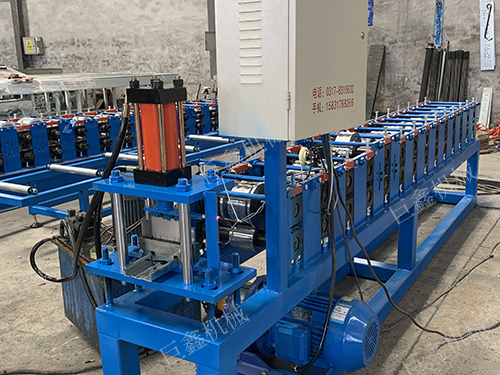
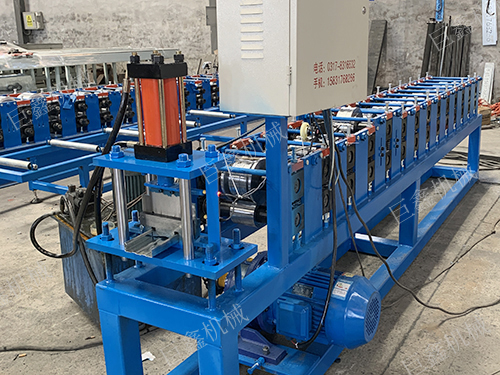
The whole machine adopts a modular design, which is divided into five independent units: the feeding support frame, the plate leveling guide device, the main machine forming roller assembly, the hydraulic cutting mechanism, and the independent electrical control box. The biggest advantage of modular construction is that it can be disassembled and boxed, greatly reducing the space occupied inside the container. During sea freight hoisting and long-distance transportation, it reduces the probability of deformation of the equipment frame caused by compression and collision. After the equipment is transported to the site of use, the operators follow the assembly instructions to complete the alignment and splicing of each module, tighten the connecting bolts, connect the lines and hydraulic pipelines to complete the assembly. The technical requirements for on-site installation personnel are relatively moderate and can adapt to the installation conditions of overseas simple processing workshops and outdoor temporary work sites. The main frame of the equipment is made of thickened steel welded as a whole. All welding joints are finely polished and coated with multiple layers of anti-corrosion and protective coatings. It can maintain structural stability in the face of high humidity coastal environments, dusty processing workshops, and outdoor areas with significant temperature differences throughout the year. Long term continuous operation is not prone to frame shaking, rust and paint peeling, and loose connection parts.
The forming roller assembly is the core component that determines the forming effect of the 910 version. The roller is processed by precision CNC machining and surface hardening treatment, and the surface of the roller body is smooth and flat, without scratching the protective coating on the surface of the coil. Multiple sets of forming rollers are arranged in a progressive bending sequence, gradually changing the cross-sectional shape of the metal sheet in multiple processes, to avoid excessive internal stress caused by a single large angle bending, resulting in problems such as surface cracking and coating peeling. After continuous shaping of the entire set of roller conveyors, the peak height, overlap width, and overall flatness of the finished board remain consistent, and the boards are tightly interlocked and spliced. After being laid on the roof, a coherent and complete protective surface layer can be formed, improving the overall sealing performance of the roof. The entire set of rolling mills is driven by a reducer and a synchronous transmission chain, with small transmission clearance, smooth vibration during equipment operation, and reasonable noise control. Long term uninterrupted batch processing can also ensure uniform and stable feeding speed, effectively controlling product size deviation.
The front end of the equipment is equipped with a coil placement rack and a plate leveling and correction mechanism. After the metal coil is placed on the rack, multiple sets of flattening rollers are used to stretch the inherent curling curvature of the coil, releasing the internal stress of the plate and allowing it to enter the forming channel in a straight state, effectively avoiding common operating faults such as material deviation, one-sided jamming, and misaligned forming edges. The feeding speed of the equipment can be flexibly adjusted according to the thickness of the raw materials and the production plan, and it has good adaptability to various metal sheet coils within the conventional thickness range. The feeding smoothness is high, and it is not easy to cause material blockage or jamming during the production process.
The cutting system adopts hydraulic cutting mode, combined with high-precision pulse counting device to achieve automatic fixed length cutting. The operator sets the required length of a single sheet in the control panel, and the equipment automatically completes feeding and roll forming. When the sheet reaches the preset length, the hydraulic knife holder automatically falls down to complete horizontal cutting. The cut is smooth and flat, without burrs, curled edges, or pressure depression of the sheet. The length error of the single finished product is within a reasonable range, and the consistency of the specifications of the mass-produced sheet is high. The cut sheet automatically slides down to the discharge tray, forming a fully automatic closed-loop production line from raw material loading to finished product unloading. Only one staff member is needed for daily coil supply and equipment status inspection, reducing errors caused by manual operation.
The electrical control system has been upgraded specifically for export scenarios, with core electrical components using highly versatile industrial accessories that support multi gear voltage switching and match industrial power supply parameters from different countries and regions. This solves the problem of equipment failure and electrical component damage caused by voltage mismatch during cross-border use. The layout of the operation panel is simple, the parameter setting logic is clear, and it is equipped with safety functions such as motor overload protection, emergency stop, and automatic fault prompt. In case of board jamming, high motor load, abnormal hydraulic pressure, etc., the system will automatically stop to protect core components and improve operational safety. The internal wiring is neatly organized, and the control box is equipped with a sealed protective shell, which has basic waterproof and dustproof capabilities and can operate stably for a long time in an open and simple factory building.
The equipment does not require high requirements for the usage site, and can be put into operation after a flat and hardened ground is placed with fixed feet, without the need to pour specialized equipment foundations. The daily maintenance operation is simple. Regularly add lubricating oil to the rotating parts such as the transmission chain and bearings, clean the metal debris and dust accumulated on the surface of the rolling mill, check the sealing of the hydraulic pipeline, and easily disassemble and replace vulnerable parts. It is convenient for users to independently complete routine maintenance and repair.
The 910 version, with its moderate coverage width and good structural stability, is frequently used in the construction of light steel roof structures worldwide. This export version of the 910 type tile press is optimized and upgraded around four key points: cross-border transportation disassembly and packing, multi country voltage compatibility, complex environment tolerance, and high-precision forming. It relies on mature and reliable cold bending forming technology to stably output standardized roof profiled sheets, providing stable equipment support for automated processing of prefabricated building materials for overseas assembly, and meeting the actual needs of large-scale production in the steel structure construction industry in various regions.
This is a cold bending equipment designed for producing color steel wall panels and roof panels. The whole machine, PLC computer control system, and products have the characteristics of light weight and heavy load-bearing capacity, and are widely used in the multi story steel structure construction industry.
It has a simple mechanical structure, does not require complex roller changing and control systems, and has low maintenance costs in the future.
Advantages: The structure is sturdy, the performance is stable, the core rolling mill has a long service life, and it performs well in continuous production of a single plate type.
Mechanical transmission: Usually driven by a gearbox, it has good synchronization, smooth operation, and a relatively low failure rate.
No need for specialized technicians: Control systems are usually simple relays and counters that can be independently operated by ordinary workers after brief training, with low personnel requirements.
Easy debugging: Once the debugging is completed, there is almost no need to adjust it again for daily production, and it can be started up for production.
Small footprint and flexible layout
设备整体长度较短,对生产车间的空间要求不高,甚至可以在较小的场地内进行安装和生产。