
You are here:HOME > PRODUCT > Single layer tile press machine >
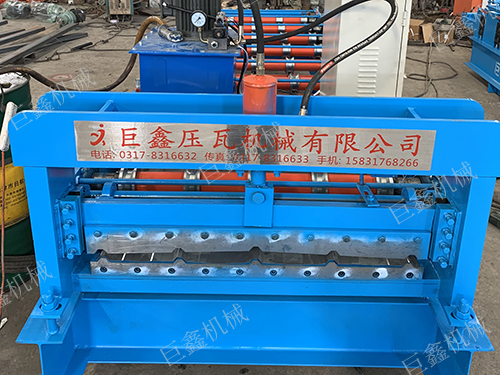
900 type tile press machine
13803170595

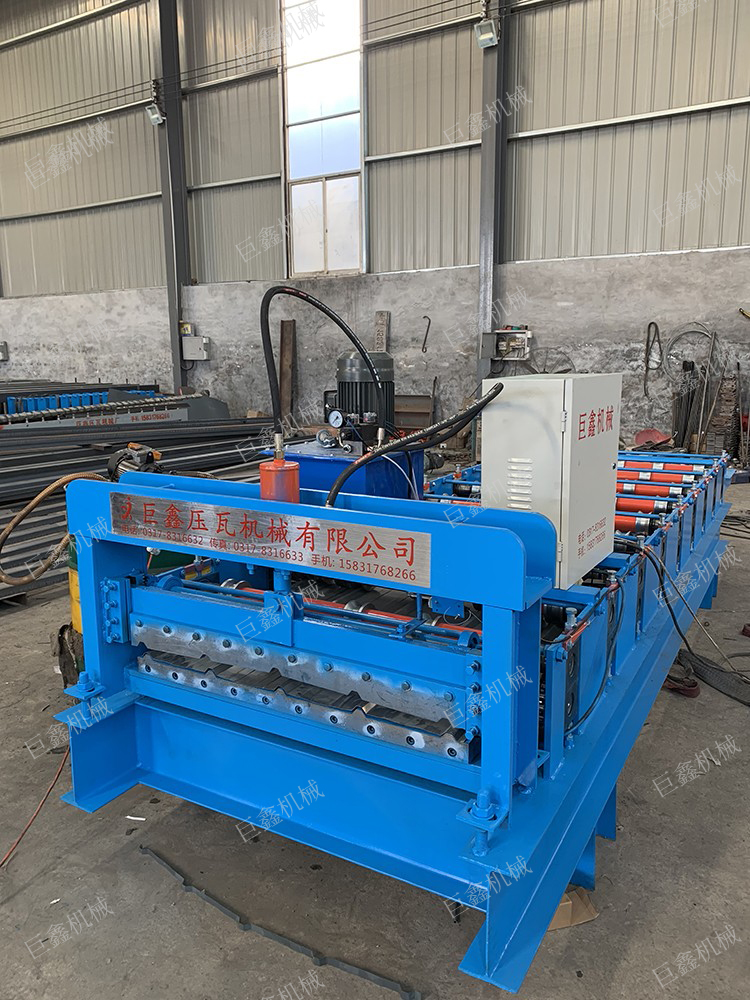
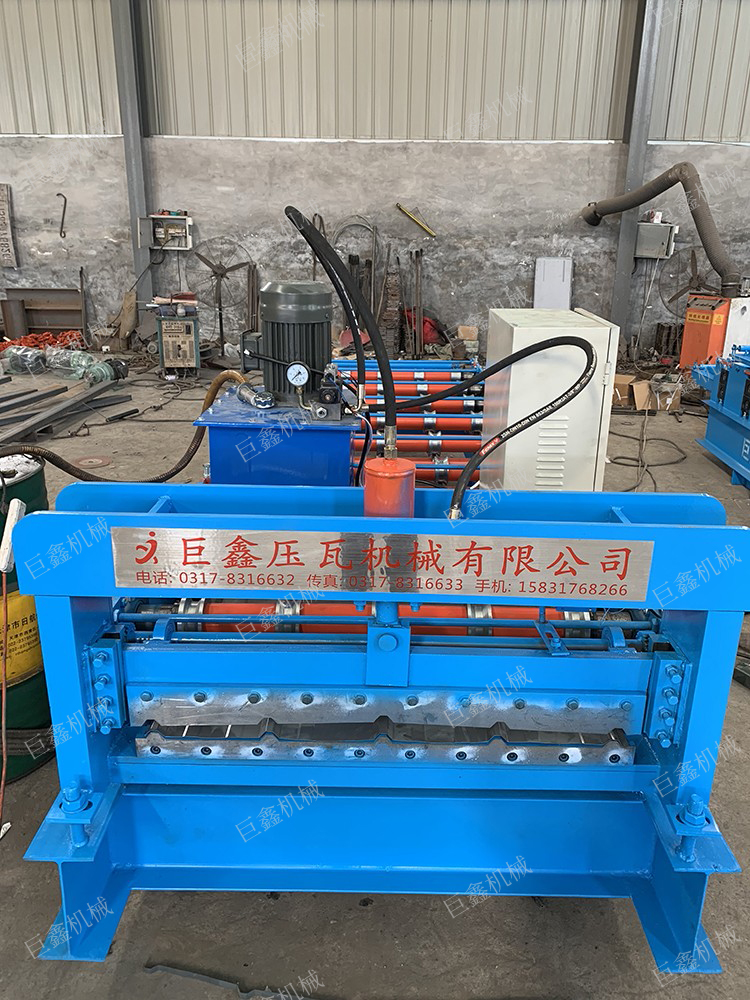
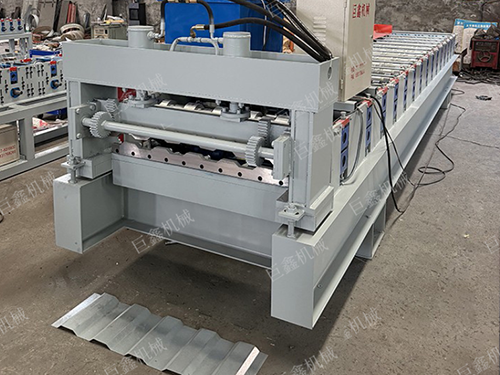
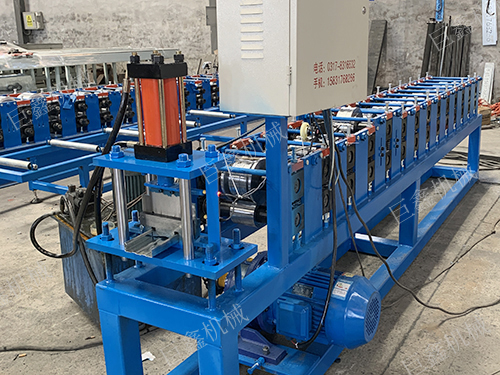
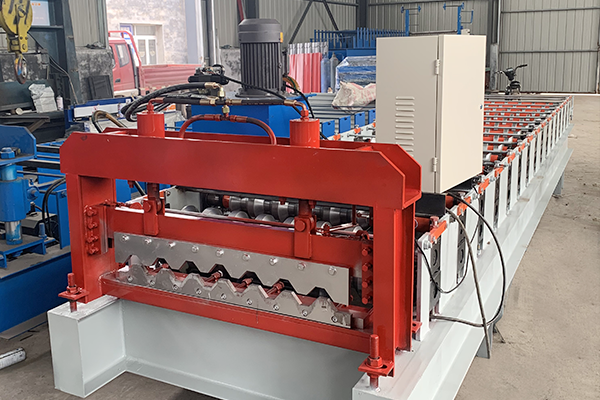
The 900 type tile press belongs to the industrial processing equipment of metal cold bending roll forming. It mainly performs continuous progressive bending processing on roll shaped raw materials such as color coated steel plates, galvanized steel plates, and aluminum alloy thin plates, and obtains 900 specification roof profiled sheets after forming. Formed sheet metal is widely used for roof enclosure in light steel factories, logistics warehouses, agricultural greenhouses, and small and medium-sized outdoor prefabricated buildings. In some scenarios, it can also be used as wall decorative panels. The equipment is designed with comprehensive optimization based on overseas export conditions, fully considering long-distance container transportation, differences in power supply systems in different regions, and outdoor working environments with varying temperatures and humidity. It has been adapted and adjusted in multiple dimensions such as ease of disassembly and assembly, electrical universality, overall structural strength, and sheet forming accuracy to meet the installation conditions and long-term continuous production requirements of construction sites in different regions.
The whole machine adopts a modular modular architecture, which can be disassembled into five independent functional modules: coil feeding bracket, plate leveling guide mechanism, main machine forming roller assembly, hydraulic cutting execution unit, and independent sealed electrical control box. The core value of modular splitting lies in reducing container loading space, allowing each component to be individually packaged and fixed. During ocean lifting and cross regional transportation, it minimizes the deformation caused by compression and collision of the frame, as well as the risk of component damage caused by collision. After the equipment arrives at the target site, the operators follow the matching assembly instructions to complete the alignment and splicing of each module, tighten the connecting bolts, and connect the hydraulic pipelines and control lines to complete the overall assembly. The professional technical requirements for on-site assembly personnel are moderate and can adapt to installation environments such as overseas simple processing sheds and outdoor temporary work sites. The main frame of the equipment is welded with thickened steel, and all welding seams are polished and repaired. Multiple layers of anti rust and anti-corrosion coatings are sprayed as a whole. It can maintain structural stability in the face of high humidity salt spray environments along the coast, dust intensive processing workshops, and outdoor working conditions with large temperature fluctuations between day and night. Long term continuous operation is not prone to problems such as frame loosening, paint peeling, and welding point corrosion.
The forming roller assembly is the core component that ensures the quality of 900 plate forming. The roller is processed by precision CNC cutting and surface strengthening treatment, and the surface of the roller body is smooth and rounded. When rolling metal coils, it will not scratch the protective coating on the surface of the sheet. Multiple sets of forming rollers are arranged in an orderly manner according to the logic of step-by-step bending, gradually changing the cross-sectional shape of the metal sheet in multiple processes to avoid stress concentration inside the sheet caused by a single large angle bending, which can lead to adverse phenomena such as surface cracking and coating peeling. After continuous shaping of the entire set of roller conveyors, the peak height, effective coverage width, overlapping bite size, and flatness of the finished board can be maintained at a uniform height. The boards are tightly spliced and fitted together, and after laying, a complete and coherent roof protective layer can be formed, effectively improving the overall sealing effect of the roof. The entire set of rolling mills is synchronously driven by a reducer combined with a high-strength synchronous transmission chain, with transmission clearance controlled within a small range. The vibration during equipment operation is smooth, and the noise is maintained at a reasonable level. Long term uninterrupted batch processing can still maintain uniform feeding speed, effectively controlling the dimensional consistency of the finished sheet metal.
The feeding end of the equipment is equipped with a dedicated coil support frame and a plate leveling and correction component. After the metal coil is placed in place, multiple sets of flattening rollers are used to stretch the inherent curling curvature of the coil, releasing the residual stress inside the plate and allowing it to be smoothly fed into the forming track in a horizontal and straight state, effectively reducing common operating failures such as material deviation, unilateral jamming, and misalignment of the forming side. The feeding speed of the equipment can be flexibly adjusted according to the thickness of the raw materials and the production rhythm on site. It has good adaptability to various types of metal sheet coils within the conventional thickness range. The feeding process is smooth and smooth, and is not prone to material blockage, jamming, and shutdown.
The cutting process adopts a hydraulic cutting structure, combined with a high-precision pulse counting device to achieve fully automatic fixed length cutting. The operator inputs the target length parameters required for a single sheet in the control panel, and the equipment automatically completes the feeding and continuous roll forming. When the sheet reaches the preset length, the hydraulic knife holder automatically descends to complete the horizontal cutting, and the cutting section is smooth and flat, without defects such as curled edges, burrs, and sheet compression depressions. The length error of the single finished product is controlled within a reasonable range, and the batch produced sheet has strong uniformity in specifications. The finished sheet material that has been cut automatically slides down to the discharge tray, forming a complete automated closed-loop production line from the loading of the coil material to the unloading of the finished product. Only one staff member is needed for daily coil supply and overall equipment status inspection, reducing size deviation caused by manual intervention.
The electrical control system is specially adapted and upgraded for export use scenarios. The core electrical components are selected from internationally recognized industrial accessories, supporting multi gear voltage switching and matching industrial power supply parameters from different countries and regions, avoiding problems such as equipment failure to start and electrical component burnout caused by inconsistent electrical compression. The operation control panel interface is simple, the parameter setting logic is intuitive and easy to understand, and it integrates multiple safety protection mechanisms such as motor overload protection, emergency stop, and automatic operation fault prompt. Once problems such as plate jamming, motor load exceeding the standard, and hydraulic system pressure abnormality are detected, the system will immediately stop and lock, protecting the core transmission and hydraulic components from overload loss and improving the overall operation safety factor. The internal wiring of the equipment is neatly tied and stored, and the control box is equipped with a sealed protective shell, which has basic waterproof and dustproof performance. It can be stably operated in open simple workshops and outdoor processing areas for a long time.
The equipment has relatively loose conditions for ground use, and only requires a flat and hardened concrete floor with fixed feet to be placed before it can be put into use, without the need to pour specialized equipment foundations. The daily maintenance process is simple. Regularly add lubricating grease to the rotating points such as the transmission chain and bearings, clean the metal debris and floating dust accumulated on the surface of the rolling mill, and check the sealing status of the hydraulic pipeline. The disassembly and replacement steps of vulnerable parts are simple, making it easy for users to independently complete routine maintenance and accessory replacement.
The 900 version, with its moderate effective coverage width and good mechanical structural performance, is widely used in the construction of light steel roof structures worldwide. This export version of the 900 type tile press has been optimized and upgraded around four core directions: ocean logistics disassembly and packing, multi country voltage compatibility, complex environment tolerance, and high-precision stable forming. Relying on mature and reliable cold bending forming technology, it continues to produce standardized roof profiled sheets, providing solid and stable equipment support for the automation processing of overseas prefabricated steel structure building materials, and meeting the actual needs of large-scale and standardized production in the steel structure building industry in various regions.
This is a cold bending forming equipment designed specifically for producing color steel wall panels and roof panels. The whole machine, PLC computer control system, and products have the characteristics of light weight and heavy load-bearing capacity, and are widely used in the multi story steel structure construction industry.
It has a simple mechanical structure, does not require complex roller changing and control systems, and has low maintenance costs in the future.
Advantages: The structure is sturdy, the performance is stable, the core rolling mill has a long service life, and it performs well in continuous production of a single plate type.
Mechanical transmission: Usually driven by a gearbox, it has good synchronization, smooth operation, and a relatively low failure rate.
No need for specialized technicians: Control systems are usually simple relays and counters that can be independently operated by ordinary workers after brief training, with low personnel requirements.
Easy debugging: Once the debugging is completed, there is almost no need to adjust it again for daily production, and it can be started up for production.
Small footprint and flexible layout
The overall length of the equipment is relatively short, and the space requirements for the production workshop are not high. It can even be installed and produced in a smaller area.