
You are here:HOME > PRODUCT > Single layer tile press machine >
820 Type Angular Pressure Tile Machine
13803170595

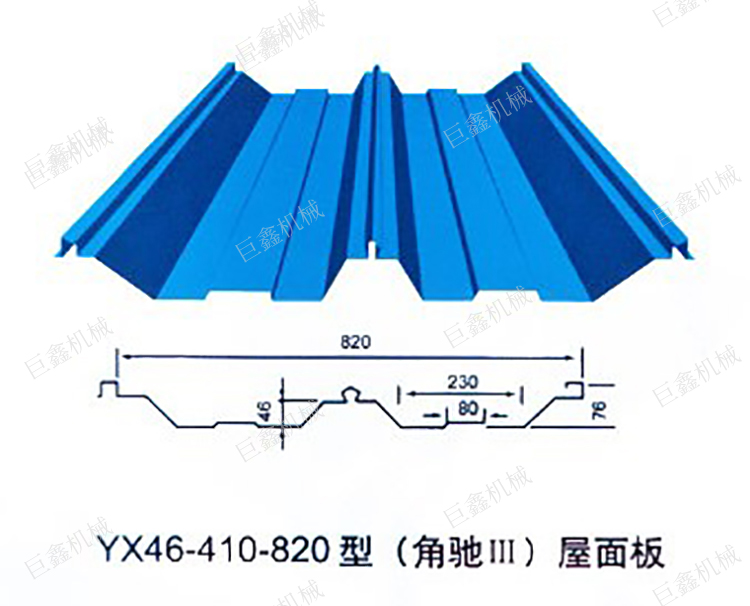
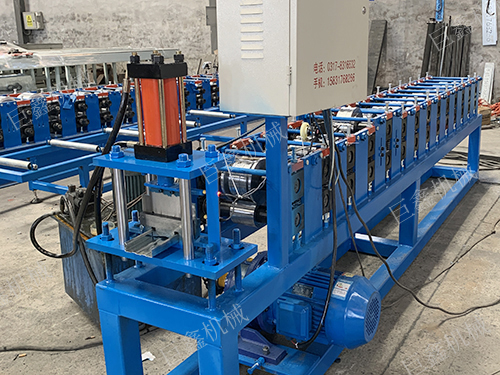
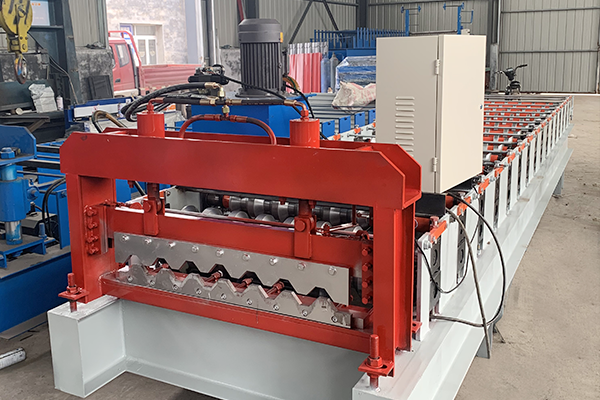
The 820 type corner roller press tile machine belongs to the special cold bending roll forming equipment for concealed metal roofs. It relies on multiple sets of rollers to gradually bend the metal coil and process it into 820 specification corner roller plate roof panels. This type of board adopts a hidden overlapping installation method, with no exposed perforation points on the board body. It is mainly used for building top enclosures with high requirements for roof waterproofing performance in large and medium-sized steel structure factories, exhibition halls, logistics and warehousing centers, large agricultural markets, etc. It is also a commonly used roof supporting board for large light steel public buildings overseas. The whole machine is designed with comprehensive optimization according to export standards, fully considering long-distance transportation of ocean containers, differences in power supply systems in different regions, coastal humid salt spray, and dusty outdoor working environments. Systematic adjustments have been made in terms of disassembly and assembly structure, electrical universality, body corrosion resistance, and pattern forming accuracy, which can meet the on-site installation conditions and long-term continuous and stable production needs in multiple overseas locations.
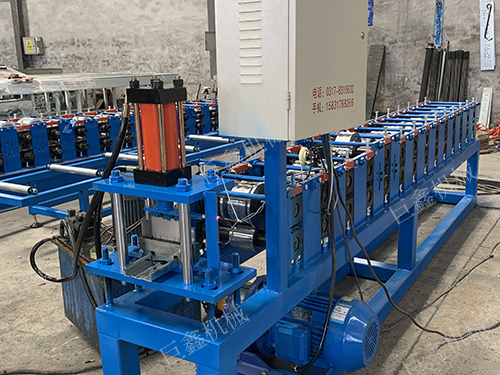
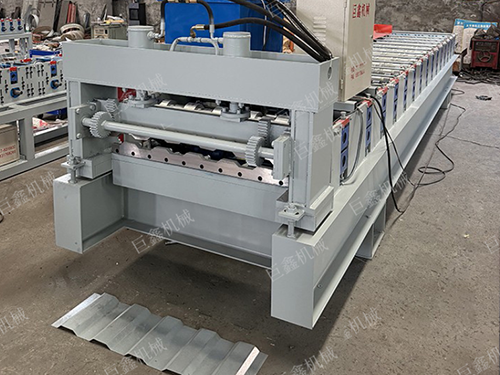
The whole machine adopts a modular assembly structure, which is disassembled into five independent functional modules: the coil feeding bracket, the plate leveling guide mechanism, the main machine corner bending forming roller assembly, the hydraulic fixed length cutting unit, and the independent sealed electrical control box. Modular disassembly design can effectively reduce the loading volume of containers, and each component can be individually packaged and fixed. During ocean lifting and cross-border transportation, it reduces the probability of equipment frame deformation caused by compression and precision roller collision damage. After the equipment is delivered to the site of use, the operator follows the assembly instructions to complete the module alignment and splicing, tighten the connecting bolts, and connect the hydraulic pipelines and control lines to complete the assembly. The practical technical threshold for on-site installation personnel is relatively friendly, and it can be adapted to installation environments such as overseas simple processing plants and outdoor temporary processing sites. The main frame of the equipment is made of thickened steel welded into one piece, and all welding joints are polished and leveled. Multiple layers of anti-corrosion and anti rust coatings are sprayed on the outside. Facing high humidity coastal environments, dust gathering workshops, and outdoor working conditions with large temperature fluctuations between day and night, the body structure is not prone to looseness, paint peeling, rust and other problems, ensuring structural stability for long-term continuous operation.
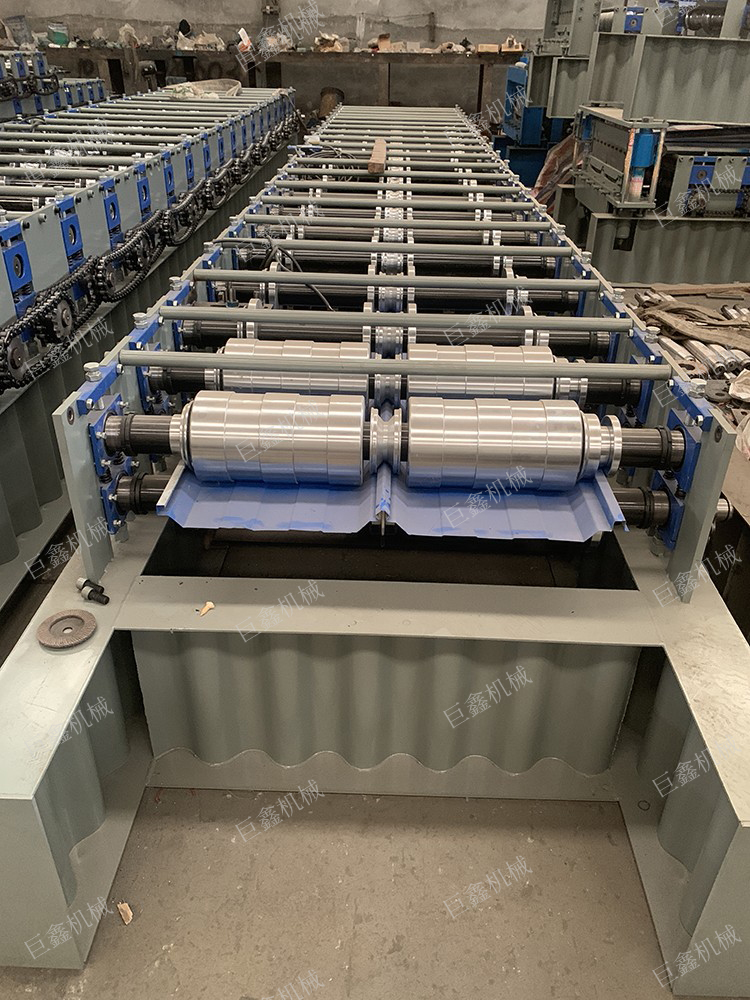
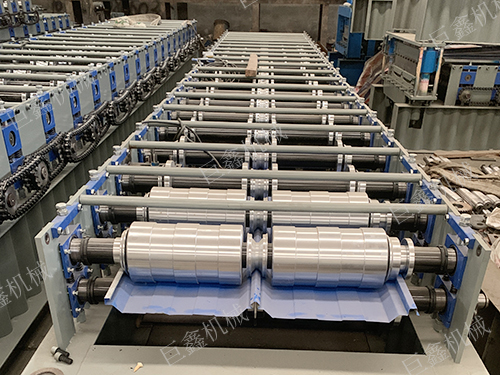
The core forming roller assembly is a key component for shaping the Jiaochi 820 hidden buckle pattern. The roller is processed by precision CNC machining and surface hardening treatment, and the surface of the roller body is smooth and rounded. During the rolling process, it will not scratch the surface protective layer of the color coated plate, galvanized plate, and aluminum alloy plate. Multiple sets of forming rollers follow a progressive bending arrangement logic, gradually changing the curvature of the sheet section and the buckle structure in multiple processes, to avoid excessive one-time bending force that may cause stress cracking and paint peeling of the sheet. After multi-stage roll molding, the finished board has a uniform curvature of the corner buckle, effective coverage width, and flatness height of the board surface. The boards are fixed to each other by built-in buckles, and the overall sealing of the roof is better after installation, reducing the hidden danger of rainwater leakage. The entire roller set is driven by a reducer combined with a synchronous transmission chain, with small transmission clearance, slight vibration during equipment operation, and reasonable operating noise. It can also maintain uniform feeding for long-term uninterrupted batch processing, effectively controlling the size error of a single batch of boards.
The feeding end of the equipment is equipped with a coil support frame and a plate leveling and correction component. After the metal coil is placed on the rack, multiple sets of pressure wheels are used to smooth out the curling stress of the coil, allowing the plate to enter the forming channel in a straight state, reducing operational failures such as material deviation, unilateral jamming, and misalignment of the buckle forming from the source. The feeding speed can be flexibly adjusted according to the thickness of the sheet and the production rhythm, adapting to the processing requirements of conventional thin metal coils. The feeding smoothness is high, and the production process is not prone to jamming and blockage.
The cutting system is equipped with a hydraulic cutting structure, combined with a high-precision pulse counting device to achieve fully automatic fixed length cutting. The staff inputs the required length of the sheet metal into the control panel, and the equipment automatically completes the feeding and corner type rolling forming. After reaching the set size, the hydraulic knife holder automatically cuts, and the cut is flat and smooth, without defects such as burrs, curled edges, and sheet compression deformation. The length error of the finished product is controlled within a reasonable range, and the batch output of sheet metal has strong consistency in specifications. The cut sheet automatically slides down to the discharge tray, forming a fully automatic closed-loop production line from raw material loading to finished product discharge. Only one staff member is needed to complete the coil supply and equipment inspection on a daily basis, reducing the accuracy deviation caused by manual operation.
The electrical control system is specially adapted and upgraded for export scenarios. The core electrical components are selected from internationally recognized models, supporting multi gear voltage switching and matching different national industrial power supply standards to avoid situations where equipment cannot start or electrical components are damaged due to voltage system mismatch. The layout of the operation panel is simple, the parameter setting logic is clear, and it has built-in protection functions such as motor overload protection, emergency stop, and automatic fault reminder. When the board is stuck, the load exceeds the standard, and the hydraulic pressure is abnormal, the system automatically stops and locks, protecting the core transmission and hydraulic components from damage and improving the safety factor of the operation. The internal wiring is well-organized, and the control box is equipped with a sealed protective cover, which has basic waterproof and dustproof performance and can operate stably in open processing sites for a long time.
The equipment has simple requirements for the usage site, and can be put into operation with a flat and hardened ground and fixed feet, without the need to pour specialized equipment foundations. The daily maintenance operation is simple. Regularly add lubricating grease to the transmission chain and bearings, clean the dust and metal debris on the surface of the rolling mill, check the sealing of the hydraulic pipeline, and easily disassemble and replace vulnerable parts. It is convenient for users to independently complete routine maintenance and repair.
The 820 corner car version is widely used in large-span roof engineering due to its excellent waterproof performance brought by the concealed installation structure. This export version of the 820 type corner bending tile press is optimized and upgraded around four key points: ocean separation and transportation, multi country voltage compatibility, durability in complex environments, and high-precision forming of hidden buckle patterns. It relies on mature cold bending forming technology to stably output standardized corner bending roof panels, providing reliable equipment support for the automation processing of large-span prefabricated steel structure building materials overseas, and adapting to the large-scale production needs of large-scale light steel construction projects around the world.
Process: feeding → leveling → guiding → continuous cold bending forming → fixed length cutting
Unloading and unwinding: The hydraulic unwinding machine carries the steel coil and smoothly discharges the material.
Plate leveling: By using a leveling machine to eliminate the curling stress of the steel coil, it is confirmed that the plate entering the forming machine is properly leveled.
Guided feeding: The guiding device confirms that the sheet is aligned and smoothly enters the forming host.
Fine forming: The flat steel plate is gradually cold-formed into the designed closed or open plate shape through more than ten (or more) finely arranged rollers.
Fixed length cutting: After forming, the continuous strip is measured in detail by an encoder or PLC, and when it reaches the set length, it is cut by hydraulic pressure.