
You are here:HOME > PRODUCT > Single layer tile press machine >
468 angle galloping tile press machine for high-altitude use
13803170595

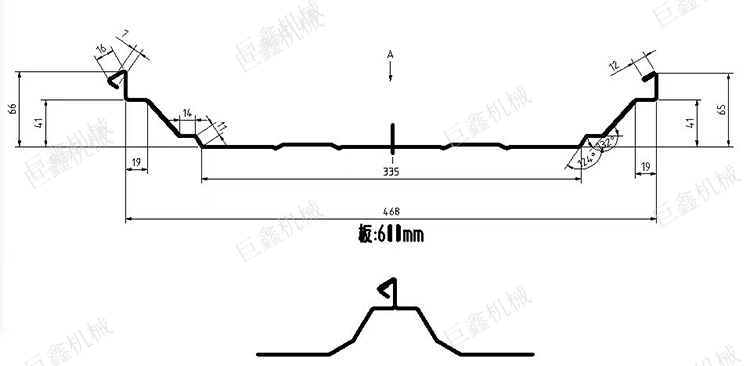
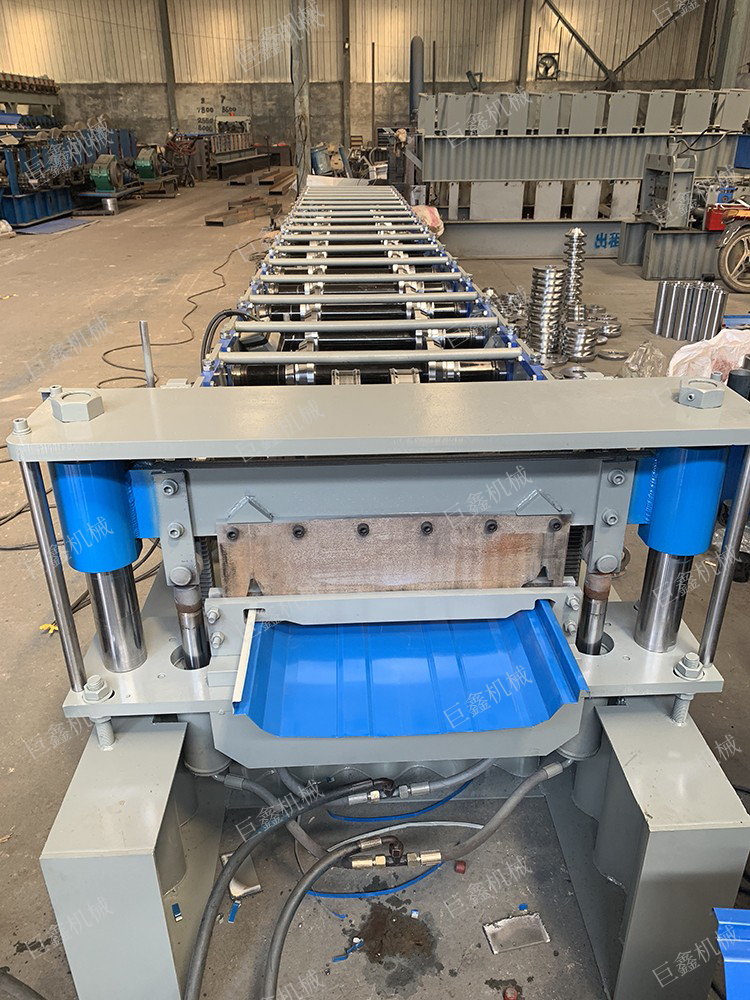
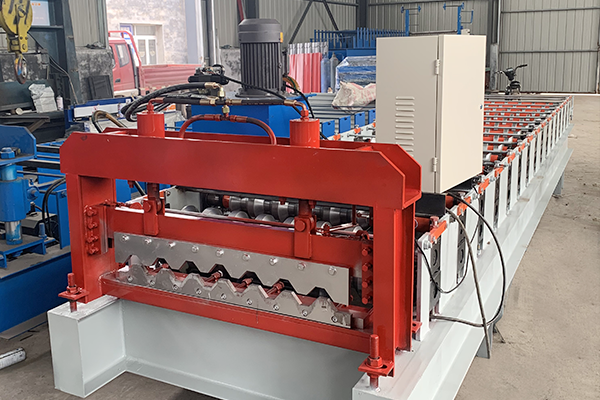
The high-altitude special 468 type corner roller tile press belongs to the vertical lock edge hidden buckle roof special cold bending forming equipment. It uses 600mm wide color coated steel plates, galvanized plates, and aluminum magnesium manganese alloy coils as raw materials, and is bent and shaped step by step through multiple rollers to produce 360 degree lock edge roof panels with a wave height of 70mm and an effective coverage width of 468mm. The board relies on sliding supports for hidden fixation, with no penetrating screws on the board surface. After the locking edge is engaged, the overall waterproof and wind resistance performance is outstanding. It is widely used in high demand roof projects such as large exhibition centers, high-speed railway stations, large-span steel structure factories, logistics and warehousing centers, and large sports venues. This model is specially optimized for high-altitude on-site processing scenarios on roofs. At the same time, it has upgraded its electrical, anti-corrosion, and anti vibration structures according to the full set of export standards, completely eliminating the process of secondary hoisting of prefabricated panels on the roof, greatly reducing damage during high-altitude hoisting and safety hazards for personnel operations. It is suitable for cross-border transportation by ocean and construction conditions of large overseas public projects.
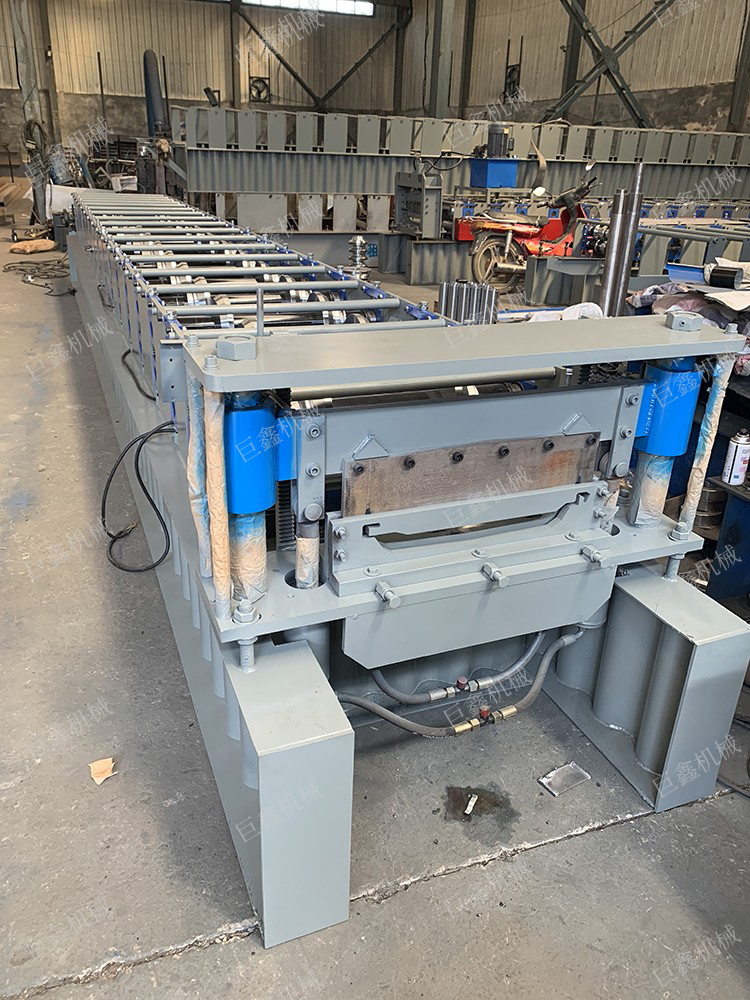
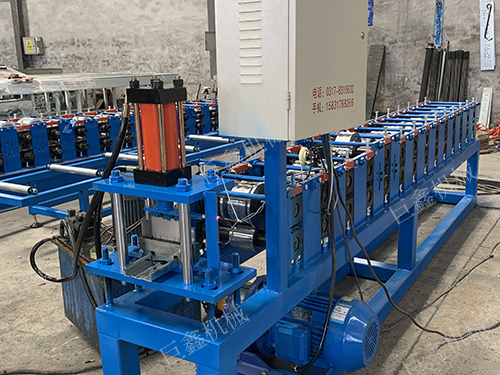
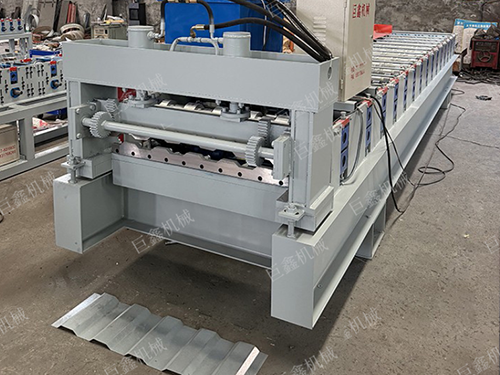
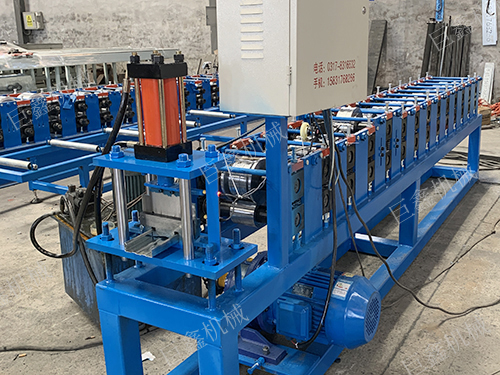
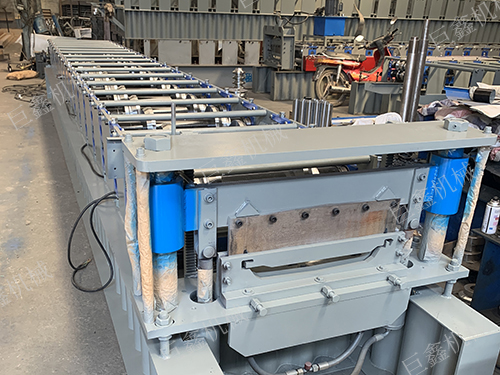
The whole machine adopts a lightweight reinforced modular architecture, which is divided into five independent modules: a compact coil feeding bracket, a plate leveling and guiding correction mechanism, a 468 corner locking edge forming host assembly, a hydraulic cutting execution unit, and a sealed and protected electrical control box. Compared to conventional landing models, the high-altitude version optimizes the distribution of weights while ensuring the rigidity of the frame. The center of gravity of the entire machine sinks, and dedicated lifting rings are reserved at the four corners of the body. It can be lifted as a whole by a crane to the steel structure platform on the roof, or split and lifted in sections through narrow lifting channels in buildings. The disassembled modules can be independently reinforced and packaged, greatly reducing the loading capacity of the container. During ocean lifting and long-distance sea transportation, they effectively resist frame deformation caused by compression and collision, precision roller scratches, hydraulic pipeline bending and leakage, and other losses. After the equipment is lifted to the designated location on the roof, the operators complete the module alignment and splicing according to the assembly instructions, tighten the connecting bolts, connect the hydraulic oil circuit and control circuit, and put it into use. The assembly process is simplified, effectively reducing the operating load and safety risks of high-altitude workers. The host base is made of national standard thickened H-shaped steel and welded together. All welds are polished to remove stress, and the entire machine is coated with multiple layers of wear-resistant and anti-corrosion coatings. It can withstand harsh working conditions such as outdoor exposure to sunlight, rain, strong winds, dust, and severe fluctuations in temperature between day and night for a long time. During continuous operation, it is not easy to encounter structural problems such as frame shaking, paint peeling, and welding point rusting and loosening.
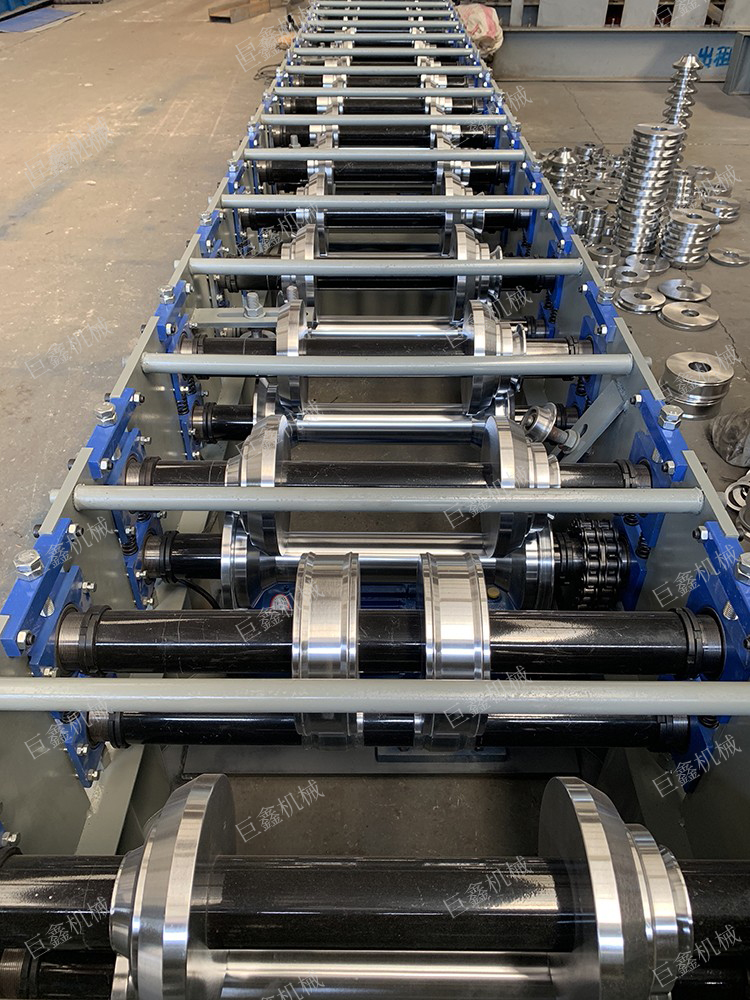
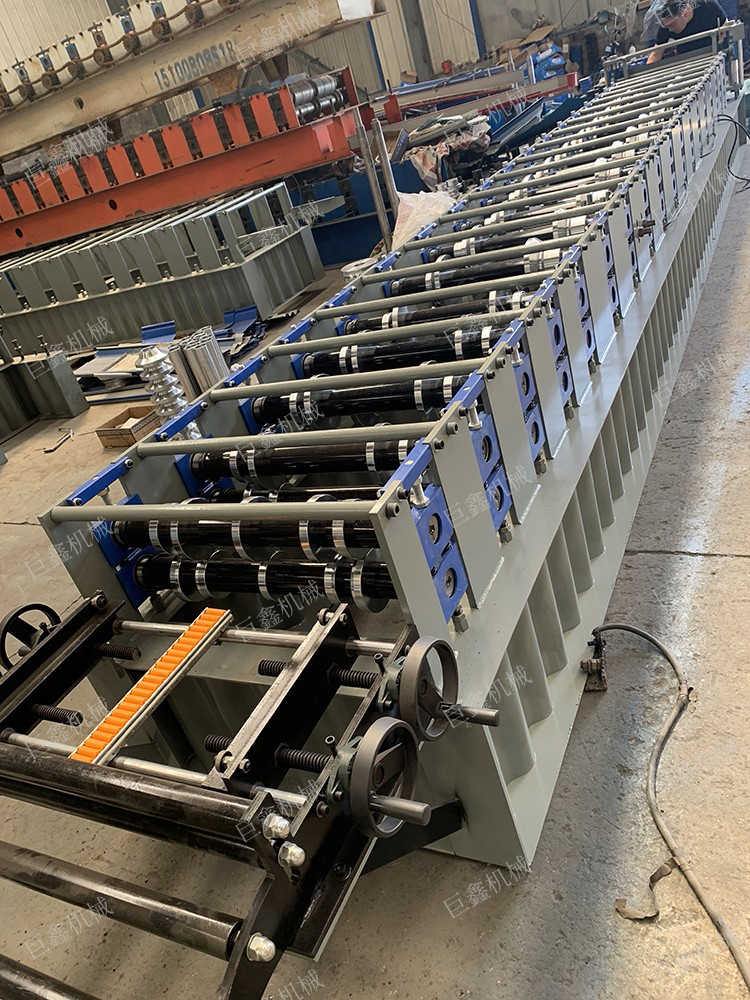
The core lock edge forming roller assembly is the core component that ensures the 70mm high rib curvature and locking accuracy of the 468 version. The entire set of forming rollers has undergone CNC precision machining, quenching and hardening, and mirror chrome plating treatment. The surface of the roller body is smooth and wear-resistant, and it will not scratch the anti-corrosion coating on the surface of the metal coil when rolling and conveying it. The whole machine is equipped with 18 progressive bending roller tracks, which are divided into multiple processes to slowly shape the board with raised wave peaks and double-sided locked edge rolling structures, avoiding stress concentration inside the board caused by a single large angle bending, and eliminating defects such as board cracking, coating peeling, and board rebound and deformation. After being uniformly shaped by the entire roller pressing system, the finished product has uniform edge curvature, rib height dimensions, and flatness height of the board surface. The 360 degree interlocking between the panels is tight, and the sliding support can release the thermal expansion and contraction stress of the panels. The overall sealing and wind resistance of the roof are significantly improved. The entire set of rollers is driven by a solid spindle combined with a high-strength quenching synchronous chain linkage, with transmission clearance controlled within a very small range. The equipment operates with weak vibration, and even when placed on a non absolutely flat load-bearing platform on the roof, it can still maintain uniform and stable feeding, strictly controlling the dimensional consistency error of large quantities of finished boards.
The feeding end of the equipment is equipped with a miniaturized heavy-duty feeding rack and a dual plate leveling and correction component. After the thick heavy metal coil is erected in place, multiple sets of parallel pressure wheels fully stretch the coil's curling curvature and release internal residual stress, allowing the plate to be fed into the forming track in a completely straight posture, reducing downtime faults such as material deviation, one-sided jamming, and misalignment of lock edge forming that are prone to occur in high-altitude working environments from the source. The feeding speed of the equipment can be infinitely adjusted according to the thickness of the sheet and the on-site construction rhythm of the roof. It has excellent adaptability to metal sheet rolls with a conventional thickness of 0.3-0.8mm, with smooth and continuous feeding, reducing frequent maintenance and downtime at high altitudes, and ensuring the continuity of roof construction.
The cutting unit adopts a four column guided stable hydraulic cutting structure, and the cutting edge is quenched with high hardness alloy cutting tools, combined with a high-precision pulse counting device to achieve fully automatic fixed length cutting. The operator inputs the required length parameters for a single roof panel into the control panel, and the equipment automatically completes the feeding and conveying, multi-stage locking and rolling forming. When the board reaches the set size, the hydraulic knife holder smoothly cuts horizontally, and the cutting section is flat without burrs, curled edges, board extrusion warping and other defects. The length error of the finished product is controlled within a reasonable range, and the cut board slides directly to a simple feeding rack. The entire set of feeding, forming, locking, cutting, and discharging forms a fully automatic closed-loop production line. Only one worker is needed to complete the supply of rolls and the inspection of the whole machine on the high-altitude site, minimizing the number of high-altitude workers and improving the construction safety level.
The electrical control system is specially adapted and upgraded for the dual scenarios of cross-border export and high-altitude turbulence. The core electrical components are selected from internationally recognized industrial specifications, supporting free switching of multiple voltage levels, and accurately matching industrial power supply parameters from different countries to avoid problems such as equipment failure to start and electrical component burnout caused by inconsistent voltage standards. The control box is equipped with a thickened waterproof and dustproof sealed shell, and all lines are reinforced, bundled, and pulled to resist lifting bumps and outdoor wind and rain erosion on the roof. The system is equipped with a built-in PLC intelligent main control, which supports dual mode switching between panel local operation and wireless remote control. It integrates multiple protection mechanisms such as motor overload protection, emergency stop, and automatic fault alarm locking. Once the board is stuck, the motor load exceeds the standard, the hydraulic system pressure is abnormal, and other working conditions are detected, the equipment will immediately lock and stop, fully protecting the core transmission and hydraulic components, and building a safety defense line for high-altitude operations.
This high-altitude specialized aircraft has extremely low requirements for the operation foundation. It only needs to level the roof steel structure platform and fix the foot support legs to operate, without the need to pour concrete to fix the foundation. After the completion of a single building construction, it can be lifted and transferred as a whole for reuse, and the equipment reuse rate is high. The daily maintenance operation is simple and convenient. Regularly add lubricating grease to the transmission chain and high-speed bearings, clean the metal debris and floating dust accumulated on the surface of the rolling mill, check the sealing of the hydraulic joint, and the disassembly and replacement steps of vulnerable parts are intuitive, making it convenient for overseas construction parties to independently complete routine maintenance and accessory replacement.
The 468 high rib upright locking edge corner panel, with its super strong waterproof durability and large-span load performance, occupies an important application proportion in the global large-scale public building roof system. This export version of the high-altitude specialized 468 angle galloping tile press is optimized and designed around five core dimensions: lightweight roof lifting, anti bounce stability during high-altitude operation, compatibility and adaptation with multiple countries' voltages, long-distance disassembly and packaging transportation, and high-precision locking plate forming. Relying on mature and stable multi-stage cold bending roller pressing technology, it directly produces standard upright locking edge roof panels on building roofs, simplifies the construction process of large steel structure roofs, compresses comprehensive construction costs, and provides efficient and reliable professional equipment support for the automated on-site processing of large-span prefabricated building roof enclosure systems overseas.
Process: feeding → leveling → guiding → continuous cold bending forming → fixed length cutting
Unloading and unwinding: The hydraulic unwinding machine carries the steel coil and smoothly discharges the material.
Plate leveling: By using a leveling machine to eliminate the curling stress of the steel coil, it is confirmed that the plate entering the forming machine is properly leveled.
Guided feeding: The guiding device confirms that the sheet is aligned and smoothly enters the forming host.
Fine forming: The flat steel plate is gradually cold-formed into the designed closed or open plate shape through more than ten (or more) finely arranged rollers.
Fixed length cutting: After forming, the continuous strip is measured in detail by an encoder or PLC, and when it reaches the set length, it is cut by hydraulic pressure.